
Pruning
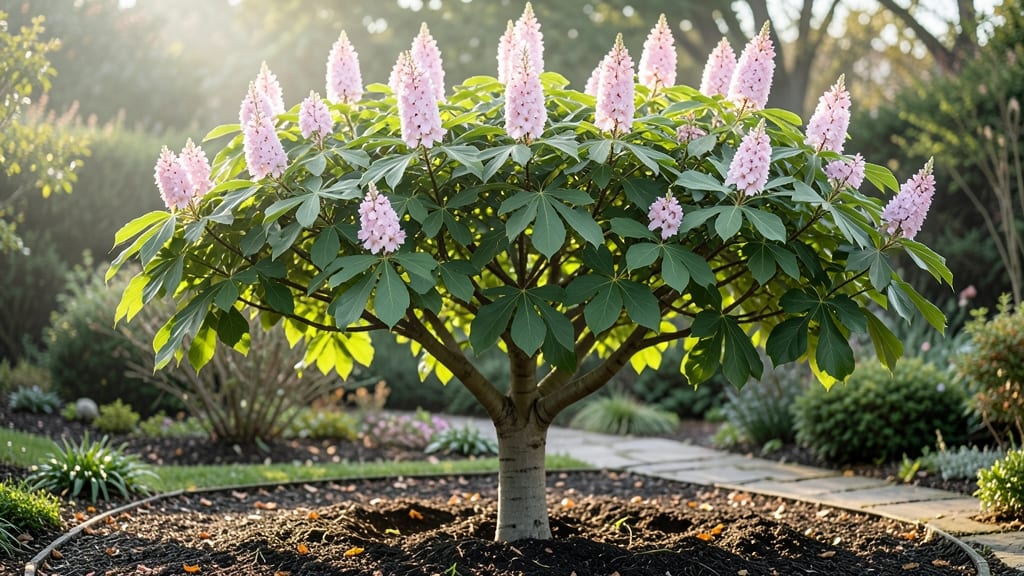
Pruning your pink chestnut tree (Aesculus × carnea) in the Pacific Northwest isn’t just about shaping—it’s about preserving that stunning blush-pink canopy through winter’s harshest freezes.
I’ve pruned mine for years, and the difference between a tree that looks half-dead in January and one that glows like a sunset is all in the cuts you make now.
The key is timing and technique: prune in late winter or early spring before new growth starts, and always cut just above a bud that faces outward. This keeps the tree’s natural shape while encouraging dense, frost-resistant foliage.
My tree now stands as the centerpiece of my yard, its branches heavy with candelabra-like blooms by May. The secret? Removing only the dead, crossing, or weak branches—never more than a third of the canopy at once.
You’ll end up with a tree that’s not just beautiful but resilient, its branches sturdy enough to handle snow without breaking. The pink hue deepens in cold snaps, creating a winter wonderland effect that neighbors drive by to admire.
Plus, the pruning opens up the lower branches for underplanting with ferns or hellebores, adding layers of texture to your garden.
Works for both urban yards and rural landscapes—just adjust the pruning intensity based on your tree’s age and local frost patterns. Let’s get those shears out and turn your pink chestnut into the showstopper it’s meant to be.
📚 In This Guide
- What you need
- Instructions
- Tips and common mistakes
- Wrapping up and next steps
What you need
- ● Pruning shears: Sharp, bypass-style shears (for cuts under ½ inch thick). Example: Felco F-2 or Corona Tools.
- ● Loppers: For branches ½ to 1½ inches thick. Look for ratcheting or bypass models for precision.
- ● Pruning saw: A curved-tooth saw for thicker branches (1½+ inches). Example: Fiskars X7.
- ○ Disinfectant: 70% isopropyl alcohol or a tree wound pruning sealant (optional but recommended for PNW’s damp climate).
- ● Gloves: Heavy-duty, cut-resistant gloves (e.g., Mechanix or gardening-specific).
- ● Safety gear: Safety goggles (to shield from debris).
- ● Long sleeves/pants (to protect from thorns or sap).
- ● Ladder or step stool: Sturdy, extendable (ensure it’s rated for your weight + tools). Pro tip: Use a harness if pruning high branches!
- ● Marking twine or flags: For tagging branches to remove (e.g., bright-colored twine or plastic flags).
- ● Heavy-duty trash bags: For collecting pruned branches (2–3 bags, depending on tree size).
- ● Pole pruner: For high branches (extendable up to 10–12 feet).
- ● Tree wound paint: Only use if your tree has large cuts (PNW’s wet climate often makes this unnecessary).
- ● Workshop or tarp: To lay out tools and protect the ground from debris.
- ● Camera or sketchbook: To document the tree’s structure before/after pruning.
- ● You’ve chosen the right time: Late winter or early spring (when the tree is dormant but before new growth).
- ● The weather is dry (PNW’s rain can make cuts heal poorly).
- ● You’ve researched your tree’s health: Look for signs of disease (e.g., cankers, oozing sap) and avoid pruning those areas.
- ● You’ve checked local regulations: Some areas require permits for large tree pruning.
Step-by-Step guide for pruning pink chestnut trees in the Pacific Northwest
Here's how I prune these frost-hardy beauties to keep them thriving through our rainy winters and mild summers.
Time Your Pruning for Optimal Growth
Late winter or early spring is the best time to prune your pink chestnut tree—right after the last hard frost but before new buds swell. In the Pacific Northwest, this usually falls between mid-February and early March. Pruning too early risks exposing fresh cuts to late frosts, while waiting too long removes growth energy for the season.
Look for dormant branches—they'll appear brown and leafless. Avoid pruning in fall or summer, as these times stress the tree and invite disease. If you must prune outside this window, focus only on removing dead or damaged wood.
Remove Dead, Diseased, or Crossing Branches First
Start with the obvious—any dead, diseased, or broken branches need to go. Use clean, sharp pruning shears to make clean cuts at a 45-degree angle, about ¼ inch above a healthy bud or branch collar. This prevents water from pooling and rotting the wound.
Next, target crossing branches where limbs rub against each other. These create weak points that split under wind or snow load. Remove the smaller of the two branches to maintain the tree's natural shape. If both are equal in size, cut the one growing upward to encourage an open canopy.
Thin the Canopy for Airflow and Light
Pink chestnut trees thrive with good airflow to prevent fungal diseases common in our damp climate. Step back and look for branches that block sunlight from reaching the inner canopy. Remove 10-20% of the foliage by selectively cutting back branches that grow too densely.
Focus on branches that grow inward or downward—they create dark, humid pockets where mildew loves to hide. Aim for an open, vase-like shape that lets light and air circulate freely. Never remove more than 25% of the canopy in one season, or you'll stress the tree.
Shape the Tree for Balance and Strength
Now it's time to refine the tree's structure. Start at the top and work your way down, removing branches that grow straight up (called "water sprouts") or those that angle sharply downward. These weak branches break easily in storms or under snow.
Use your hands to feel the branch's attachment point—if it's less than ½ inch thick, it's a small branch that can be pruned with shears. For thicker branches, use loppers or a pruning saw to make clean cuts. Always cut just outside the branch collar to promote fast healing.
Clean Up and Protect the Tree
After pruning, rake up and dispose of all debris—this removes potential disease spores and pests. Sterilize your tools with rubbing alcohol or a 10% bleach solution to prevent spreading pathogens between cuts.
Apply a wound dressing only if the cut is larger than 2 inches in diameter. For smaller cuts, let the tree seal itself naturally. Water the base of the tree deeply to help it recover, especially if you pruned during a dry spell. Mulch with 2-3 inches of organic mulch to retain moisture and regulate soil temperature.
Tips & tricks for pruning pink chestnut trees
Here's what I've learned after years of working with these resilient Pacific Northwest trees—small details make all the difference.
Timing is Everything: The mid-February to early March window is non-negotiable for our climate. I've seen trees stressed when pruned too early—late frosts can damage fresh cuts. Check your local frost dates and mark your calendar. If you miss this window, wait until late fall when the tree is fully dormant, but avoid summer pruning entirely as it invites disease in our damp summers.
Branch Collar Technique: That ¼-inch cut above the branch collar in Step 2 is critical. I learned this the hard way—improper cuts create entry points for pathogens. Run your thumb along the branch collar to feel where it meets the trunk. The collar is that swollen area where the branch naturally attaches, and cutting just outside it lets the tree heal faster. For larger branches, use a pruning saw and make the cut on the outside of the branch collar to avoid tearing.
Canopy Thinning Strategy: When removing 10-20% of foliage in Step 3, focus on creating that open vase shape. I visualize sunlight streaming through the center—this prevents those dark, humid pockets where mildew thrives. Start with the smallest branches first, then work your way up. If you're unsure about a cut, step back and look at the tree's overall shape. You'll notice how removing just a few branches opens up the entire canopy.
Tool Maintenance Matters: Sterilizing tools between cuts in Step 5 isn't just about disease prevention—it's about protecting your tree's health. I keep a small bottle of rubbing alcohol in my tool belt for quick sterilization. For larger pruning jobs, I use a 10% bleach solution (1 part bleach to 9 parts water) and let tools soak for 5 minutes between uses. Sharp tools also make cleaner cuts that heal faster, so sharpen your shears and saws before you start.
Pro Tips for Pink Chestnut Tree
- Here's what I've learned after years of working with these resilient Pacific Northwest trees—small details make all the difference.
- Timing is Everything: The mid-February to early March window is non-negotiable for our climate.
- Branch Collar Technique: That ¼-inch cut above the branch collar in Step 2 is critical.
Frequently asked questions
Got questions about pruning your pink chestnut tree in the Pacific Northwest? You’re not alone!
Here are answers to the most common concerns—from timing to troubleshooting—so you can keep your frost-resistant beauty thriving.
When is the best time to prune a pink chestnut tree in the PNW?
Prune your pink chestnut tree late winter or early spring (before buds swell but after frost risk passes). This timing minimizes stress and disease risk. Avoid pruning in fall—it can stimulate new growth that won’t harden off before winter. Pro tip: If you must prune in summer, do it early to avoid heat stress.
How do I protect my pink chestnut tree from frost damage?
Pink chestnut trees are frost-resistant, but young trees or extreme cold (<10°F) may need help. Wrap vulnerable branches with frost cloth or burlap, and avoid pruning in late fall—this prevents tender new growth. Water trees deeply before winter to build cold resilience. Watch for: brown, mushy twigs (sign of frost crack).
How much can I trim back a pink chestnut tree without harming it?
You can safely remove up to 25% of the canopy per year, but avoid cutting more than 1/3 of the tree’s total branches at once. Focus on dead, diseased, or crossing branches first. For heavy pruning, spread it over 2–3 years to avoid stress. Never top the tree—it weakens the structure and invites pests.
Why are my pink chestnut tree’s leaves turning yellow or dropping?
Yellowing leaves often signal overwatering, nutrient deficiency, or fungal issues. Check soil moisture—pink chestnut trees prefer well-draining soil. Yellow edges? Likely iron deficiency (common in alkaline PNW soil). Brown spots? Fungal disease—prune affected branches and apply copper fungicide if needed. Drop leaves in summer? Could be heat stress; mulch and water deeply.
Are there alternatives to pink chestnut trees for frost-prone PNW yards?
If pink chestnuts seem high-maintenance, consider these frost-hardy, low-maintenance alternatives:
- Hazelnut trees (Corylus spp.): Edible nuts, compact growth, and cold tolerance.
- Serviceberry (Amelanchier): Stunning spring blooms, edible berries, and USDA Zone 3 hardiness.
- Oregon white oak (Quercus garryana): Native, drought-tolerant, and extremely frost-resistant.
- Douglas fir (Pseudotsuga menziesii): Evergreen, shade-providing, and thrives in PNW winters.
Wrapping up and next steps
The pink chestnut tree is a stunning addition to Pacific Northwest landscapes, especially when cared for with precision—like proper pruning! By following frost-resistant techniques, you’ll ensure a healthy, vibrant canopy that thrives year after year. Your efforts now will reward you with beauty and resilience for seasons to come.
Ready to take the next step? Mark your calendar for late winter or early spring—when the tree’s dormant but the frost threat has passed—and grab those pruners! With the right tools and knowledge, you’re all set to give your pink chestnut tree the care it deserves. ✨ Happy pruning!