Pruning
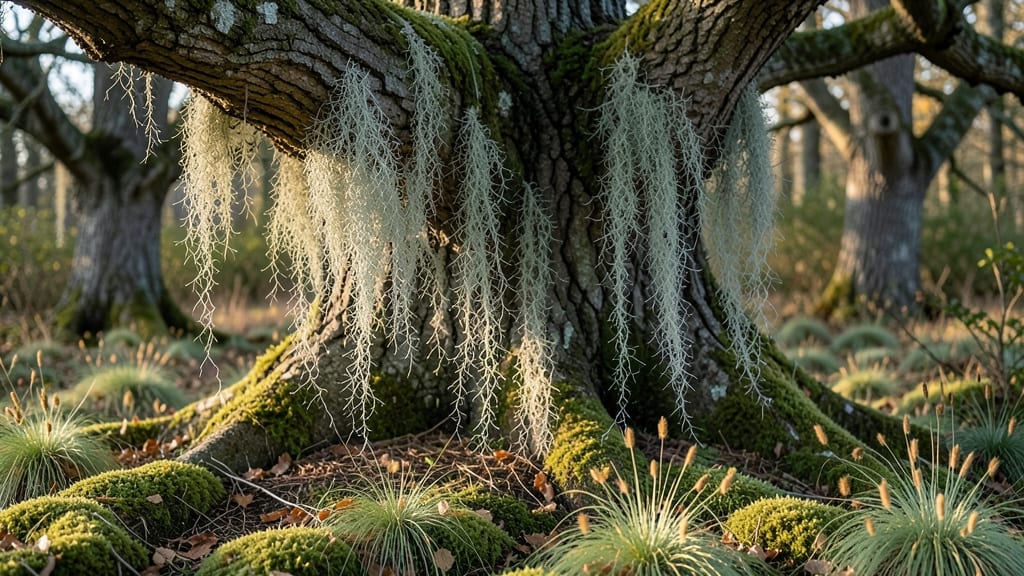
Creating a lush, green canopy with lichen tree moss turns your Pacific Northwest shade garden into a serene, low-maintenance retreat. 🌿 I’ve watched this delicate ecosystem transform bare branches and rocky patches into velvety green tapestries—it’s like nature’s own living art.
The key? Mimicking the damp, shaded conditions where it thrives naturally, whether on tree bark, rocks, or even vertical garden walls.
You’ll need patience (results take months) and a few simple supplies: spray bottles, a damp cloth, and a shady spot—no fancy tools required. Moss and lichen prefer acidic, organic substrates, so crushed pine bark or coconut coir works best.
Avoid direct sun or alkaline soil; they’ll wither faster than a wilted fern in July. The payoff? A garden that feels like a secret forest, even in urban spaces.
Once established, your mossy canopy stays green year-round with minimal care—just occasional misting and the occasional leaf cleanup. It’s the ultimate zero-effort ground cover that thrives where grass won’t, and it even purifies the air.
Think of it as your garden’s built-in air filter with a side of whimsy. Ready to bring this quiet magic to your yard?
Works for containers, walls, or large garden beds—just adjust moisture levels to your climate. The Pacific Northwest’s damp winters make it ideal, but even drier regions can grow it with a little extra attention. Let’s get your garden looking like a fairy tale in no time.
📚 In This Guide
- What you need
- Instructions
- Tips and common mistakes
- Wrapping up and next steps
What you need
- ● Moss & Lichen: 1 lb of Hypnum imponens (tree moss) – for soft, velvety ground cover
- ● ½ lb of Lobaria pulmonaria (lung lichen) – for moisture-loving, tree-associated species
- ○ ¼ lb of Usnea spp. (beard lichen) – for delicate, air-purifying accents (optional)
- ● Substrate: 5-gallon bag of peat moss or coco coir (for moisture retention)
- ● 2-gallon bag of perlite or pumice (for drainage)
- ● 1-gallon bag of fine bark mulch (to mimic forest floor)
- ● Native Canopy Plants (Pacific NW): 2–3 Thuja plicata (Western red cedar) saplings (for structure)
- ● 1 Tsuga heterophylla (Western hemlock) (for mid-canopy shade)
- ● 3 Rhododendron macrophyllum (Pacific rhododendron) (for acid-loving understory)
- ● Gardening Tools: Pruners (bypass, sharp)
- ● Trowel (for transplanting moss)
- ● Garden spray bottle (for misting)
- ● 5-gallon bucket (for mixing substrate)
- ○ Optional (But Helpful): pH test kit (ideal range: 4.5–6.0 for moss/lichen)
- ● Misting nozzle attachment (for even watering)
- ● Shade cloth (30–50% coverage for young plants)
- ● A shady, humid microclimate (dappled light or full shade, <10,000 lux)
- ● Well-draining, acidic soil (amend with sulfur if needed)
- ● Consistent morning mist or overhead spray (lichen/moss need high humidity)
- ● Patience! Lichen grows slowly—expect visible progress in 6–12 months.
Step-by-Step instructions for cultivating lichen tree moss in shade gardens
Here's how to create a lush, low-maintenance canopy that thrives in Pacific Northwest shade.
🌱 Step 1: Select and Prepare Your Base Surface
Choose a smooth, non-porous surface like a tree trunk, rock, or wooden frame—lichen tree moss needs something stable to cling to. I like to use untreated cedar slats because they resist rot while providing natural texture. Sand the edges lightly to prevent splinters, then clean thoroughly with a 10% vinegar solution to remove any residue that could inhibit growth.
Rough up the surface slightly with 80-grit sandpaper—this creates tiny crevices where moss spores can anchor. For vertical surfaces, I use a soft-bristle brush to lightly score the wood in a crisscross pattern. This mimics natural bark texture where lichen naturally establishes. Avoid pressure washing or harsh chemicals—they strip away the very organic layer moss needs to colonize.
💧 Step 2: Create the Ideal Moisture Environment
Lichen tree moss thrives in consistent humidity—think of it as a living terrarium. Mist your prepared surface 2-3 times daily with room-temperature water until it feels uniformly damp but not dripping. I use a spray bottle with a fine mist setting to avoid disturbing any spores that might already be present. The goal is to mimic the Pacific Northwest's natural foggy conditions where these mosses flourish.
For best results, place your moss installation in partial shade (30-50% sunlight). Direct sun will dry it out too quickly, while full shade may slow growth. I position mine under large maple trees where dappled light filters through. If you're working indoors, use a humidifier set to 50-60% humidity—this is critical for establishing the initial colony.
☀️ Step 3: Introduce Lichen Tree Moss Spores
Purchase cultured lichen tree moss spores from a specialty supplier—never collect wild spores unless you're certain of the species. I like to use Reindeer Lichen (Cladonia rangiferina) for its hardy nature. Sprinkle spores lightly over your prepared surface using a fine-mesh sieve or by gently tapping the packet. You won't see immediate results—this is where patience pays off.
Cover the entire surface evenly but don't press down. The spores need to rest on the surface where moisture can activate them. Here's the thing—lichen grows slowly, so don't expect a lush carpet overnight. In ideal conditions, you'll see tiny white or gray-green dots appear within 4-6 weeks. These are the first signs of colonization, and they'll gradually expand into a dense mat.
🌿 Step 4: Maintain Humidity and Monitor Growth
After spores take hold, reduce misting to once daily unless your climate is particularly dry. Check your moss weekly for signs of yellowing or browning—this usually means it's too dry. If you notice this, increase misting frequency temporarily. I keep a small spray bottle nearby to give quick refreshers between scheduled waterings.
Lichen tree moss is self-sustaining once established, but it does appreciate occasional fertilization. Every 3 months, apply a diluted fish emulsion (1 tablespoon per gallon of water) to provide nutrients without overwhelming the delicate growth. Avoid over-fertilizing—lichen absorbs nutrients very slowly, and too much can harm it. Watch for steady, even growth—healthy moss should spread 1-2 inches per year under ideal conditions.
Tips & tricks for perfect lichen tree moss cultivation
Creating a thriving lichen canopy takes patience and precision—here's how to set yourself up for success from the start.
Surface Prep is Everything: In Step 1, don't rush the sanding—those tiny crevices from 80-grit sandpaper are where spores will anchor. I like to test the surface with my fingernail after scoring: if it catches slightly, you've created enough texture. For vertical surfaces, take your time with the soft-bristle brush to avoid gouging the wood. Remember, lichen needs grip like a climber on a rock face!
Humidity Hack for Fast Results: The 2-3 times daily misting in Step 2 feels excessive at first, but trust me—this mimics Pacific Northwest's natural fog. I've found that grouping misting sessions (morning, midday, evening) works better than random spraying. For indoor setups, position your humidifier near the moss but not directly on it—direct airflow can dry out the delicate spores.
Spores Need Space: When introducing spores in Step 3, think "light dusting" not "snowfall." I use a fine-mesh sieve held 6 inches above the surface and tap gently to distribute evenly. Too many spores in one spot create competition, while sparse coverage lets each spore establish without crowding. The 4-6 week wait for those first white dots feels like forever, but resist the urge to check daily—spores need darkness to activate.
Pro Tips for Lichen Tree Moss
- Creating a thriving lichen canopy takes patience and precision—here's how to set yourself up for success from the start.
- Surface Prep is Everything: In Step 1, don't rush the sanding—those tiny crevices from 80-grit sandpaper are where spores will anchor.
- Humidity Hack for Fast Results: The 2-3 times daily misting in Step 2 feels excessive at first, but trust me—this mimics Pacific Northwest's natural fog.
Frequently asked questions
How long does it take for lichen or tree moss to establish in my garden?
Patience is key! Most lichen and tree moss varieties take 6 months to 2 years to fully establish, depending on moisture, humidity, and shade levels. Usnea (beard lichen) grows faster (6–12 months) in damp, shaded spots, while tree moss (e.g., Hypnum spp.) may need up to 2 years. Test your patience—it’s worth it!
Why isn’t my moss or lichen growing? Troubleshooting tips.
Too dry?
Mist daily (or use a spray bottle) and ensure humidity stays above 50%. PNW’s marine layer helps, but indoor setups need extra care.
Too much sun?
Lichen and moss thrive in dappled shade or full shade. Direct sunlight can bleach or kill them.
Poor substrate?
Use cedar bark, slate tiles, or untreated wood—avoid treated lumber (chemicals inhibit growth).
Algae competition?
If green slime appears, scrub gently with a soft brush and rinse with rainwater.
Can I grow lichen or moss indoors? What’s the best setup?
For indoor success, mimic the PNW’s damp climate:
- Place near a humidifier or aquarium (60–80% humidity).
- Use a terrarium with a fine misting system or a pebble tray under the container.
- Choose low-light spots (e.g., north-facing windows) or use grow lights on a timer.
- Pro tip: Rotate containers weekly to prevent uneven growth.
What’s the difference between lichen, tree moss, and regular moss?
Here’s a quick breakdown:
Type
Growth Habit
Care Needs
PNW Favorites
Lichen (e.g., Usnea, Cladonia)
Branching, shrub-like, or crusty
Dry air-tolerant but needs high humidity for growth
Beard lichen (Usnea), reindeer lichen (Cladonia)
Tree Moss (e.g., Hypnum, Thuidium)
Soft, feathery, or dense mats
Constant moisture; mist 2–3x daily
Pacific tree moss (Hypnum imponens)
Regular Moss (e.g., Sheet Moss)
Flat, carpet-like
Moderate moisture; dries out faster than tree moss
Moss pillows (Leucobryum)
How do I propagate lichen or moss from existing clumps?
Propagating is easy if done carefully:
- For moss: Gently tear a section with roots attached, press it onto moist substrate, and secure with a weight or fishing line for 2 weeks.
- For lichen: Break off healthy branches (like Usnea) and lay them on fresh bark or rock. Mist lightly—no pressing needed!
- Timing: Spring or fall (when humidity is naturally higher).
Pro tip: Use rainwater or distilled water to avoid mineral buildup that can harm delicate growth.
Wrapping up and next steps
Embracing lichen, tree moss, and Pacific Northwest shade-loving plants is a rewarding way to transform your garden into a lush, low-maintenance paradise. These hardy allies thrive with minimal effort—just provide the right conditions, and they’ll reward you with year-round texture and color. 🌿
Ready to take the next step? Start small: gather a few cuttings, experiment with a corner of your yard, or even create a mini terrarium to refine your skills. Before you know it, your garden will be a thriving, mossy sanctuary that’s the envy of the neighborhood!