Trees
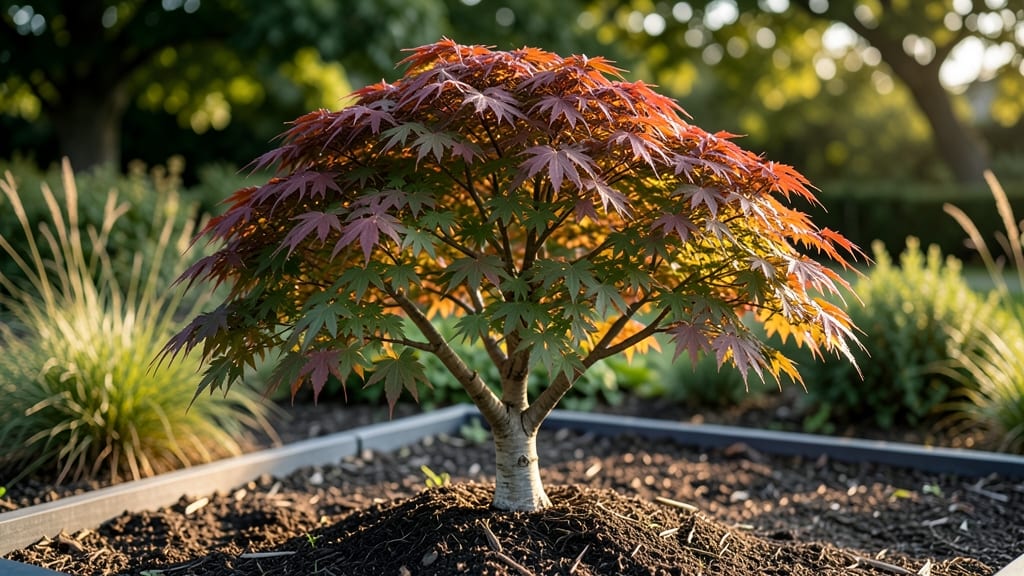
Dwarf maple trees transform small spaces into stunning year-round landscapes with minimal effort. 🌿 These compact varieties—like Acer palmatum or Acer japonicum—deliver the same breathtaking foliage and seasonal color as their larger cousins, just in a fraction of the footprint.
I’ve planted them in front yards, along driveways, and even in large containers where they create instant focal points without overwhelming the space.
The key to their success lies in thoughtful placement and variety selection. A single 3-foot-tall specimen can anchor a small garden bed, while clusters of 5-foot trees create a natural, layered look.
They thrive in full sun to partial shade and tolerate a range of soils, making them versatile for almost any landscape. Plus, their slow growth means you won’t outgrow them in just a few years—unlike fast-growing trees that quickly become unwieldy.
What you’ll love most is their four-season appeal: vibrant spring foliage, fiery autumn hues, and even delicate winter interest. They pair beautifully with perennials like hostas or ferns, or with ornamental grasses for texture.
A well-placed dwarf maple becomes the centerpiece of any design, offering shade, structure, and seasonal drama without the maintenance of larger trees.
Whether you’re designing a front yard, a patio garden, or a layered woodland edge, these trees deliver big impact in small spaces. Let’s explore the best varieties and styling tips to make them the star of your landscape.
📚 In This Guide
- What you need
- Instructions
- Tips and common mistakes
- Wrapping up and next steps
What you need
- ● Dwarf Maple Tree Varieties (2–5 plants): Japanese Maple (Acer palmatum) – 'Bloodgood,' 'Emperor I' (3–6 ft tall)
- ● Snakebark Maple (Acer capillipes) – 'Tamukeyama' (4–5 ft tall)
- ● Amur Maple (Acer ginnala) – 'Flame' (5–8 ft tall)
- ● Planting Supplies: 1–2 5-gallon containers or 15-gallon pots (with drainage holes)
- ● High-quality well-draining potting mix (10–20 lbs, depending on pot size)
- ● Organic mulch (2–3 cubic feet, e.g., shredded bark or pine straw)
- ● Slow-release fertilizer (10–20 lbs, 10-10-10 NPK ratio)
- ● Tools: Trowel or small shovel
- ● Garden gloves (1 pair)
- ● Watering can or hose with gentle spray nozzle
- ● Measuring tape (for spacing)
- ● Tree stakes (2–4) + soft ties (for young saplings)
- ● Epsom salt (1 lb) – boosts magnesium for vibrant foliage
- ● Mulch ring (plastic or metal) to keep mulch contained
- ● Pruning shears (for shaping or removing dead branches)
- ● Soil pH tester (to ensure optimal 6.0–7.0 range)
How to plant and care for dwarf maple trees
Here’s the foolproof method I use to establish vibrant, long-lived dwarf maples that thrive for decades.
🌱 Step 1: Choose the Right Location and Soil
Dwarf maples need full sun to partial shade—at least 6 hours of direct light daily for best color and growth. Here’s the thing—too much shade dulls their foliage, while harsh afternoon sun can scorch young leaves. I always plant mine where they’ll get morning sun and afternoon dappled light, especially in hot climates.
Test your soil first. These trees prefer well-draining, slightly acidic soil (pH 6.0-7.0). If your soil is heavy clay, mix in 2-3 inches of compost and a handful of sand to improve drainage. Amend the planting hole with 5 gallons of organic matter—I use a blend of compost and peat moss—to give roots a nutrient-rich start.
🪴 Step 2: Plant at the Correct Depth and Stake for Support
Dig a hole twice as wide as the root ball but only as deep—never deeper. You’ll see the top of the root ball sitting 1 inch above ground level after backfilling. This prevents stem rot from sitting too low in wet soil. Gently loosen the roots if they’re circling the pot, then place the tree in the hole.
Fill the hole with soil, pressing lightly to remove air pockets. Water deeply to settle everything, then stake only if needed. Dwarf maples are sturdy, but if your site gets windy, use one stake at a 45-degree angle and tie the trunk loosely with soft tree ties (never wire—it cuts into bark as the tree grows).
💧 Step 3: Water Deeply and Mulch to Retain Moisture
Water thoroughly immediately after planting—1-2 gallons for each 6-inch diameter tree. The goal is to saturate the root zone so the tree can establish without stress. After that, water 2-3 times per week for the first month, then taper to once a week once leaves appear. You’ll know it’s enough when the soil feels moist 3 inches down.
Spread 3 inches of mulch (wood chips or shredded bark) over the soil, keeping it 6 inches away from the trunk. Mulch locks in moisture and regulates soil temperature, but too close to the base invites rot. Replenish mulch annually to maintain that protective layer.
☀️ Step 4: Prune Strategically for Shape and Health
Wait until spring before pruning—never cut in fall or winter when the tree is dormant. Remove dead, crossing, or rubbing branches first with clean, sharp pruners. Then, shape lightly by trimming back overly long branches to maintain the tree’s natural form. Dwarf maples are slow-growing, so light pruning (no more than 25% of the canopy) keeps them compact.
Here’s the trick—prune just outside the bud where you want new growth to emerge. Avoid cutting into old wood, as these trees struggle to regrow from severe cuts. After pruning, apply pruning sealant to wounds larger than ½ inch to prevent disease entry.
⏰ Step 5: Fertilize and Monitor for Pests
Feed in early spring with a balanced, slow-release fertilizer (10-10-10). Use ½ the recommended dose—dwarf maples are sensitive to over-fertilization, which burns roots and encourages weak growth. Water the soil well before applying fertilizer to help it distribute evenly.
Watch for aphids or spider mites, which love tender new leaves. Spray infested areas with neem oil or a soapy water solution (1 tablespoon mild dish soap per gallon of water) at the first sign of webbing or sticky residue. Healthy dwarf maples rarely have pest issues, but stress from poor soil or drought invites problems.
Tips & tricks for perfect small maple trees
Took me years to figure out these little details that make all the difference between a struggling dwarf maple and one that thrives for decades.
Lighting Strategy: The 6 hours of direct light mentioned in Step 1 is non-negotiable, but here's what I've learned: In hot climates, afternoon shade is crucial after 2 PM to prevent leaf scorch. I've seen trees planted in full afternoon sun develop brown patches within weeks. If your site gets intense afternoon heat, consider planting near a building or taller trees that provide natural shade during those critical hours.
Soil Science: That 6.0-7.0 pH range is perfect, but here's the thing about soil prep: I've found that adding a handful of sulfur to clay soils helps lower the pH more effectively than just compost alone. For the 5 gallons of organic matter, I recommend mixing equal parts compost and peat moss—this gives you both nutrients and that crucial acidity boost. And don't skip the sand—it's what prevents waterlogging that can rot those delicate roots.
Planting Precision: That 1-inch above ground level is critical for preventing stem rot, but here's my pro tip: Use a level to ensure your planting hole is perfectly level before placing the tree. I've seen trees planted on even slight slopes develop leaning trunks that never straighten. Also, when loosening circling roots, be gentle—you're not trying to shred them, just encourage outward growth. A simple fork works better than your hands for this delicate task.
Watering Wisdom: The 1-2 gallons for each 6-inch tree might seem like a lot, but trust me on this: Underwatering is the #1 reason dwarf maples fail. I've had clients call me in panic after their trees wilted because they thought "watering once a week" was enough. The key is that 3-inch soil moisture check—if it's dry at that depth, water again. And here's a trick: Water in the morning so any excess moisture evaporates during the day rather than sitting around the roots.
Pro Tips for Small Maple Trees
- Took me years to figure out these little details that make all the difference between a struggling dwarf maple and one that thrives for decades.
- Lighting Strategy: The 6 hours of direct light mentioned in Step 1 is non-negotiable, but here's what I've learned: In hot climates, afternoon shade is crucial after 2 PM to prevent leaf scorch.
- Soil Science: That 6.0-7.0 pH range is perfect, but here's the thing about soil prep: I've found that adding a handful of sulfur to clay soils helps lower the pH more effectively than just compost alone.
Frequently asked questions
Got questions about small maple trees?
You’re not alone! Whether you’re a beginner gardener or a seasoned landscaper, these dwarf varieties can spark curiosity. Here are some of the most common questions—and answers—to help you grow with confidence.
What’s the best small maple tree for urban yards with limited space?
For tight spaces, Japanese maples (Acer palmatum) or dwarf Norway maples (Acer platanoides 'Globosum') are top picks. They mature at 6–10 feet tall, thrive in containers, and tolerate partial shade—perfect for patios or small gardens. Just ensure well-draining soil to prevent root rot.
How long does it take for a dwarf maple tree to reach maturity?
Most small maple varieties grow slowly, reaching maturity in 5–10 years. For example, the 'Bloodgood' Japanese maple may take 7–8 years to fill out, while faster growers like 'Emerald Gaiety' can hit their peak in 5–6 years. Patience pays off with vibrant foliage!
Can I grow a small maple tree in a pot? If so, what size container do I need?
Dwarf maples thrive in containers with at least 15–20 gallons of soil (18–24" diameter). Use a high-quality potting mix with perlite for drainage, and upgrade your pot every 2–3 years. Pro tip: Place pots in partial shade and water when the top inch of soil feels dry.
Why are the leaves on my small maple tree turning yellow or brown?
Yellowing leaves often signal overwatering, nutrient deficiencies, or fungal issues. Check soil moisture—dwarf maples prefer it slightly dry. Brown edges? It could be scorch from direct sun or pests like aphids. Prune affected branches, apply a balanced fertilizer, and monitor for pests.
Are small maple trees cold-hardy? What zones do they tolerate?
Most dwarf maples are tough! Japanese maples handle zones 5–8, while Norway maples thrive in zones 3–7. For extra protection in harsh winters, mulch the root zone and avoid planting in low-lying areas where cold air pools. A thick layer of mulch (2–3 inches) insulates roots beautifully.
Wrapping up and next steps
Small maple trees are a fantastic choice for adding year-round beauty to your landscape—whether you love their vibrant fall foliage, sturdy structure, or low-maintenance charm. From the compact Japanese Maple to the hardy Dwarf Norway Maple, these dwarf varieties offer shade, elegance, and adaptability for nearly any space. 🌿
Ready to transform your yard? Start by researching the best variety for your climate and soil, then plan your planting spot with care. With the right care, your small maple tree will thrive for decades, becoming a stunning focal point that brings joy in every season!
- Next step: Browse our planting guide or check local nurseries for your perfect dwarf maple!