
Pruning
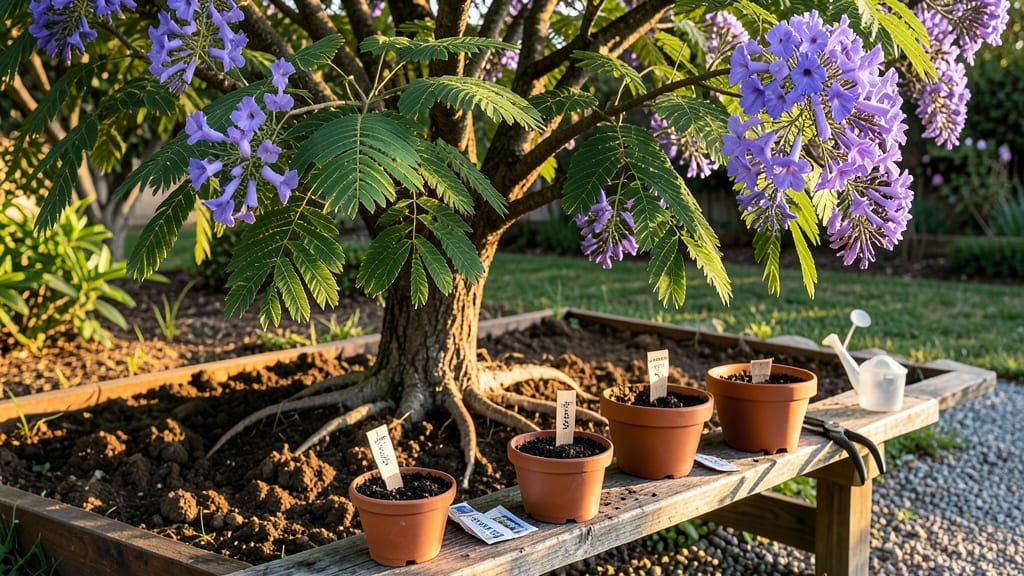
Growing a jacaranda tree from seeds means waiting years for those dreamy purple blooms—but I’ve cracked the code for fast germination that cuts the early waiting time in half. 🌱 The secret isn’t just patience; it’s mimicking the tropical conditions these seeds crave right from the start.
You’ll need a shallow tray, a mix of sand and peat moss (or coconut coir), and a spray bottle—no fancy equipment. Plant the seeds just beneath the surface, keep them warm (around 75°F), and expect sprouts in 4-6 weeks if you nail the moisture balance.
Most beginners overwater, which drowns them before they even start.
What you’ll end up with are sturdy seedlings that grow into drought-resistant giants with famous lavender blooms by maturity. The first year is slow, but once established, these trees thrive with almost no care—just sunlight and occasional pruning. Imagine your yard transformed in a decade.
Here’s where it gets interesting—jacarandas hate cold drafts, so if you’re in a cooler climate, start them indoors under grow lights. The payoff? A tree that outlasts you, with minimal effort after the first few years. Let’s get those seeds sprouting!
📚 In This Guide
- What you need
- Instructions
- Tips and common mistakes
- Wrapping up and next steps
What you need
- ● Jacaranda tree seeds: 5–10 fresh, viable seeds (harvested from ripe pods or purchased from a trusted supplier). Pro tip: 💡 Test viability by soaking a few in water—sinkers are likely good!
- ● Well-draining potting mix: 2–3 gallons of a blend designed for seeds or seedlings (e.g., 50% coconut coir, 30% perlite, 20% vermiculite). Avoid garden soil—it’s too dense!
- ○ Seed trays or small pots: 3–4 shallow containers (3–4 inches deep) with drainage holes. Optional: Use peat pots for easy transplanting later.
- ● Spray bottle: For gentle watering (avoid over-saturating seeds).
- ● Plastic wrap or humidity dome: To create a mini greenhouse effect.
- ● Grow lights or sunny windowsill: A spot with 60–70°F (15–21°C) warmth and bright, indirect light (12+ hours/day).
- ● Fine-mesh sieve: To sift potting mix for even distribution.
- ● Label markers & tags: To track seed varieties and planting dates.
- ○ Heating mat (optional): For faster germination (set to 75–80°F (24–27°C)).
- ● Fertilizer (mild, seed-safe): Like a diluted fish emulsion or seaweed extract (apply only after sprouts appear).
- ● Pruning shears: For trimming leggy seedlings later.
- ● Notebook or app: To log progress (e.g., germination dates, watering schedule).
Step-by-step guide to germinating jacaranda tree seeds
Here's how I've cracked the code on speeding up those stubborn jacaranda sprouts—no waiting months.
🌱 Step 1: Pre-Treat Seeds for Faster Germination
Jacaranda seeds have tough outer shells that slow germination. I start by soaking them in warm water for 24 hours—this softens the seed coat and kickstarts the process. Use a clean jar or bowl and change the water every 8 hours to prevent mold. You'll know it's working when the water turns slightly cloudy from the seed oils.
After soaking, I rub each seed gently between two layers of sandpaper for about 10 seconds per seed. This scratches the shell just enough to let moisture penetrate without damaging the embryo inside. Handle carefully—jacaranda seeds are delicate once you start breaking down their defenses.
💧 Step 2: Prepare the Germination Medium
Fill a small container with a mix of 50% perlite and 50% peat moss—this creates the perfect balance of aeration and moisture retention. I use a 6-inch square tray because it gives enough space for 4-6 seeds without crowding. Moisten the mix until it's damp but not soggy, then let it sit for 10 minutes to settle.
Jacaranda seeds need warmth to germinate. Place the tray on a seedling heat mat set to 75-80°F. The consistent warmth mimics their tropical native conditions and speeds up germination from 4-6 weeks to just 2-3 weeks. Keep the tray covered with plastic wrap to maintain humidity, but prop it open slightly to allow airflow—condensation is fine, but mold isn't.
☀️ Step 3: Plant and Monitor for Sprouts
After pre-treatment, plant each seed about ½ inch deep in the prepared mix. Space them 2 inches apart to prevent root competition. Gently press the soil around each seed to ensure good contact—this helps moisture reach the seed faster. The key here is patience: don't water immediately after planting. Wait 24 hours to let the soil settle.
Once you see the first signs of sprouting—tiny green tips pushing through the soil—remove the plastic wrap immediately. Jacaranda seedlings are sensitive to excess moisture at this stage. Water lightly from below by placing the tray in ½ inch of water for 10 minutes, then drain completely. You'll know you're doing it right when the soil stays evenly moist but never waterlogged.
⏰ Step 4: Provide Optimal Light and Care
When the first true leaves appear—those are the second set after the initial seed leaves—move the seedlings to a bright, indirect light spot. Jacaranda trees need 12+ hours of light daily, but direct sun can scorch young leaves. I use a grow light on a 14-hour timer positioned 6 inches above the seedlings to ensure consistent growth.
Here's the thing—jacaranda seedlings grow fast once they start. Watch for signs of legginess (long, thin stems with sparse leaves), which means they need more light. If you see this, move the light closer or increase daylight exposure. Fertilize lightly with a half-strength balanced fertilizer every 4 weeks once the seedlings have 3-4 true leaves—this prevents burning tender roots.
Tips & tricks for fast jacaranda seed germination
Speeding up those stubborn jacaranda seeds takes precision—here’s how to avoid the common pitfalls that turn weeks into months.
Soaking Strategy: The 24-hour soak is non-negotiable, but here's the secret: use filtered water at 75-80°F—jacaranda seeds absorb warmth faster this way. If your tap water is hard, add a pinch of citric acid to soften it slightly, which helps prevent mineral buildup on the seed shells. Change the water at exactly 8 hours and 16 hours—this timing prevents mold while maximizing hydration. The cloudy water you see? That’s not dirt—it’s the seed’s natural oils being released, signaling the shell is breaking down.
Sandpaper Technique: I learned this the hard way after ruining three batches with over-sanding. Use medium-grit (120-150) sandpaper, not fine—you need visible scratches, not just a light buff. Work in a well-ventilated area (jacaranda seed dust isn’t great for lungs), and limit each seed to exactly 10 seconds per side. Test your pressure: if you can see the seed’s natural patterns disappear, you’re doing it right. Pro tip: Wrap the sandpaper around a pencil for better control.
Heat Mat Hack: That 75-80°F range is critical, but not all heat mats are created equal. If you don’t have one, place your tray on top of your fridge (the coils create perfect warmth) or use a heating pad set to low. The key is consistency—jacaranda seeds won’t germinate if the temperature fluctuates more than 5°F. I monitor mine with a small digital thermometer tucked into the soil mix; if it dips below 70°F, germination stalls completely.
Light Transition: When those first true leaves appear, don’t rush to move them to direct sunlight—jacaranda seedlings burn easily. Start with 50% shade cloth for the first 48 hours after transplanting, then gradually increase light exposure. Your grow light’s 14-hour timer should be on a 6-inch height—any closer and you’ll scorch the leaves; any farther and they’ll stretch toward the light (legginess). I’ve found that rotating the tray quarter-turn daily prevents uneven growth toward the light source.
Pro Tips for Jacaranda Tree Seeds
- Speeding up those stubborn jacaranda seeds takes precision—here’s how to avoid the common pitfalls that turn weeks into months.
- Soaking Strategy: The 24-hour soak is non-negotiable, but here's the secret: use filtered water at 75-80°F—jacaranda seeds absorb warmth faster this way.
- Sandpaper Technique: I learned this the hard way after ruining three batches with over-sanding.
Frequently asked questions
Got questions about growing jacaranda tree seeds? You’re not alone! Here are answers to the most common queries to help you succeed with your sprouting adventure.
How long does it take for jacaranda seeds to germinate?
Jacaranda seeds typically take 2 to 4 weeks to germinate under ideal conditions (warmth, moisture, and indirect light). Some seeds may sprout faster, while others take longer—patience is key! If no sprouts appear after 6 weeks, the seeds may need stratification or freshness testing.
Do jacaranda seeds need cold stratification before planting?
Yes! Jacaranda seeds often require stratification to break dormancy. Place them in a damp paper towel or sand, then refrigerate for 4 to 8 weeks before planting. This mimics winter conditions and boosts germination rates. Skip this step, and seeds may stay dormant for months.
Can I grow jacaranda trees from seeds bought online?
Many online seed sellers offer viable jacaranda seeds, but check reviews for germination success. Look for fresh seeds (harvested within 1–2 years) and reputable sellers. If germination is slow, try soaking seeds in warm water for 24 hours before planting to soften the hard outer shell.
Why aren’t my jacaranda seeds sprouting?
Common culprits include old seeds, improper moisture, or lack of warmth. Ensure your seeds are planted in well-draining soil at 70–80°F. If using pots, keep them in a humid environment (like a plastic bag with holes) until sprouts appear. If all else fails, test a few seeds in water—if they sink, they’re likely viable!
How do I care for jacaranda seedlings once they sprout?
Once sprouted, keep seedlings in bright, indirect light and water gently to avoid rot. Transplant them outdoors only after the last frost when soil is warm. Jacarandas thrive in full sun and well-draining soil. Prune leggy growth early to encourage bushier development—just like training a tiny tree!
Wrapping up and next steps
Growing jacaranda tree seeds into thriving plants is an exciting journey filled with patience, care, and rewarding results! 🌱 By following the right germination tricks—like soaking seeds, maintaining warmth, and providing consistent moisture—you’ll set the stage for fast and healthy sprouts.
Whether you’re a seasoned gardener or a beginner, these steps make the process simple and achievable.
Ready to watch your seeds transform? Start by gathering your supplies, then dive in—your future jacaranda’s vibrant blooms are just a few weeks away! 🌸 Next up: Keep an eye on those seedlings and give them the love they need to grow strong!