
Trees
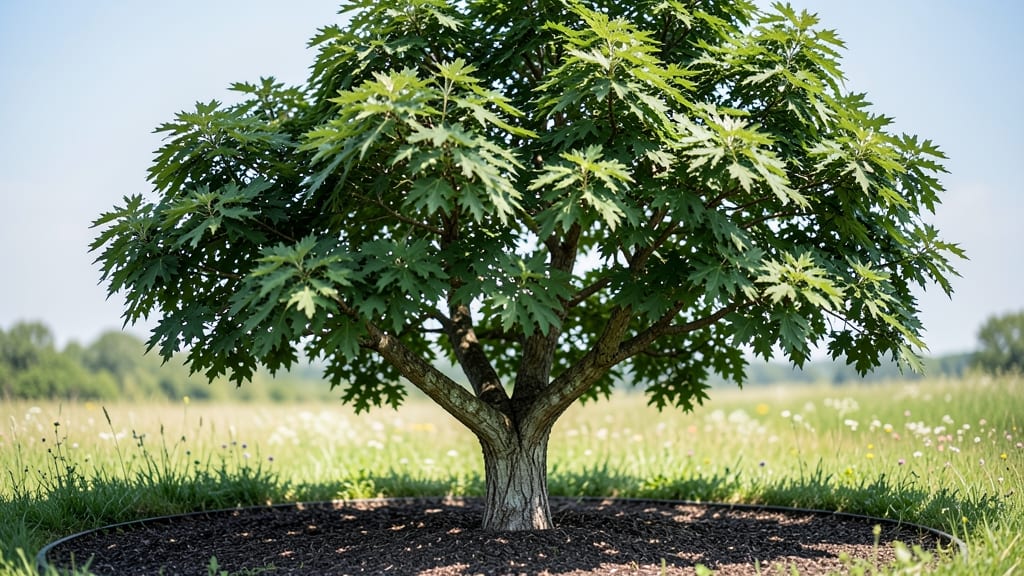
Planting Illinois elm trees means adding a hardy, native shade tree that thrives where others struggle—especially in the Midwest’s tough conditions. 🌳 These trees aren’t just survivors; they’re the backbone of many local ecosystems, offering deep shade and wildlife support with minimal fuss.
What makes them special is their disease resistance compared to other elms, though Dutch elm disease still lurks as a threat. They love full sun and adaptable soil, but their real magic happens in well-drained, slightly acidic earth—just like the native woodlands they evolved in.
Watering young trees deeply once a week keeps them strong until their deep roots take over.
By maturity, you’ll have a 60-foot-tall canopy that cools your yard in summer and provides year-round structure. Their glossy leaves turn golden in fall, and the bark develops striking ridges over time. The best part? They outperform many non-native shade trees in both beauty and resilience.
Perfect for large properties, parks, or streetscapes, Illinois elms need space to grow but pay dividends in shade, wildlife habitat, and low-maintenance reliability. Let’s get yours planted right from the start.
📚 In This Guide
- What you need
- Instructions
- Tips and common mistakes
- Wrapping up and next steps
What you need
- ● Illinois Elm Tree: 1 healthy sapling (1–3 years old) or bare-root tree from a reputable nursery. Look for disease-resistant cultivars like 'Valley Forge' or 'Princeton'.
- ● Shovel: 1 medium-sized digging spade (for saplings) or a mattress shovel (for larger trees).
- ● Compost or Organic Mulch: 2–3 cubic feet (for soil amendment) and 2–3 inches of mulch (e.g., wood chips or pine straw).
- ● Watering Can or Hose: With a gentle spray nozzle for post-planting hydration.
- ● Gloves: 1 pair of sturdy gardening gloves (to protect hands from thorns and soil).
- ● Tree Stake & Ties (if needed): 1–2 stakes (for young trees in windy areas) and soft fabric ties.
- ● Pruning Shears: 1 pair of sharp, sterilized shears (for shaping or removing dead branches).
- ● Soil Test Kit: To check pH (Illinois Elms prefer slightly acidic to neutral soil (6.0–7.5)).
- ● Fertilizer: Slow-release balanced fertilizer (10-10-10) or compost tea (apply in early spring).
- ● Tree Guard or Protective Barrier: 1–2 feet tall (to deter rodents or lawn equipment damage).
- ● Drip Irrigation System: For large plantings or drought-prone areas.
- ● Post-Hole Digger: If planting in clay-heavy soil (to loosen roots).
- ● ✅ Sunlight: Full sun (6+ hours/day) for optimal growth.
- ● ✅ Soil: Well-draining, slightly acidic to neutral (amend heavy clay with compost).
- ● ✅ Spacing: Plant saplings 30–50 feet apart (mature trees can reach 70+ feet!).
- ● ✅ Timing: Best planted in early spring or fall (avoid extreme heat or frost).
- ● ✅ Local Regulations: Check city/county rules for tree planting permits (especially in urban areas).
How to plant and care for Illinois elm trees in your landscape
This hardy native shade tree thrives with minimal fuss once you nail placement and soil prep.
🌱 Step 1: Choose the Perfect Planting Location
Illinois elms need full sun to partial shade—at least 6 hours of direct sunlight daily—but perform best in morning sun with afternoon shade to prevent leaf scorch. Here's the thing: these trees develop aggressive root systems, so plant them 50-60 feet from foundations, sidewalks, or driveways to avoid future lifting or cracking. I always measure twice—root spread can reach 30-40 feet at maturity.
Check your site's drainage first. Illinois elms tolerate wet soils better than most elms, but they won't thrive in standing water. If your yard pools after rain, amend the planting area with 3-4 inches of compost mixed into the native soil to improve drainage while retaining moisture. The root crown should sit 1-2 inches above ground level—never deeper, or the tree will suffocate.
🌿 Step 2: Prepare the Planting Hole and Soil
Dig a hole twice as wide as the root ball but no deeper—this encourages outward root growth instead of circling. I use a shovel to loosen the sides of the hole, creating a saucer-shaped basin that helps capture water. The key is to avoid compacting the native soil at the bottom, as dense layers strangle roots.
Amend the removed soil with a 50/50 mix of native soil and compost (about 2-3 cubic feet total). Illinois elms prefer slightly acidic to neutral soil (pH 6.0-7.5). If your soil tests higher than 7.5, mix in peat moss to lower the pH slightly. Fill the hole halfway, then place the tree so the root flare (where roots meet trunk) is visible above the surrounding soil.
💧 Step 3: Plant and Water for Immediate Stability
Backfill the hole in thirds, tamping down gently after each layer to eliminate air pockets. Water 5 gallons into the hole as you fill to settle the soil and eliminate gaps. The goal is firm but not compacted—you should see the soil surface settle about 1 inch after watering. Once planted, create a 4-inch-high berm of soil around the outer edge of the hole to direct water toward the roots.
Water 10 gallons weekly for the first year, adjusting based on rainfall. Here's where most gardeners go wrong: they water lightly every day instead of deeply and infrequently. Illinois elms develop deep taproots, so you want moisture to penetrate 12-18 inches down. Use a soil probe to check moisture levels—if it comes out dry at 6 inches, water again. Mulch with 3 inches of wood chips (keeping mulch 6 inches away from the trunk) to retain moisture and regulate soil temperature.
☀️ Step 4: Prune for Structure and Disease Prevention
Prune only to remove dead, diseased, or crossing branches in the first year—never to shape the tree. Illinois elms are naturally disease-resistant, but proper pruning prevents Dutch elm disease by improving airflow. Use sterilized pruners and make cuts just outside the branch collar to avoid tearing bark. Seal larger cuts (>1 inch diameter) with pruning sealant to prevent decay.
Wait until late winter or early spring (before buds swell) to prune established trees. Remove sucker growth at the base immediately—these drain energy from the main trunk. Thin the canopy by 20-25% to let light penetrate to the lower branches. You'll see new growth emerge within 4-6 weeks—that's your signal the tree is recovering well from pruning.
✂️ Step 5: Maintain Long-Term Health Through Seasonal Care
Fertilize only if needed—Illinois elms are low-maintenance. Conduct a soil test every 3 years and apply balanced 10-10-10 fertilizer in early spring only if growth is slow. Over-fertilizing leads to weak wood and attracts pests. I've seen trees grow 2-3 feet per year with no fertilizer in ideal conditions.
Watch for elm leaf beetles (small yellow larvae) in summer—they skeletonize leaves but rarely kill the tree. Blast them off with a strong stream of water or treat with neem oil if infestations persist. In fall, remove all fallen leaves and dispose of them in the trash (not compost) to prevent disease overwintering. The tree's deep roots make it drought-tolerant once established, but water during prolonged dry spells (no rainfall for 2+ weeks) to maintain vigor.
Tips & tricks for perfect Illinois elm tree planting
Common mistakes can derail even the hardiest trees—here's how to set your Illinois elm up for decades of trouble-free growth.
Location Precision: When marking your 50-60 foot planting zone, use a garden flag and string line to visualize the mature root spread. I've seen homeowners plant too close to driveways only to deal with cracked concrete years later. The 6 hours of sunlight requirement is non-negotiable—use a sun tracker app for a week to map your yard's light patterns before planting. Morning sun with afternoon shade creates the ideal microclimate for these trees.
Soil Science: That 50/50 soil-compost mix in Step 2 isn't just about nutrients—it creates the perfect air-to-water ratio for aggressive root development. I recommend testing your native soil first; if it's heavy clay, add an extra 10% perlite to the mix. The root flare visibility check is critical: if buried, the tree will suffocate from poor gas exchange. Use a small trowel to scrape back soil until you see the natural flare where roots meet trunk.
Watering Strategy: The 10-gallon weekly rule for the first year might seem excessive, but it's designed to encourage those deep taproots. Here's the thing: most gardeners water too frequently, which creates shallow roots. Instead, water deeply every 7-10 days (adjusting for rainfall) to push roots downward. The soil probe test at 6 inches is your best indicator—if it comes out dry, you haven't watered enough.
Pruning Insight: That 20-25% canopy thinning recommendation in Step 4 isn't arbitrary—it's based on the tree's natural growth habit. Illinois elms develop a dense, rounded crown. By removing only the thickest branches, you maintain airflow while preserving the tree's structural integrity. I always prune in late winter when the tree is dormant but before buds swell—this timing minimizes stress and disease risk.
Pro Tips for Illinois Elm Trees
- Common mistakes can derail even the hardiest trees—here's how to set your Illinois elm up for decades of trouble-free growth.
- Location Precision: When marking your 50-60 foot planting zone, use a garden flag and string line to visualize the mature root spread.
- Soil Science: That 50/50 soil-compost mix in Step 2 isn't just about nutrients—it creates the perfect air-to-water ratio for aggressive root development.
Frequently asked questions
Got questions about Illinois elm trees? You’re not alone! Here are some of the most common inquiries—plus answers to help you grow, care for, or troubleshoot these hardy natives with ease.
Are Illinois elm trees really disease-resistant?
Yes! Unlike their Dutch elm cousins, Illinois elms (also called Ulmus americana) are bred for resilience. They resist Dutch elm disease far better than other elms, thanks to hybrid vigor. However, no tree is 100% immune—proper pruning and removal of infected branches can help prevent outbreaks. Pro tip: Plant them in well-drained soil to boost their natural defenses!
How fast do Illinois elm trees grow?
These trees grow at a moderate pace—expect about 12–24 inches per year under ideal conditions (full sun, rich soil, and regular watering). They mature to 50–70 feet tall with a 40–50-foot spread, so patience pays off for long-term shade. For faster growth, mulch the base and water deeply during droughts. Warning: Avoid overwatering; soggy roots slow growth and invite pests.
Can I plant an Illinois elm in my small yard?
While they’re large, their compact, vase-shaped canopy and shallow but wide root system make them great for medium-sized yards (think 5,000+ sq. ft.). For tighter spaces, opt for a younger sapling (under 10 feet) and prune annually to control height. Just keep sidewalks and foundations in mind—their roots spread horizontally! Alternative: Consider the smaller ‘Valley Forge’ elm if space is ultra-limited.
Why are my Illinois elm leaves turning yellow or brown?
Yellowing leaves often signal overwatering or nutrient deficiencies, while brown edges usually mean underwatering or drought stress. Check the soil moisture—it should be damp but not soggy. If yellowing spreads with black veins, it could be elm leaf beetle damage (a common pest). Treat with neem oil or insecticidal soap, and prune affected branches promptly. Quick fix: Test your soil’s pH (ideal: 6.0–7.5) and amend with compost if needed.
What’s the best time to plant an Illinois elm tree?
Plant in early spring or fall (April–May or September–October) for the best root establishment. Avoid extreme heat or cold—roots struggle to adapt. Dig a hole twice as wide as the root ball but no deeper. Water thoroughly after planting, then mulch (2–4 inches) to retain moisture. Bonus: Container-grown trees can be planted year-round, but spring/fall still win for long-term success.
Are there good alternatives if I can’t grow an Illinois elm?
If disease resistance or space is a concern, try these shade-loving Illinois natives:
- Sugar maple (Acer saccharum) – Stunning fall color, but slower growth.
- Green ash (Fraxinus pennsylvanica) – Disease-resistant (but watch for emerald ash borer).
- Hackberry (Celtis occidentalis) – Tough, adaptable, and wildlife-friendly.
- Oak hybrids (e.g., Quercus robur) – Long-lived but need more space.
Wrapping up and next steps
Illinois elm trees are a standout choice for homeowners and landscapers alike—offering durable shade, striking beauty, and remarkable resilience against disease and harsh weather. Their deep roots and adaptability make them perfect for urban and rural settings, while their low-maintenance nature ensures long-term satisfaction. 🌳
Ready to enhance your landscape? Start by researching local nurseries or certified arborists to source a healthy sapling, then plan its placement with care.
Whether you’re revamping your yard or simply adding a touch of native charm, the Illinois elm is a wise investment for years of lush, worry-free greenery!