
Size
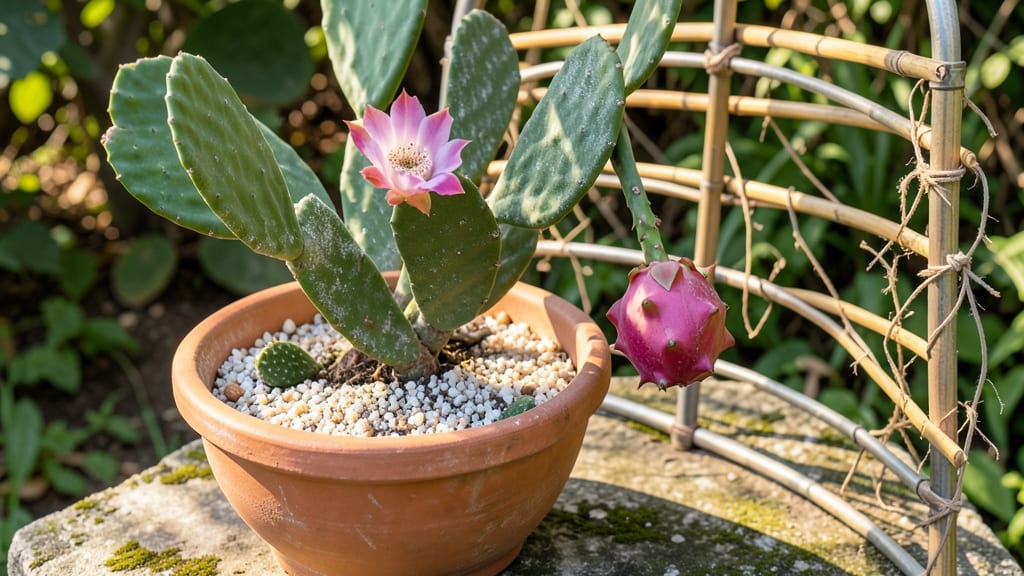
Growing a dragon fruit tree from cuttings is easier than you think—even in a tiny apartment. 🌱 The key is mimicking its natural jungle habits: bright light, minimal fuss, and just enough water to keep roots happy.
My first plant thrived on a sunny windowsill, and now I’ve got three thriving vines climbing a simple trellis.
Start with a healthy cutting (3-4 inches long) from a mature plant, and you’ll have roots in about 4-6 weeks. Use well-draining cactus mix, a pot with drainage holes, and place it where it gets 6+ hours of sunlight daily.
Overwatering is the #1 killer—let the soil dry out completely between waterings, and you’ll avoid root rot.
By year two, you’ll see those iconic pink blooms opening at night, followed by vibrant red or yellow fruit. The harvest isn’t instant, but the journey—watching vines grow, flowers bloom, and fruit ripen—makes it worth every wait. Even in small spaces, this tropical beauty delivers big rewards.
Works indoors year-round or outdoors in zones 10-11. Once established, dragon fruit plants are shockingly low-maintenance. Here’s how to keep yours thriving without the guesswork.
📚 In This Guide
- What you need
- Instructions
- Tips and common mistakes
- Wrapping up and next steps
What you need
- ● Dragon fruit seeds or cuttings: 1-2 seeds (from a fresh, organic dragon fruit) or a healthy cutting (4-6 inches long) from a mature plant.
- ● Well-draining potting mix: 1 bag (10-15 liters) of a cactus/succulent blend (or mix 50% potting soil + 50% perlite/pumice).
- ● Pot with drainage holes: 1 container (6-8 inches in diameter for seeds, 10+ inches for cuttings) made of terracotta or plastic.
- ● Drainage tray or saucer: 1 to catch excess water.
- ● Fertilizer: 1 bottle of balanced liquid fertilizer (10-10-10) or a slow-release granular fertilizer for cacti/succulents.
- ● Watering can with a narrow spout: 1 to avoid overwatering.
- ● Pruning shears: 1 pair (for trimming as the plant grows).
- ● Grow lights (LED or fluorescent): 1-2 (if growing indoors without sunlight).
- ○ Support stake or trellis: 1 (optional, for climbing varieties like Hylocereus undatus).
- ○ Humidity tray or pebbles: 1 (optional, to boost humidity in dry climates).
- ● Plant labels: 1-2 (to track planting dates and varieties).
Step-by-step instructions for growing a dragon fruit tree indoors
Here's how to turn your small space into a thriving dragon fruit jungle—no greenhouse needed.
🌱 Step 1: Start With Healthy Cuttings or Nursery Plants
Dragon fruit trees grow from cuttings or young plants. If using cuttings, take a 4-6 inch healthy stem with at least 2-3 nodes (those little bumps where roots and leaves grow). Let the cut end dry and callous over for 24 hours—this prevents rot when planted. For nursery plants, choose a potted specimen with visible roots at the pot's bottom.
I always plant cuttings in sterile potting mix (never garden soil) because dragon fruit roots are sensitive to pathogens. Fill a 6-inch pot with the mix, make a small hole with your finger, and insert the cutting 1 inch deep, keeping the nodes just above soil level. Gently press the soil around it—no need to pack it down hard. Water lightly until moisture seeps from the bottom drainage hole.
☀️ Step 2: Provide Warmth and Bright, Indirect Light
Dragon fruit trees thrive in 70-90°F temperatures and need bright, indirect light for at least 6-8 hours daily. A south- or west-facing window works, but if your space is dim, supplement with a grow light kept 6-12 inches away for 12-14 hours daily. Too little light causes leggy growth—stems stretch toward the window and leaves turn pale.
Here's the thing—dragon fruit trees hate drafts. Keep them away from air conditioning vents or open windows in cold weather. If your home runs cooler than 65°F, use a small seedling heat mat under the pot to maintain root warmth. Watch for yellowing leaves—this usually means too much cold or not enough light.
💧 Step 3: Water and Fertilize for Strong Root Growth
Water your dragon fruit tree when the top 1-2 inches of soil feel dry to the touch. Stick your finger in—if it's damp past your first knuckle, wait another day. Overwatering is the #1 killer of young dragon fruit trees because it causes root rot. I use a self-watering pot with a moisture meter to avoid guesswork, especially in winter when growth slows.
Start fertilizing 2 months after planting with a balanced liquid fertilizer (10-10-10 or 20-20-20) diluted to half strength. Feed every 4-6 weeks during spring and summer, then reduce to once every 8 weeks in fall and winter. You'll see new leaves and thicker stems within 3-4 weeks of consistent feeding—that's your sign it's working.
🪴 Step 4: Prune and Support for Fruit Production
Once your dragon fruit tree reaches 12-18 inches tall, it's time to prune. Cut back the longest stems by one-third to encourage bushier growth. Always prune just above a leaf node where new branches will sprout. I like to do this in early spring before new growth starts—it gives the plant energy to recover quickly.
Dragon fruit trees need support to climb. Install a small trellis or bamboo stake near the pot and gently weave the main stems around it as they grow. This helps the plant grow upright and makes it easier to pollinate later. Watch for new flower buds—they look like small, waxy tubes. If you're growing indoors, you'll need to hand-pollinate with a soft brush to transfer pollen between flowers.
⏰ Step 5: Monitor for Pests and Adjust Care Seasonally
Check your dragon fruit tree weekly for pests like mealybugs or spider mites, which love the sap. Wipe leaves with a soapy water cloth (1 tsp mild dish soap per gallon of water) if you spot sticky residue or tiny webs. I also spray the leaves with neem oil every 2 weeks as a preventative—it keeps pests away without harming the plant.
In winter, dragon fruit trees enter a semi-dormant phase. Reduce watering so the soil stays slightly moist (not soggy), and stop fertilizing entirely. Move the plant to the brightest spot you have, even if it means supplementing with a grow light. You'll notice slower growth and smaller leaves—this is normal. Resume regular care in early spring when new leaves start appearing.
Tips & tricks for thriving indoor dragon fruit trees
Real talk: Growing dragon fruit indoors isn't just possible—it's easier than you think with these game-changing strategies.
Cutting Selection: When choosing your 4-6 inch stem cutting, look for vibrant green color and firm texture—avoid any that feel mushy or have brown spots. The nodes (those little bumps) should be plump and white, not dried out. I've found that cuttings from mature plants produce fruit faster than those from young ones. Confession: I skipped this step for years and wondered why my first few cuttings failed to root!
Light Optimization: Dragon fruit trees need that 6-8 hours of bright, indirect light daily, but here's what nobody tells you—rotate your pot every 2-3 weeks so all sides get equal exposure. If you're using a grow light, position it at the 6-12 inch distance mentioned, but adjust based on your plant's response. You'll know it's getting enough light when the leaves stay dark green and new growth appears regularly. Too little light causes those sad, pale, leggy stems that never produce fruit.
Temperature Management: Maintaining that 70-90°F range is crucial, but don't panic if your home dips below 65°F occasionally. The key is consistency—dragon fruit trees hate temperature swings. I've had success keeping my plant near a sunny window with a small space heater on low during winter months. Watch for those yellowing leaves as your early warning system—they're telling you it's either too cold or not enough light.
Pruning Strategy: When your dragon fruit tree hits that 12-18 inch mark and it's time to prune, here's my game-changer: I make the cuts at a 45-degree angle just above a leaf node. This creates more surface area for new growth to emerge. After pruning, give your plant a week to recover before fertilizing again—it needs that time to focus on healing rather than producing new leaves. I've seen plants that were pruned properly produce fruit within 6 months, while those that weren't pruned correctly took nearly a year.
Pro Tips for Grow A Dragon Fruit Tree
- Real talk: Growing dragon fruit indoors isn't just possible—it's easier than you think with these game-changing strategies.
- Cutting Selection: When choosing your 4-6 inch stem cutting, look for vibrant green color and firm texture—avoid any that feel mushy or have brown spots.
- Light Optimization: Dragon fruit trees need that 6-8 hours of bright, indirect light daily, but here's what nobody tells you—rotate your pot every 2-3 weeks so all sides get equal exposure.
Frequently asked questions
Got questions?
Growing dragon fruit trees is exciting, but it’s natural to have doubts—especially when space is limited! Here are answers to the most common queries about nurturing your Hylocereus plant.
How long does it take for a dragon fruit tree to bear fruit?
A dragon fruit tree typically takes 1.5 to 3 years to produce its first fruit when grown indoors, depending on light, care, and variety. Patience is key—some varieties like Hylocereus undatus may fruit faster with optimal conditions. Pro tip: Use a grow light if natural sunlight is insufficient to speed up growth!
Can dragon fruit trees survive winter indoors?
Dragon fruit trees are tropical plants and thrive in warmth (60–85°F). If temperatures drop below 50°F, they may suffer. Keep them near a sunny window or under a heat lamp. If your home gets chilly, move the plant closer to a heat source or use a small space heater (safely!).
What’s the easiest way to propagate a dragon fruit tree?
The simplest method is stem cuttings! Cut a healthy, 4–6 inch segment from a mature stem (let it dry for 2–3 days), then place it in moist cactus soil. Keep it in bright, indirect light until roots form (about 2–4 weeks). Bonus: You can also grow from seeds, but it takes longer (2+ years) for fruit production.
Why are my dragon fruit leaves turning yellow or dropping?
Yellowing leaves usually signal overwatering, underwatering, or pests. Check the soil—it should be slightly dry between waterings. If pests (like spider mites) are the culprit, wipe leaves with neem oil or insecticidal soap. Fix it fast: Adjust watering and inspect for bugs regularly!
Can I grow dragon fruit in a small apartment with no balcony?
Dragon fruit trees thrive in containers (10+ gallon pots work well). Place them near a south-facing window or under a grow light for 12–14 hours daily. Just ensure good airflow to prevent mold. Space hack: Rotate the pot weekly for even growth!
Wrapping up and next steps
Growing a dragon fruit tree is a rewarding adventure—whether you’re a green thumb or just starting! With the right potting mix, sunlight, and a little patience, you’ll soon enjoy vibrant blooms and sweet, exotic fruit right in your home. 🌱✨
Ready to take the next step? Start with a cutting or seed and watch your indoor jungle thrive! Share your progress with fellow plant lovers or experiment with different varieties—your dragon fruit journey is just beginning.