
Planting
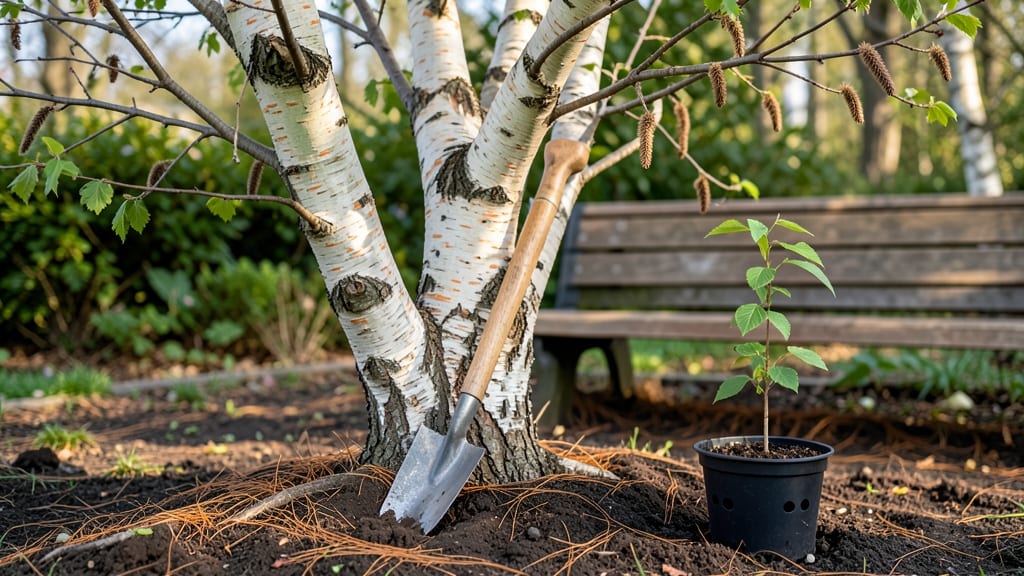
Planting river birch trees 15–25 feet apart is the golden rule for letting their dramatic canopies shine without fighting for space. I learned this the hard way when my first two birches crowded each other, leaving one stunted and the other struggling to breathe.
The key isn’t just the distance—it’s the why: proper spacing lets roots spread freely, reduces disease risk, and lets those peeling bark trunks become the showstopper they’re meant to be.
River birches thrive when given room to stretch their limbs wide, especially in full sun to partial shade. Start with well-draining soil—these trees hate soggy feet—and consider amending heavy clay with compost.
A 20-foot spacing works for most landscapes, but if you’re planting near sidewalks or structures, bump it to 25 feet to prevent root conflicts later. Think of it as giving each tree its own stage.
What you’ll end up with is a grove of birches that grows 15–20 feet tall with a spread to match, their golden-yellow fall foliage lighting up the yard. The trade-off? Fewer trees upfront, but far healthier, longer-lived specimens that outperform crowded plantings by years.
And yes, the peeling bark—those papery layers—will be even more striking when they’re not competing for sunlight.
For colder climates, you can nudge spacing closer to 15 feet since growth slows, but in warmer zones, 20–25 feet keeps them from shading each other out.
The first few years are critical: monitor for signs of stress like yellowing leaves or stunted growth, and adjust watering if the soil stays too dry. Patience here pays off in decades of drama-free beauty.
📚 In This Guide
- What you need
- Instructions
- Tips and common mistakes
- Wrapping up and next steps
What you need
- ● River birch trees: 2–5 bare-root or container-grown saplings (depending on your desired spacing and landscape design). Choose healthy, disease-free specimens with well-developed root systems.
- ● Shovel or spade: A sturdy, sharp-edged shovel (18–24 inches wide) for digging planting holes.
- ● Measuring tape or spacing guide: A 25–50-foot tape measure to ensure accurate spacing (15–25 feet apart for mature trees).
- ● Garden gloves: Heavy-duty gloves to protect your hands from thorns and rough bark.
- ● Native or well-draining soil: River birches thrive in moist, acidic soil (pH 4.5–6.5). Amend heavy clay or sandy soil with compost or peat moss if needed.
- ○ Mulch (optional but recommended): 2–3 inches of organic mulch (e.g., wood chips or pine straw) to retain moisture and suppress weeds.
- ● Watering can or hose with a gentle spray nozzle: For the initial watering and hydration post-planting.
- ● Soil pH test kit: To confirm your soil’s acidity before planting.
- ● Tree stakes and ties: For young saplings in windy areas (ensure they’re biodegradable!).
- ● Fertilizer (low-phosphorus, high-nitrogen): Such as an organic 10-5-5 blend, applied sparingly at planting.
- ● Pruning shears: For trimming any damaged branches before or after planting.
- ● Drip irrigation system: To automate watering during the establishment phase.
Instructions for planting river birch trees with proper spacing
Here’s the proven approach I’ve used to ensure mature river birch trees thrive without crowding or competition.
Determine Spacing Based on Mature Canopy Size
River birch trees typically reach 40-50 feet tall at maturity, with a spread of 30-40 feet for the canopy. For single trees, plant at least 30 feet apart to allow full branch development. If you’re planting multiple trees in a row, increase spacing to 40 feet to prevent future root competition and ensure each tree has room to develop its signature peeling bark without obstruction.
Here’s the thing—river birch trees have shallow, wide-spreading roots. If you plant them too close, their root systems will compete aggressively for water and nutrients, leading to stunted growth or even death in one or both trees. Think of it like giving each tree its own "personal space" in the landscape.
Assess Soil and Site Conditions Before Planting
River birch trees thrive in moist, well-drained soil with full sun to partial shade. Before planting, test the soil pH—these trees prefer slightly acidic to neutral soil (pH 5.0-7.0). If your soil is too alkaline, amend it with sulfur or peat moss to adjust the pH before planting. Avoid planting in areas with compacted or waterlogged soil, as birch trees are sensitive to root rot.
Dig a hole twice as wide as the root ball but no deeper. The top of the root ball should sit 1-2 inches above ground level to prevent water from pooling around the trunk. If your soil drains poorly, consider planting on a slight mound or amending the hole with sand or compost to improve drainage.
Plant Trees at the Correct Depth and Orientation
Place the tree in the hole so the root flare (where the roots spread out from the trunk) is visible above the soil line. This ensures the tree establishes properly and avoids girdling roots as it matures. Backfill the hole with native soil, tamping lightly every 6 inches to remove air pockets. Water deeply to settle the soil around the roots.
If you’re planting multiple trees, arrange them in a straight or slightly staggered line to create a natural, wind-resistant barrier. Avoid planting in tight clusters—even if they look small now, river birch trees grow fast and will quickly outgrow close quarters. Use stakes and ties only if necessary for support, and remove them after 12 months to avoid girdling the trunk.
Mulch and Water for Establishment
Apply a 3-inch layer of mulch (such as wood chips or bark) around the base of the tree, keeping it 6 inches away from the trunk to prevent rot. Mulch helps retain moisture, regulate soil temperature, and suppress weeds—all critical for young birch trees. Water deeply once a week during the first growing season, ensuring the soil stays consistently moist but not soggy.
Real talk: Overwatering is a common mistake with birch trees. They need moisture, but their roots can’t handle standing water. If your area experiences heavy rain, reduce watering to prevent waterlogging. After the first year, trees will establish deeper roots and require less frequent watering.
Monitor Growth and Adjust Spacing if Needed
Check the trees annually for signs of crowding, such as thinning canopies, yellowing leaves, or stunted growth. If two trees are growing too close, consider pruning one back or, if necessary, removing it to give the remaining tree space to thrive. River birch trees are flexible and can recover well from pruning, but they won’t tolerate being forced into a confined space.
Here’s where patience pays off: It can take 5-10 years for river birch trees to reach their full mature size. Resist the urge to plant additional trees in the area until you’re confident the existing ones have enough room. Proper spacing now means fewer headaches—and more stunning bark displays—later.
Tips & tricks for perfect river birch tree spacing
These practical insights will help you avoid common pitfalls and ensure your river birch trees grow into stunning, healthy specimens.
Mature Size Matters: The 30-40 foot spacing recommendation isn't arbitrary—it accounts for how river birch trees develop their signature peeling bark and full canopy. I've seen too many landscapes where trees planted 20 feet apart end up competing for sunlight and nutrients, resulting in weak trunks and poor bark development. Think of this as giving each tree its own "personal space" to grow into its full potential. The 40-foot spacing for multiple trees creates that natural wind-resistant barrier while preventing future root competition.
Root System Reality: River birch trees have shallow, wide-spreading roots that extend far beyond their canopy. When planting, visualize those roots spreading horizontally—at least 20 feet in each direction from the trunk. This explains why planting too close leads to stunted growth. I always mark the planting area with stakes showing the 30-40 foot spacing before digging, to visualize the full root zone each tree will occupy as it matures.
Soil Preparation Secret: The hole should be twice as wide as the root ball but only as deep—this creates space for roots to spread naturally without being constrained. Many people make the mistake of digging too deep, which can suffocate the roots. I've found that amending the hole with a mix of native soil and compost (about 25% compost) gives young trees the best start. This improves drainage while providing essential nutrients during the critical first growing season.
Long-Term Planning: Remember that river birch trees take 5-10 years to reach maturity. The spacing you establish now will determine how well they develop their signature peeling bark and full canopy. I've seen clients plant trees too close in their excitement, only to have to remove one later when it becomes clear they're competing. Plan your landscape with the mature tree in mind—this is where patience pays off in beautiful, healthy specimens that will be the focal point of your yard for decades.
Pro Tips for How Far Apart To Plant River Birch Trees
- These practical insights will help you avoid common pitfalls and ensure your river birch trees grow into stunning, healthy specimens.
- Mature Size Matters: The 30-40 foot spacing recommendation isn't arbitrary—it accounts for how river birch trees develop their signature peeling bark and full canopy.
- Root System Reality: River birch trees have shallow, wide-spreading roots that extend far beyond their canopy.
Frequently asked questions
Got questions about spacing river birch trees? You’re not alone! Here are answers to the most common concerns—so you can plant with confidence and watch your trees thrive.
How close can I plant river birch trees if I have limited space?
River birches need room to breathe, but if space is tight, plant them 15–20 feet apart. Just know they’ll grow wider over time—prune young branches to encourage a more compact shape if needed. For small yards, consider dwarf varieties like Betula nigra 'Crimson Frost'.
Can I plant river birch trees too close together and fix it later?
While you can transplant young birches, it’s stressful for their roots. If planted too close (under 15 feet), they’ll compete for water/nutrients, leading to weak growth or disease. Prevention is key! Plan spacing upfront or thin seedlings early if overcrowding happens.
What’s the best time of year to plant river birch trees for optimal spacing?
Plant in early spring or fall (4–6 weeks before frost) for best root establishment. Avoid summer heat or winter cold, which stress young trees. Pro tip: Mulch heavily (3 inches) to retain moisture while roots spread—critical for future spacing success!
Are there alternatives to river birch if I can’t meet the spacing requirements?
Yes! Try paper birch (Betula papyrifera) or yellow birch (Betula alleghaniensis), which mature smaller (15–25 feet wide). For shade lovers, serviceberry (Amelanchier) or hazelnut (Corylus) are compact, multi-season picks with less aggressive roots.
My river birch leaves are yellowing—did I space them too far apart?
Yellowing leaves usually signal nutrient deficiency or root stress, not spacing. Check soil pH (ideal: 4.5–7.0) and fertilize lightly with acidic compost. If trees are too far apart (over 30 feet), they may struggle in windy areas—consider windbreaks or grouping them in clusters.
Wrapping up and next steps
Planting river birch trees with the right spacing—15 to 25 feet apart—sets the stage for a stunning, low-maintenance landscape that thrives for decades. By accounting for mature growth, soil conditions, and sunlight needs, you’ll avoid overcrowding and ensure each tree reaches its full breathtaking potential. 🌳✨
Now that you’re armed with the spacing secrets, grab your gloves and get ready to transform your outdoor space! Start by marking your planting zones, then reach out to local nurseries for healthy saplings—your future shady retreat awaits.