
Trees
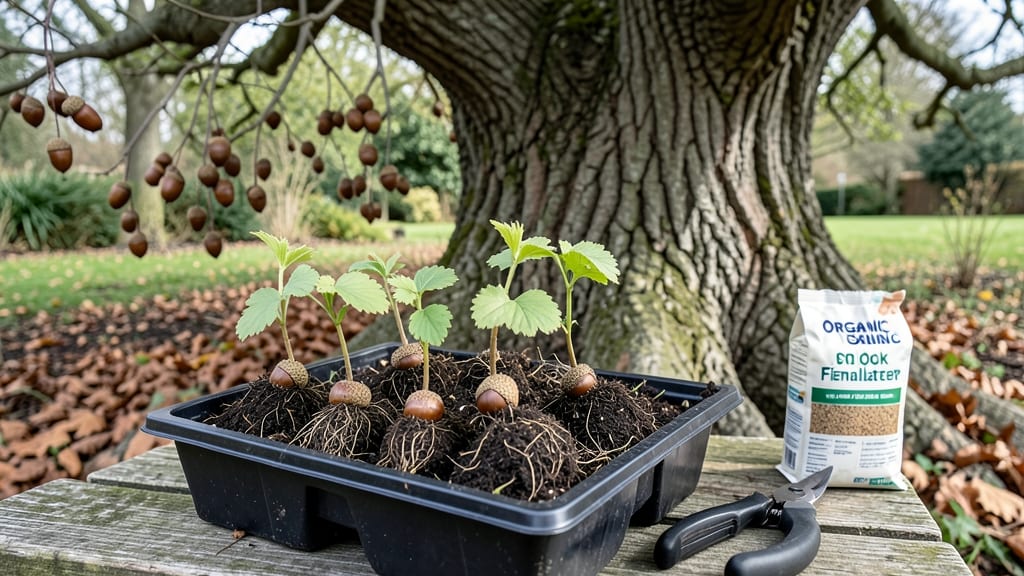
Oak trees start seeds through a process that begins with wind-pollinated flowers and ends with acorns ready to sprout—nature’s way of growing mighty giants from tiny beginnings. 🌳 The journey from blossom to sapling is slower than most plants, but understanding these stages lets you help acorns thrive when you collect and plant them.
First comes pollination, where male catkins release pollen to female flowers hidden in the same tree. This happens in early spring before leaves appear, setting the stage for acorn development over the summer.
By fall, those flowers turn into the acorns we recognize, though not all will be viable—some are empty or infested.
Germination only happens when acorns get cold moisture, a process called stratification. Planting them in fall or storing them in damp sand in the fridge mimics winter conditions, tricking acorns into sprouting by spring.
With patience, you’ll see tiny roots break through the shell within weeks, ready for their first sunlight.
Young oak seedlings need consistent moisture and shade to avoid drying out, but they’re tough once established. The real magic? Giving them space—they’ll grow into shade trees that outlive us all. Whether you’re collecting acorns or watching wild ones sprout, this is how forests begin.
📚 In This Guide
- What you need
- Instructions
- Tips and common mistakes
- Wrapping up and next steps
What you need
- ● Fresh oak acorns: Collect at least 10–20 mature acorns (preferably from local oak trees for better adaptation). Ensure they’re plump, firm, and free of cracks or mold.
- ○ Well-draining potting mix: Use a blend of 50% peat moss or coconut coir, 30% perlite or sand, and 20% compost (sterilized to prevent fungal issues). Optional: Add a handful of sand for extra drainage.
- ● Small pots or seed trays: 3–4 inch diameter pots with drainage holes (or a seed-starting tray with individual cells). Recommended: Biodegradable pots for easy transplanting.
- ● Grow lights or sunny windowsill: Acorns need bright, indirect light (12–14 hours/day). A LED grow lightg works best if natural light is limited.
- ● Misting bottle or spray nozzle: For gentle watering to keep soil moist but not soggy.
- ● Plastic wrap or humidity dome: To maintain 80–90% humidity during germination (critical for the first 4–6 weeks!).
- ● Labeling tags: Waterproof markers or wooden stakes to track planting dates and varieties.
- ● Temperature control: Germination: Keep soil at 65–75°F (18–24°C) (use a seedling heat mat if needed).
- ● Post-germination: Gradually harden off saplings by exposing them to cooler temps (50–60°F / 10–15°C) over 2 weeks.
- ● Outdoor space (for transplanting): Choose a sunny, well-drained location with partial shade for young saplings.
- ● Soil pH: Ideal range is 5.0–7.0 (test with a soil pH kit if unsure).
- ● Patience! 🐢 Oak trees take 1–2 years to sprout from acorns—plan ahead!
- ● Stratification kit: If collecting acorns in late fall/winter, use a refrigerator or cold stratification chamber (32–40°F / 0–4°C) to mimic winter dormancy for 3–4 months.
- ● Fungicide (e.g., neem oil or hydrogen peroxide): 1 tsp hydrogen peroxide per quart of water to prevent damping-off disease.
- ● Epsom salt: 1 tsp per gallon of water monthly to boost magnesium for healthy foliage.
- ● Tree guards: Protect young saplings from deer, rabbits, or rodents with wire mesh or plastic tubes.
How to understand oak tree seed germination: nature’s slow-growth strategy
Oak trees don’t rush—here’s why their seeds take patience (and how to help them along).
🌱 Step 1: Acorn Maturation and Fall Release
Oak trees release acorns in late fall when they’re fully mature—look for hard-shelled nuts that feel heavy in your hand. The cap (cup) should be tight, not loose. I always collect acorns from the ground in November, when squirrels have stopped caching them. Store them in a breathable container (like a mesh bag) in a cool, dry place until spring.
Real talk: If you pick acorns too early, they won’t germinate. Wait until the cap falls off easily—that’s your cue. The seed inside needs to experience winter’s cold to break dormancy, a process called stratification. Without it, the acorn will sit stubbornly dormant for years.
☀️ Step 2: Cold Stratification (Nature’s Trick)
Place acorns in a sealed plastic bag with a little damp peat moss or sand (just enough to keep them moist but not soggy). I like to use a ziplock bag with a few air holes poked in the top. Store the bag in your refrigerator’s crispier drawer for 60-90 days—this mimics winter’s chill.
Check them monthly. If any acorns smell musty or develop mold, remove them immediately. You’ll know stratification is working when tiny roots (called radicles) emerge from the bottom—this usually happens around day 45-60. Don’t rush this step; cold stratification is non-negotiable for oak seeds.
🌿 Step 3: Planting Stratified Acorns
Once stratified, plant acorns ½ inch deep in a well-draining seed-starting mix (oaks hate soggy roots). I use a shallow tray with holes for drainage. Space them 3 inches apart—they’ll need room to grow. Keep the soil lightly moist (not wet) and place the tray in a bright, indirect light spot, like a north-facing window.
Here’s the thing—oak seedlings grow extremely slowly. Don’t expect sprouts for 4-6 weeks, and even then, they’ll be tiny. Patience is key. If you see mold on the soil surface, sprinkle a little cinnamon (it’s antifungal) or reduce watering slightly.
⏰ Step 4: Nurturing Saplings for Long-Term Growth
When seedlings emerge, they’ll have two seed leaves (cotyledons) that look like tiny oak leaves. Keep them in the same bright, indirect light for 6-8 weeks, then gradually introduce them to morning sun to harden them off. I like to move them outside for a few hours daily, increasing time by 1 hour per week.
Oak saplings take 3-5 years to reach transplant size. You’ll know they’re ready when they’re 12-18 inches tall with a sturdy stem. Plant them in full sun with well-draining soil, and brace for slow growth—oaks are built for longevity, not speed.
Tips & tricks for growing oak trees from acorns
Nature’s slow-growth strategy for oak trees requires patience—but these simple tricks will help you succeed where others give up.
Selection Tip: When collecting acorns in Step 1, focus on those with intact, heavy shells. Tap them gently—if they sound solid, they’re ready. Avoid any with cracks or hollow spots, as these won’t germinate. I’ve learned this the hard way after wasting time on questionable acorns that never sprouted. Store them in a paper bag (not plastic) in a cool, dark place until November to mimic natural conditions.
Stratification Secret: During Step 2’s 60-90 day cold treatment, place a damp paper towel in the bag with your acorns to maintain moisture without sogginess. The refrigerator’s crispier drawer is ideal because it maintains consistent 35-40°F temperatures—just like winter. Check monthly for mold, and if you see any, remove those acorns immediately. The radicles (tiny roots) usually appear around day 45-60, signaling it’s time to plant.
Planting Precision: In Step 3, use a pencil to make planting holes exactly ½ inch deep—any deeper and the acorn won’t have enough oxygen. Space them 3 inches apart to prevent overcrowding as they grow. I’ve found that using a seed-starting mix with perlite improves drainage, which oak seedlings desperately need. Place your tray on a saucer to catch excess water and keep it in bright, indirect light to prevent leggy growth.
Long-Term Care Strategy: For Step 4’s gradual sun introduction, I recommend using a timer for your outdoor sessions. Start with just 1 hour per week and increase by 30 minutes every 7 days. Oak saplings are tough but sensitive—sudden sun exposure can scorch their delicate leaves. After 6-8 weeks of indoor growth, you’ll notice the first true leaves forming, signaling they’re ready for more sunlight.
Pro Tips for How Does Oak Trees Start Seed
- Nature’s slow-growth strategy for oak trees requires patience—but these simple tricks will help you succeed where others give up.
- Selection Tip: When collecting acorns in Step 1, focus on those with intact, heavy shells.
- Stratification Secret: During Step 2’s 60-90 day cold treatment, place a damp paper towel in the bag with your acorns to maintain moisture without sogginess.
Frequently asked questions
Got questions about oak tree seeds? You’re not alone! Here are some of the most common queries—and straightforward answers—to help you navigate the journey from acorn to sapling with confidence.
How long does it take for an acorn to sprout?
Acorns typically sprout in 4 to 6 weeks under ideal conditions (moisture, warmth, and well-draining soil). However, some may take 3 to 6 months if conditions aren’t perfect. Patience is key—oak seedlings grow slowly!
Why won’t my acorns sprout?
Acorns may fail to sprout due to dormancy (a natural delay), poor storage (drying out or freezing), or inferior seeds (shriveled or hollow acorns). Try soaking them in water for 24 hours or chilling them in the fridge for 2–4 weeks to break dormancy.
Can I plant acorns directly in the ground?
Yes! Oak acorns thrive when planted 1–2 inches deep in well-draining soil, either in fall (natural planting season) or early spring. For better germination, mix the soil with sand or perlite to prevent rot. Just avoid compacted clay!
How do I tell if an acorn is viable?
Check for a plump, firm shell and a brown, meaty cap (the cup). Tap it—if it sounds hollow, it’s likely empty. A viable acorn should feel heavy for its size and have a smooth, unblemished shell.
What’s the best way to speed up oak seed germination?
Simulate nature’s timing by stratifying acorns: Place them in a damp paper towel, seal in a bag, and refrigerate for 6–8 weeks. Then, plant them in moist soil. This mimics winter’s cold spell, tricking acorns into sprouting faster!
Are there any risks to planting oak trees?
Oak trees can spread aggressively via roots and acorns, potentially crowding other plants. If you’re in a small garden, opt for container-growing or regularly prune saplings. Also, watch for oak wilt disease in some regions—remove infected trees promptly.
Wrapping up and next steps
Watching an oak tree’s journey from acorn to towering sapling is nothing short of magical! 🌱 From acorn germination to seedling growth, each stage relies on nature’s patience—and a little help from the environment.
Now that you know the secrets behind oak seed propagation, why not plant an acorn or two and witness the miracle firsthand?
Ready to take the next step? Start small:
- Collect acorns from a healthy oak tree in fall.
- Strategically plant them in well-draining soil.
- Monitor and nurture—then step back and let nature do its work!