
Trees
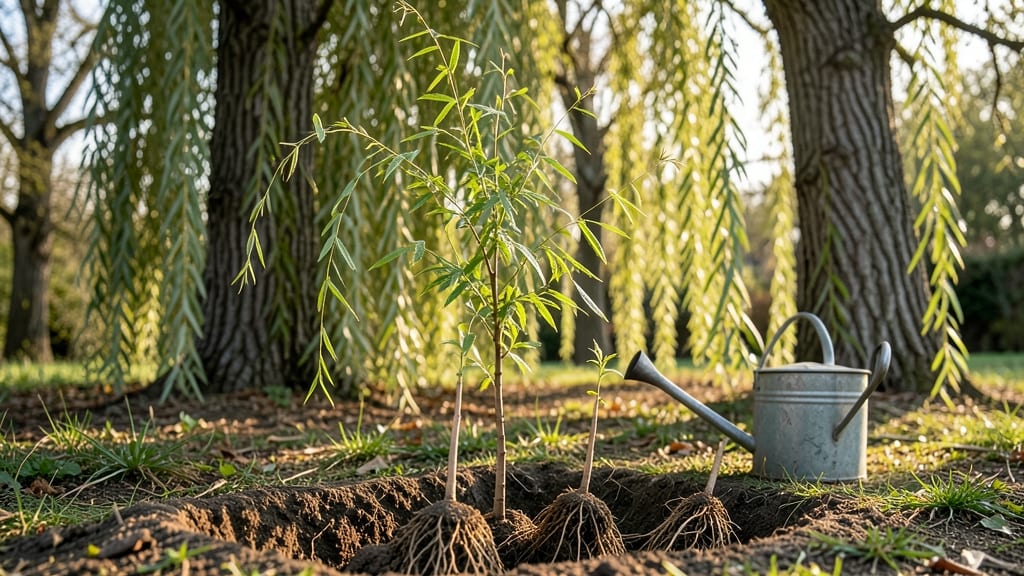
Growing willow trees means instant drama in your landscape—those arching branches and golden catkins arrive faster than you’d expect. 🌿 I planted my first weeping willow last spring, and within months, it cast shade like a 20-year veteran.
The key isn’t just water; it’s knowing which species thrives where and how to tame their aggressive roots before they take over.
Willows love moisture but hate soggy feet—pick a spot near water features or with naturally damp soil. Most varieties need 6-8 feet of space at planting, though some crack willows spread wider.
Start with bare-root saplings in early spring for the best root establishment, and avoid planting near foundations or septic lines unless you’re ready for some root barrier work.
You’ll see 10-12 feet of growth per season with proper care, but pruning is where willows reveal their personalities. Weeping willows need structural cuts to maintain their graceful shape, while crack willows benefit from winter pruning to control their sprawl.
The trade-off? Those golden catkins in early spring are worth the effort—just be ready for the mess they make.
Perfect for wetland gardens, privacy screens, or dramatic focal points—but only if you’re prepared for their fast pace. Let’s get those roots in the ground before they outpace your plans!
📚 In This Guide
- What you need
- Instructions
- Tips and common mistakes
- Wrapping up and next steps
What you need
- ● Willow cuttings: 10–20 hardwood cuttings (12–18 inches long, ½-inch thick), harvested in late winter or early spring.
- ○ Rooting hormone: 1 small bottle (optional but recommended for faster rooting).
- ● Well-draining soil: 50 lbs of a mix of garden soil, sand, and compost (or a pre-mixed potting soil for containers).
- ● Water source: A hose with a gentle spray nozzle or a watering can for consistent moisture.
- ● Containers or nursery bed: For containers: 5–10 gallon pots with drainage holes (1–2 per cutting).
- ● For a nursery bed: A shallow trench (6–12 inches deep) filled with moist soil.
- ● Mulch: Straw or wood chips (2–3 inches thick) to retain moisture and suppress weeds.
- ● Pruning shears: Sharp, clean pair for trimming and shaping.
- ● Fertilizer: Slow-release granular fertilizer (e.g., 10-10-10) to boost early growth.
- ● Shade cloth: Lightweight fabric (30–50% shade) to protect young cuttings from intense sun.
- ● Pest control: Neem oil or insecticidal soap for aphids or other pests.
- ● Stakes or trellis: For training vines (especially for weeping willows).
- ● pH test kit: To ensure soil pH is between 6.0–7.5 (willows thrive in slightly acidic to neutral soil).
Step-by-Step guide for planting fast-growing willow trees
Here's how to get those lush, rapid-growing branches established in your wetland garden.
🌱 Step 1: Choose the Right Willow Variety and Planting Location
Willows thrive where others struggle—wet soils and full sun. For fastest growth, select a variety like Weeping Willow (Salix babylonica) or Pussy Willow (Salix discolor). These handle soggy ground beautifully. Plant along pond edges, streams, or low spots where water pools after rain. The roots will spread aggressively, so give them plenty of space—at least 20 feet from buildings or septic systems.
I always check the soil moisture first by pressing my finger into the ground. If water rises within 2-3 inches of the surface, it's perfect for willows. Too dry? Amend with 3-4 inches of compost to improve water retention. The key is giving them the wet conditions they crave—they'll reward you with 6-12 feet of growth per year.
🪴 Step 2: Plant Willow Cuttings or Bare-Root Saplings
Willows grow fastest from cuttings, not seeds. Take 12-18 inch long branches in late winter or early spring while still dormant. Strip the lower leaves, leaving just a few at the top. Dip the cut end in rooting hormone (optional but helpful) and plant at a 45-degree angle in moist soil. The top of the cutting should sit 1-2 inches above soil level—this prevents rot while allowing roots to form.
For bare-root saplings, soak the roots in lukewarm water for 2-3 hours before planting. Dig a hole twice as wide as the root ball but only as deep. The top of the root ball should sit 1-2 inches above ground level. Backfill with native soil, tapping gently to remove air pockets. Water deeply until moisture seeps 6-8 inches down—willows need consistent dampness to establish quickly.
☀️ Step 3: Provide Full Sun and Water Management
Willows demand 6+ hours of direct sunlight daily for maximum growth. A south or west exposure works best. If planting near water, ensure the soil stays saturated but not submerged—roots need oxygen. Mulch with 3-4 inches of wood chips to retain moisture and suppress weeds, but keep mulch 6 inches away from the trunk to prevent rot.
Here's the thing—willows grow so fast they'll drink down a surprising amount of water. In the first year, water twice weekly if rainfall is light, aiming for 1-2 gallons per plant. You'll know they're happy when new shoots emerge within 4-6 weeks of planting. Watch for yellowing leaves—this usually means the soil is too dry, not too wet (willows tolerate soggy conditions better than drought).
✂️ Step 4: Prune for Shape and Control Spread
Prune willows in late winter or early spring before new growth begins. Remove 1/3 of the oldest branches at the base to encourage vigorous new shoots. For weeping varieties, trim back any branches that grow too close to structures or sidewalks—willows can become invasive if left unchecked. Use clean, sharp pruners and make cuts just above a leaf bud or side branch.
Don't skip this step. I learned the hard way—neglected willows send out aggressive root suckers that can clog drainage systems or overtake lawns. If you notice unwanted shoots popping up 10+ feet from the main plant, dig them out immediately. The faster you prune and monitor, the faster your willow will grow where you want it—not where you don't.
Tips & tricks for fast willow tree growth
Here's what I learned after planting willows in my own wetland garden—and how to avoid my early mistakes.
Timing is Everything: The 12-18 inch cutting length in Step 2 is key for root development. I used longer cuttings at first, but they took longer to establish. Stick to this range for the fastest growth—you'll see roots forming within 4-6 weeks if conditions are right. For bare-root saplings, that 2-3 hour soak in lukewarm water is non-negotiable. It jumpstarts root hydration before planting, giving your willow a head start in wet conditions.
Root Hormone Hack: While rooting hormone is optional, I've found it makes a noticeable difference in root formation. Apply it to the cut end of your willow branches before planting at a 45-degree angle. The hormone helps prevent rot while encouraging root growth in that critical first month. If you skip it, just make sure your soil stays consistently moist during this period—willows are surprisingly resilient once they get going.
Sunlight Strategy: That 6+ hours of direct sunlight in Step 3 isn't just about growth—it's about survival. I planted mine in a spot that got morning sun but afternoon shade, and the growth was noticeably slower. For fastest results, prioritize south or west-facing locations. If your site has partial shade, consider a more sun-tolerant variety like Weeping Willow over Pussy Willow.
Watering Wisdom: The 1-2 gallons per plant twice weekly guideline is perfect for the first year, but here's the thing: willows actually tell you when they're thirsty. Watch for those yellowing leaves—it's usually a sign of dryness, not overwatering. In my experience, willows can handle more water than most trees, but they'll grow fastest when the soil stays consistently damp, not waterlogged. A good rule of thumb is to water when the top 2-3 inches of soil feel dry to the touch.
Pro Tips for Growing Willow Trees
- Here's what I learned after planting willows in my own wetland garden—and how to avoid my early mistakes.
- Timing is Everything: The 12-18 inch cutting length in Step 2 is key for root development.
- Root Hormone Hack: While rooting hormone is optional, I've found it makes a noticeable difference in root formation.
Frequently asked questions
Got questions about growing willow trees? Here are some of the most common ones—plus straightforward answers to help you get started with confidence!
How fast do willow trees grow?
Willows are fast growers! Most varieties can shoot up 3 to 5 feet per year, with some reaching maturity in just 3–5 years. Their rapid growth makes them perfect for quick privacy screens or erosion control—but be prepared for aggressive spreading if not managed!
Do willow trees need a lot of water?
Willow trees thrive in wet soil and are often called "water-loving" trees. Plant them near ponds, streams, or in soggy areas. If your soil drains too quickly, water deeply 2–3 times per week during the first year to encourage strong root growth.
How do I control a willow tree’s spread?
Willows spread via suckers (underground shoots) and can become invasive. To manage growth:
- Prune aggressively in late winter to remove unwanted shoots.
- Install a root barrier (1–2 feet deep) to limit spreading.
- Mulch heavily with wood chips to suppress suckers.
Can I grow a willow tree in a container?
Yes, but it’s tricky! Dwarf varieties like Salix caprea ‘Pendula’ work best in large containers (15+ gallons). Use a moist, well-draining potting mix and replant outdoors every 2–3 years to prevent root-bound stress. Containers won’t stop suckers, so prune often!
Are willow trees good for wildlife?
You bet! Willow trees attract bees, butterflies, and birds with their early spring catkins (flower clusters). They also provide habitat for small mammals and their flexible branches offer nesting spots. Plus, their bark is a food source for beavers and rabbits—just watch your tree if critters are nearby!
Why are my willow leaves turning yellow?
Yellow leaves usually mean overwatering, nutrient deficiency, or fungal issues. Check these fixes:
- Ensure soil is moist but not waterlogged.
- Fertilize in early spring with a balanced 10-10-10 formula.
- If spots appear, treat with neem oil for fungal diseases.
Wrapping up and next steps
Growing willow trees is a rewarding way to add beauty, privacy, and ecological benefits to your wetland garden—whether you're a beginner or a seasoned gardener. 🌿 With the right soil, water access, and a little patience, these fast-growing trees can transform your space into a lush, serene retreat. Now’s the perfect time to plant!
Ready to get started? Pick your favorite variety, gather your supplies, and dig in—your future shady oasis awaits!
- Next step: Check local climate zones and soil conditions to choose the best willow type for your area.
- Bonus tip: Tag a friend who loves gardening and share your progress!