
Container Gardens
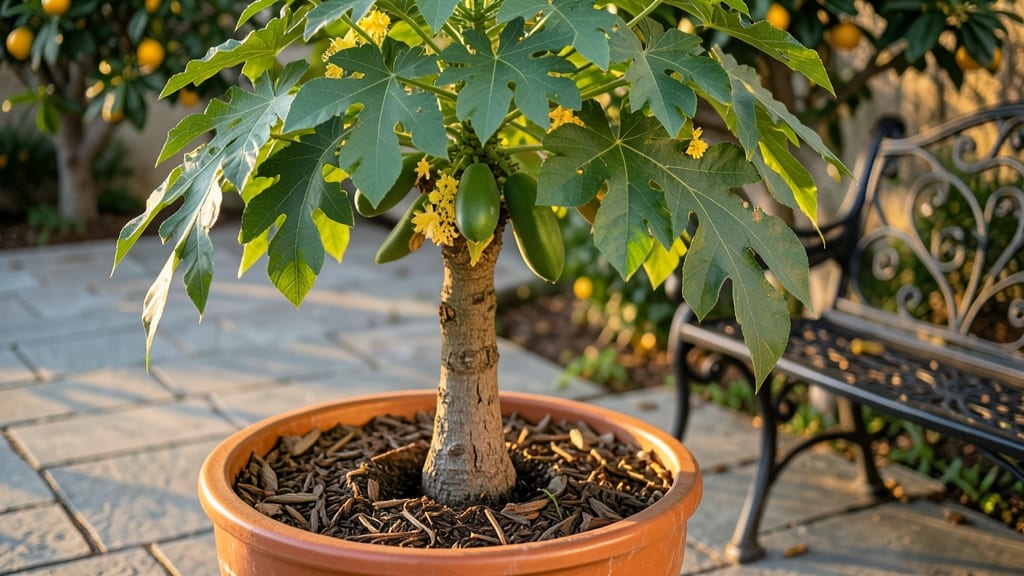
Growing papaya trees in containers gives you tropical fruit without a yard—imagine fresh papayas in pots on your patio or balcony. 🌿 I’ve grown them in 15-gallon containers for years, and the key is mimicking their jungle roots: fast-draining soil, warm spots, and plenty of humidity.
The first challenge is finding the right variety—dwarf or dwarf hybrid types like ‘SunUp’ or ‘Solo’ stay manageable in containers, while full-sized trees need bigger pots and more care.
Start with a container at least 15 gallons (bigger is better for long-term growth), drainage holes, and a lightweight potting mix mixed with perlite or coconut coir. Papayas crave full sun (6+ hours daily) and hate cold—bring pots indoors when temps dip below 55°F.
Water when the top inch of soil dries out, but never let them sit in soggy soil. A slow-release fertilizer in spring keeps them fed without burning roots.
By summer, you’ll see those signature papaya flowers (and maybe even tiny fruit). Prune leggy growth to encourage bushiness, and watch for pests like spider mites—spray with neem oil if you spot them.
The first harvest might take 12-18 months, but once you crack that first fruit, you’ll be hooked. The sweet, musky flavor beats anything you’ll find in stores.
Indoor growers can supplement with grow lights, while outdoor containers need winter protection. Container papayas thrive in zones 10-11, but with care, even cooler climates can enjoy them as houseplants. The trade-off? Smaller fruit—but the convenience of fresh papaya anytime wins me over every time.
📚 In This Guide
- What you need
- Instructions
- Tips and common mistakes
- Wrapping up and next steps
What you need
- ○ Container: At least 15–20 gallons (18–24" deep and wide) with drainage holes. Optional: Self-watering pots for convenience.
- ● Papaya Seeds: 2–3 seeds per container (or a young sapling from a nursery). Choose a dwarf or container-friendly variety like 'SunUp' or 'Solo'.
- ● Potting Mix: Well-draining, organic blend (60% coconut coir, 30% perlite, 10% compost). Avoid heavy garden soil!
- ● Drainage Material: 1–2 inches of gravel, pebbles, or broken pottery for the pot’s bottom layer.
- ● Fertilizer: Balanced liquid fertilizer (10-10-10) or organic options like fish emulsion. Start with a weak solution (½ strength).
- ● Support: Bamboo stakes or trellis (3–4 feet tall) for vining varieties.
- ● Gloves & Pruners: For handling seeds and trimming (sterilize with rubbing alcohol!).
- ● Watering Can: With a spout for gentle watering (papayas hate soggy roots!).
- ● pH Test Kit: Ideal soil pH for papayas: 6.0–7.0. Adjust with lime (to raise pH) or sulfur (to lower) if needed.
- ● Mulch: Straw or wood chips (1–2 inches) to retain moisture and regulate temperature.
- ○ Grow Lights (Optional): LED full-spectrum bulbs if growing indoors (12+ hours of light/day).
- ○ Humidity Dome (Optional): For seedlings to retain moisture in dry climates.
Step-by-step guide to cultivating papaya trees in containers
Here's how I transform small spaces into tropical fruit havens—no backyard needed.
🪴 Step 1: Select the Right Container and Drainage
Papaya trees need room to grow, so choose a container with a minimum 18-inch diameter and depth—larger is better. I use fabric grow bags because they allow excess moisture to evaporate while still providing stability. Make sure your container has multiple drainage holes (at least four) to prevent root rot, which is papaya trees' biggest enemy.
If repurposing a decorative pot, drill holes yourself—¼-inch diameter works perfectly. Place a 2-inch layer of gravel or expanded clay pebbles at the bottom before adding soil. This creates an air pocket that prevents waterlogging while still allowing roots to breathe. Here's the thing—papaya trees hate soggy feet, so drainage isn't optional.
🌱 Step 2: Prepare the Soil and Plant Your Seedling
Use a lightweight, fast-draining potting mix specifically formulated for tropical plants. I blend 50% coconut coir, 30% perlite, and 20% worm castings for the perfect balance of moisture retention and aeration. Fill your container ¾ full, leaving space for root growth and watering.
Gently remove your papaya seedling from its nursery pot and tease the roots apart if they're circling. Place it in the center of the container, ensuring the root flare (where roots meet the stem) sits ½ inch below the soil line. This prevents stem rot while allowing roots to expand downward. After planting, water deeply until it drains freely from the bottom holes.
☀️ Step 3: Position for Maximum Sun and Warmth
Papaya trees are sun worshippers—they need full sun exposure (6-8 hours daily) to thrive. Place your container in the sunniest spot available, ideally near a south or west-facing window if indoors. If growing outside in cooler climates, move the container indoors during nights below 55°F—papayas are tropical and won't tolerate chilly temperatures.
Here's where it gets fun—watch the leaves. Healthy papaya trees develop deep green, glossy foliage with prominent veins. If leaves start yellowing or curling, it's a sign of either underwatering or too much direct afternoon sun (which burns tender leaves). I like to acclimate new plants gradually by moving them from morning sun to full sun over 5-7 days—this prevents shock.
💧 Step 4: Water and Fertilize for Optimal Growth
Water your papaya tree when the top 2 inches of soil feel dry to the touch. I use a moisture meter for precision, but you can also stick your finger in the soil—it should feel slightly damp but not soggy. Papayas need consistent moisture, especially during fruiting, but they despise waterlogged roots. Always water at the base of the plant, avoiding the leaves to prevent fungal diseases.
Feed your tree every 4-6 weeks with a balanced, water-soluble fertilizer (10-10-10 works well). During fruiting season, switch to a high-potassium fertilizer (like 5-10-15) to sweeten the fruit. I mix fertilizer with water and apply it directly to the soil, making sure to rinse the leaves afterward to prevent salt buildup. Real talk: Over-fertilizing burns roots, so always follow the package instructions.
✂️ Step 5: Prune and Support for Fruit Production
Papaya trees grow fast, and pruning encourages stronger branches and more fruit. Once your tree reaches 3-4 feet tall, trim back the topmost set of leaves to encourage lateral branching. This creates a bushier plant with more sites for fruit to develop. I also remove any dead, yellowing, or crossing branches to improve airflow and reduce disease risk.
As your papaya tree grows, it may need staking or trellising to support its weight, especially when fruit starts forming. Use soft ties (like old T-shirts or horticultural tape) to secure the main stem to a 5-foot bamboo stake. Avoid wire or anything that can cut into the bark—papaya trees are sensitive to damage. Watch for flower buds (they look like tiny yellow stars) and protect them from strong winds, which can cause them to drop.
Tips & tricks for perfect container-grown papaya trees
Here's what nobody tells you about turning tiny pots into tropical fruit producers—these are the game-changers I wish I knew sooner.
Container Size Matters: That 18-inch minimum diameter isn't just a suggestion—it's non-negotiable for mature trees. I've seen papayas struggle in 15-inch pots, especially when fruiting. If you're growing multiple trees, use containers with at least 24-inch diameters to prevent root competition. For extra stability, place heavy containers on casters so you can easily move them to follow the sun's arc throughout the day.
Soil Mix Secrets: The 50-30-20 coconut coir/perlite/worm castings blend is perfect, but here's the pro move: sterilize your soil first. Microwave a small batch in a microwave-safe container for 2 minutes to kill any fungal spores or pests. This prevents diseases from sabotaging your tropical harvest before it even starts. I also add a handful of crushed eggshells to the mix—the calcium helps prevent blossom-end rot in developing fruits.
Sunlight Strategy: Those 6-8 hours of daily sun need to be quality sunlight, not just quantity. If your papaya leaves start looking pale or stretched (a condition called etiolation), it's getting too little light. For indoor growers, supplement with a full-spectrum LED grow light for 12 hours daily. And here's the thing about those 5-7 days of gradual acclimation: start with just 2 hours of afternoon sun on day one, then add 1-2 hours each subsequent day. This prevents the shock that causes leaves to crisp and drop.
Fertilizer Timing: The 4-6 week feeding schedule works, but switch to every 3 weeks during fruiting season—your tree will thank you with bigger, sweeter papayas. I use a liquid seaweed extract (like Maxicrop) mixed with my 10-10-10 fertilizer during early growth stages. The seaweed boosts root development and stress resistance. And when you see those tiny yellow flower buds appear, immediately switch to your high-potassium fertilizer. This is when your tree needs that extra phosphorus and potassium to develop strong fruit stems and sweeten the fruit.
Pro Tips for Growing Papaya Trees In Containers
- Here's what nobody tells you about turning tiny pots into tropical fruit producers—these are the game-changers I wish I knew sooner.
- Container Size Matters: That 18-inch minimum diameter isn't just a suggestion—it's non-negotiable for mature trees.
- Soil Mix Secrets: The 50-30-20 coconut coir/perlite/worm castings blend is perfect, but here's the pro move: sterilize your soil first.
Frequently asked questions
Got questions about growing papayas in containers? You’re not alone—this tropical fruit can be tricky for beginners! Here are answers to the most common queries to help you grow happy, productive papaya trees in small spaces.
How big should my container be for a papaya tree?
Papaya trees need at least 15–20 gallons of space (a 20–24" diameter pot works well). Since their roots grow aggressively, opt for a deep container (12" minimum depth) with drainage holes. If you’re growing dwarf varieties like ‘SunUp’ or ‘Tainong No. 1,’ slightly smaller pots (10–12 gallons) may suffice—but expect pruning as the tree matures.
How long does it take for a papaya tree to fruit in a container?
With ideal care, papayas can produce fruit in 12–18 months from seed. However, container-grown trees often take longer (18–24 months) due to limited root space and stress. Choose grafted or nursery-grown plants (not seeds) to cut this time in half—some varieties like ‘Red Maradol’ may fruit in as little as 10–12 months!
Can I grow a papaya tree indoors year-round?
Papayas thrive outdoors in USDA Zones 10–11, but you can grow them indoors with bright, indirect light (6+ hours daily) and a grow light in winter. Keep temps between 65–85°F and maintain high humidity (use a pebble tray or humidifier). However, flowering and fruiting are much harder indoors—outdoor containers (even in pots on a sunny patio) yield far better results.
Why aren’t my papaya tree leaves turning yellow?
Yellow leaves often signal overwatering, nutrient deficiency, or pests. Check these fixes:
- Watering: Let the top 2" of soil dry out between waterings—papayas hate soggy roots.
- Nutrients: Feed with a balanced fertilizer (10-10-10) every 4–6 weeks, or use a citrus/pomegranate mix high in potassium.
- Pests: Inspect for aphids, spider mites, or whiteflies (spray with neem oil if needed).
- Container size: Root-bound trees may yellow—repot if roots circle the pot.
Can I grow more than one papaya tree in a single container?
While possible, it’s not recommended—papayas need plenty of space to grow and fruit. If you’re set on sharing a container, plant one tree per 5+ gallons and prune aggressively to prevent competition. For best results, stick to one tree per pot and enjoy faster growth and higher yields!
Wrapping up and next steps
Growing papaya trees in containers is a rewarding way to enjoy tropical flavors—even in limited spaces! With the right container, soil, sunlight, and care, you’ll soon be harvesting sweet, vibrant fruit. Don’t let small spaces hold you back; start small, stay consistent, and watch your papaya thrive!
Ready to take the next step? Pick your favorite variety, grab a pot, and get planting! 🌱✨