
Container Gardens
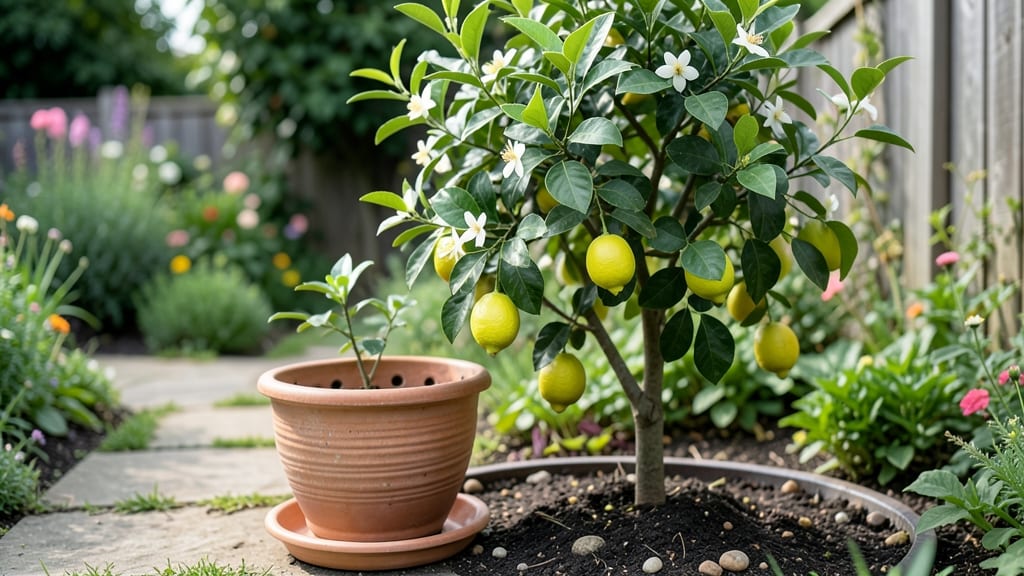
Growing a lemon tree inside means zesty harvests even when winter freezes the outdoors. 🌱 I’ve watched my Meyer lemon tree produce fruit indoors for three years now—no greenhouse needed—just a sunny window and a few smart adjustments.
The key isn’t luck; it’s matching the tree’s Mediterranean roots to your indoor environment.
Start with a dwarf variety like Meyer or Eureka, which thrive in containers and adapt well to indoor light. You’ll need a 10-15 gallon pot with drainage, well-draining soil, and a south- or west-facing window for at least 6-8 hours of sunlight daily.
If natural light is weak, a grow light on a timer becomes your secret weapon—just 12-14 hours of artificial light keeps the tree happy.
Water when the top inch of soil feels dry, but avoid soggy roots—lemon trees hate wet feet. Fertilize monthly in spring and summer with citrus-specific food, and prune in early spring to shape the tree and encourage fruiting.
Within a year, you’ll see glossy leaves, delicate blossoms, and—with patience—tiny, tart lemons that taste sweeter than anything from the store.
This method works for apartments, kitchens, or sunrooms—just tweak light and humidity as seasons change. The first year is about establishing the tree; by year two, you’ll harvest enough for lemonade or marmalade. Ready to grow your own sunshine?
📚 In This Guide
- What you need
- Instructions
- Tips and common mistakes
- Wrapping up and next steps
What you need
- ● Lemon tree seedling or young plant: Age: 1–3 years old (hardier than seeds, which take years to bear fruit).
- ● Size: 12–18 inches tall (easier to manage indoors).
- ● Pro tip: Look for Meyer lemon varieties—they’re cold-hardy and sweeter! 🌡️
- ● Container: Size: 12–18 inches in diameter (with drainage holes).
- ● Material: Terracotta (breathable) or plastic (retains moisture).
- ○ Optional: Self-watering pots for convenience. 💧
- ● Well-draining potting mix: Type: Cactus/succulent mix (60%) + perlite or pumice (30%) + compost (10%).
- ● Avoid heavy garden soil (root rot risk!). ❌
- ● Grow lights (if natural light is Type: Full-spectrum LED (10,000–15,000 lux).
- ● Wattage: 20–40W (adjustable height for 8–12 hours/day).
- ● Fertilizer: Type: Citrus-specific fertilizer (balanced NPK, e.g., 6-6-6).
- ● Schedule: Every 4–6 weeks during growing season (spring–fall).
- ● Pruning tools: Sterilized bypass pruners (for shaping and removing dead branches).
- ● Rubbing alcohol (to clean tools between cuts).
- ● Humidity tray: A pebble tray with water to boost moisture (lemon trees love 50–60% humidity!). 🌧️
- ● Citrus food: Organic supplements like Epsom salt (magnesulfate) for yellowing leaves.
- ● Support stake: For young trees (if they grow top-heavy).
- ● Spray bottle: For misting leaves (mimics outdoor dew).
- ● Pollination kit: A small brush to hand-pollinate flowers (if indoor bees aren’t visiting!). 🐝
Step-by-step guide to cultivating a thriving indoor lemon tree
Here's how to coax a citrus tree to life indoors with sunlight tricks that work.
🪴 Step 1: Select the Perfect Container and Soil Mix
Start with a 10-12 inch diameter pot—large enough to accommodate roots but not so big that soil stays soggy. I use a container with drainage holes to prevent root rot, which is a silent killer of indoor citrus. The well-draining potting mix should combine 60% peat moss or coconut coir, 30% perlite or coarse sand, and 10% compost for nutrients. This blend mimics the airy, mineral-rich soil of Mediterranean citrus groves.
Fill the pot to about 2 inches from the rim, leaving room for the root ball. Tap the container gently on the table to settle the mix without compacting it. The goal is a loose, fluffy medium that water can penetrate evenly. Pre-moisten the soil with warm water until it feels evenly damp but not dripping—you want it to hold moisture without becoming waterlogged.
☀️ Step 2: Position for Maximum Sunlight and Warmth
Lemon trees crave 6-8 hours of direct sunlight daily, but most indoor spaces can’t deliver that naturally. Place your tree near the south-facing window—the brightest spot in most homes. If your window doesn’t provide enough light, supplement with a full-spectrum LED grow light positioned 6-12 inches above the tree. Keep it on for 12-14 hours daily to mimic long summer days.
Here’s the thing—lemon trees also need warmth. Keep the soil temperature between 65-75°F and the air around 60-70°F. If your home runs cooler, especially at night, avoid placing the tree near drafty windows or air conditioning vents. You’ll see leggy growth or yellowing leaves if the light or warmth is off—these are your early warning signs to adjust.
💧 Step 3: Water Deeply and Establish a Routine
Water your lemon tree only when the top 1-2 inches of soil feel dry to the touch. Stick your finger in the soil—if it’s damp, wait another day. Overwatering is the fastest way to kill an indoor citrus tree. When you water, do it deeply, so moisture reaches the root zone. Pour water slowly until it drains freely from the bottom holes, then empty the saucer to prevent the roots from sitting in water.
I like to water in the morning so the tree has the whole day to absorb moisture before evening. During winter, when growth slows, you’ll water less frequently—sometimes every 10-14 days. Watch the leaves: slightly wrinkled edges mean it’s thirsty, while yellowing or dropping leaves often signals overwatering or poor drainage.
✂️ Step 4: Prune and Fertilize for Healthy Growth
Prune your lemon tree once in early spring to shape it and encourage branching. Use clean, sharp pruning shears to cut back leggy growth or crowded branches by one-third. This isn’t just about aesthetics—pruning improves airflow, which reduces the risk of fungal diseases. Always cut just above a leaf node or outward-facing bud to promote new growth.
Feed your tree with a balanced, water-soluble fertilizer (like a 10-10-10 or 20-20-20 mix) every 4-6 weeks during the growing season (spring and summer). Dilute the fertilizer to half-strength to avoid burning the roots. In fall and winter, cut back to once every 8-10 weeks—citrus trees rest during cooler months, and over-fertilizing can harm them.
🌿 Step 5: Monitor and Troubleshoot Common Issues
Keep an eye out for pests like spider mites or scale insects, which love the dry indoor air. Wipe leaves with a neem oil solution (1 tsp neem oil + 1 quart water) weekly as a preventative measure. If you spot pests, isolate the tree and treat it immediately—these critters spread fast and can weaken your tree.
Yellow leaves? It’s usually a sign of overwatering or nutrient deficiency. Brown tips? That’s often low humidity or fluoride buildup from tap water. Switch to filtered or rainwater if you notice this. Real talk: Even with perfect care, your lemon tree might drop a few leaves—this is normal, especially when adjusting to new conditions or seasonal changes.
Tips & tricks for perfect indoor lemon tree growth
Here's what nobody tells you about keeping your citrus tree thriving indoors—these are the details that separate a struggling plant from a fruit-bearing beauty.
Lighting Strategy: The 6-8 hours of direct sunlight your lemon tree needs can be tricky indoors. If your south-facing window isn't enough, place a mirror opposite the window to reflect and amplify light during the day. For grow lights, position the full-spectrum LED 6-12 inches above the tree and keep it on for 12-14 hours daily—this mimics Mediterranean daylight perfectly. I've found that rotating the tree quarter-turn weekly prevents it from leaning toward the light source, ensuring even growth all around.
Soil Temperature Secret: Maintaining that 65-75°F soil temperature range is crucial, but most people overlook how quickly indoor temps drop at night. Place your pot on a ceramic saucer (not metal) to help regulate temperature fluctuations. If your home runs cooler, consider using a heating mat set to 70°F during winter months—just be sure it has a thermostat to prevent overheating. The roots will thank you with vigorous growth.
Watering Wisdom: The "top 1-2 inches dry" rule works, but here's the thing—citrus trees hate soggy roots. I've learned the hard way that even with drainage holes, water can pool in saucers. After watering, I always tilt the pot to drain any excess from the saucer completely. For extra insurance, I use a terracotta pot—the porous material helps wick away excess moisture. And if your tap water has high fluoride content, let it sit out overnight before watering to reduce fluoride levels.
Pruning Precision: When pruning those leggy branches in early spring, don't just cut willy-nilly. Look for outward-facing buds just above where you're cutting—these will grow into new branches. I like to make my cuts at a 45-degree angle just above the bud to prevent water from pooling on the cut. This simple technique dramatically improves airflow and reduces disease risk. And remember, you're not just shaping the tree—you're encouraging it to produce more fruit!
Pro Tips for Growing A Lemon Tree Inside
- Here's what nobody tells you about keeping your citrus tree thriving indoors—these are the details that separate a struggling plant from a fruit-bearing beauty.
- Lighting Strategy: The 6-8 hours of direct sunlight your lemon tree needs can be tricky indoors.
- Soil Temperature Secret: Maintaining that 65-75°F soil temperature range is crucial, but most people overlook how quickly indoor temps drop at night.
Frequently asked questions
Got questions about growing a lemon tree indoors? Here are some of the most common ones—and their answers—to help you get started on your citrus adventure!
Can I grow a lemon tree indoors without sunlight?
Indoor lemon trees need bright light—at least 6-8 hours of sunlight daily. If natural light is limited, supplement with a grow light (LED or fluorescent) 12-16 inches away. South-facing windows are ideal, but east or west works too. Without enough light, your tree will grow leggy and produce few (if any) lemons.
How long does it take for an indoor lemon tree to bear fruit?
Patience is key! Dwarf varieties (like Meyer lemons) can take 3-5 years to bear fruit indoors, while standard trees may wait 5-10 years. Factors like light, water, and pollination (hand-pollinate with a small brush!) speed up the process. Keep your tree healthy, and you’ll taste homegrown lemons sooner than you think!
Why are my indoor lemon tree’s leaves turning yellow?
Yellow leaves usually signal overwatering or nutrient deficiency. Check the soil—it should be slightly moist but not soggy. If the roots smell rotten, trim affected areas and repot in fresh, well-draining soil. Yellowing can also mean lack of sunlight or fluoride buildup (from tap water). Switch to filtered or distilled water and adjust care accordingly.
Are Meyer lemon trees better for indoor growing?
Meyer lemon trees are the top choice for indoors because they’re dwarf-sized, cold-hardy, and produce sweeter, larger fruit than standard lemons. They adapt well to containers and thrive in lower light. Plus, their compact growth makes them perfect for kitchens or sunrooms. Just give them love, and they’ll reward you with lemons year-round!
What’s the best temperature for an indoor lemon tree?
Lemon trees love warmth but hate drafts. Keep them in 65–75°F (18–24°C) during the day and 55–60°F (13–16°C) at night. Avoid cold windowsills or AC vents, which can shock the tree. In winter, move it away from chilly glass and consider a space heater (safely!) if your home runs too cool. Humidity helps too—mist leaves or use a pebble tray!
Wrapping up and next steps
Growing a lemon tree indoors isn’t just a rewarding hobby—it’s a taste of sunshine you can enjoy year-round. With the right container, light tricks, and a little patience, you’ll soon be harvesting sweet, homegrown lemons that brighten up both your kitchen and your mood! 🌱✨
Ready to take the next step? Start by monitoring your tree’s progress—adjust light exposure, prune as needed, and watch it thrive. Before you know it, you’ll be sharing jars of homemade lemon marmalade or fresh lemonade with friends. Your indoor citrus adventure starts now!