
Pruning
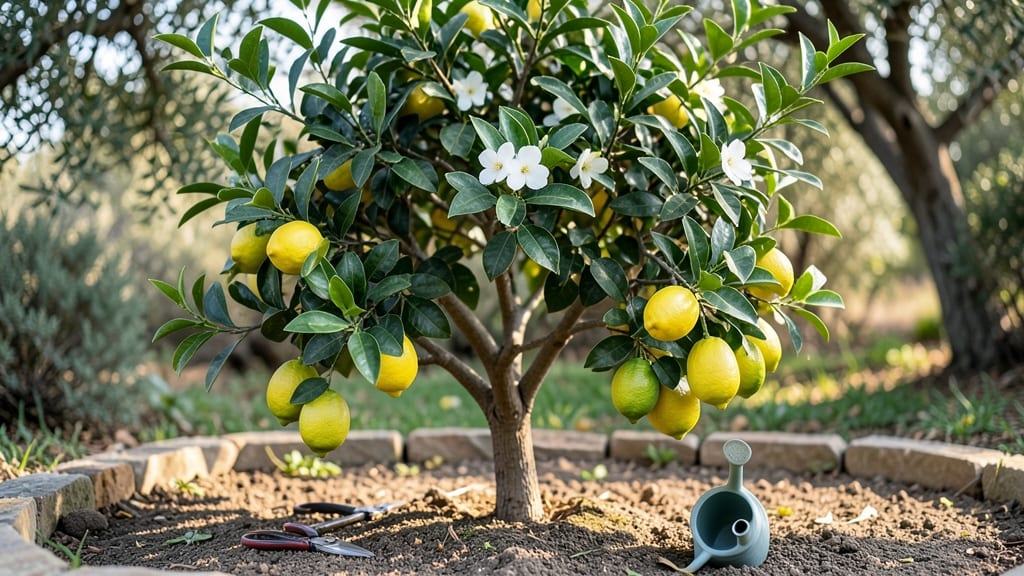
Pruning your citrus limon tree isn't just about shaping branches—it’s about saving it from Pacific Northwest winters. 🌿 I’ve learned the hard way that skipping this step means frost-damaged limbs and fewer lemons, even with frost-resistant varieties.
The right cuts keep your tree healthy, productive, and standing tall through cold snaps.
You’ll need sharp pruning shears, a clean workspace, and a clear plan for removing dead wood while encouraging new growth. Focus on thinning crowded branches first—this improves airflow and sunlight penetration, both critical for frost resilience.
A little strategic pruning now means a stronger tree by spring, ready to burst with glossy leaves and sweet fruit.
What you’ll end up with is a lemon tree that looks like it belongs in a Mediterranean grove, even in our damp climate. The canopy stays open, reducing frost pockets where cold air lingers, and the structure supports heavier harvests.
Plus, fewer branches mean easier access to pick those bright, tangy lemons without a ladder.
Whether you’re growing in a container on your patio or planted in the ground, the same principles apply. Just adjust timing—wait until after the last frost in spring to avoid late-season cold damage. Here’s how to get it right the first time.
📚 In This Guide
- What you need
- Instructions
- Tips and common mistakes
- Wrapping up and next steps
What you need
- ● Pruning shears: Bypass pruners (sharp, sterilized) for clean cuts on small branches (e.g., blank">Fiskars 8-inch).
- ● Loppers: For thicker branches (1–2 inches), like blank">Felco F-2 (bypass style).
- ● Hand saw: Pruning saw with 10–12 teeth per inch (e.g., blank">Gebhardt Pruning Saw) for stubborn branches.
- ● Disinfectant: 70% isopropyl alcohol or bleach solution (1 part bleach to 9 parts water) to sterilize tools between cuts.
- ● Heavy-duty gloves: Cut-resistant (e.g., blank">TEKWORX) to protect from thorns and sap.
- ● Work boots: Slip-resistant, ankle-supporting (e.g., blank">Dr. Scholl’s) for stability.
- ○ 5-gallon bucket: For collecting pruned branches (optional: line with a trash bag for easy disposal).
- ○ Pruning sealant: blank">Tree wound pruning paste (optional, for large cuts > ½ inch).
- ● Frost cloth: 30–50 lb. test (e.g., blank">Agribon) to wrap young trees or vulnerable branches during late frosts.
- ○ String lights: LED grow lights (e.g., blank">GE 90024) for extending daylight in winter (optional, for indoor/container trees).
- ● Mulch: 4–6 inches of wood chips or straw to insulate roots (apply after pruning).
- ● Timing: Prune after the last frost (typically late spring in PNW) to avoid frost damage to fresh cuts.
- ● Safety first: Wear safety glasses—citrus sap can irritate eyes!
- ● Tool sharpening: Hone blades with a whetstone before starting for clean cuts.
Step-by-step guide to pruning your Pacific Northwest citrus limon tree
Here's how to shape your lemon tree for resilience against PNW winters while keeping it productive.
✂️ Step 1: Time Your Pruning for Frost Readiness
Prune your citrus limon tree late winter to early spring, just as new growth begins but before the last frost date in your zone. In the Pacific Northwest, this typically means February through March—waiting too long risks exposing tender new shoots to cold. I always check the local frost forecast first because a sudden late freeze can undo all your work.
Use sharp, clean pruning shears to make 45-degree cuts just above a leaf node or outward-facing bud. This angle helps water run off and prevents rot. Avoid cutting into old wood—citrus trees heal slowly, and large wounds attract pests. If you must remove thick branches, sterilize your tools with rubbing alcohol between cuts to prevent disease spread.
🌿 Step 2: Remove Dead, Diseased, or Crossing Branches
Start by eliminating any dead, broken, or diseased branches—these are easy to spot as they’re brown, brittle, or lack leaves. Cut them back to the main trunk or a healthy lateral branch. Next, look for crossing or rubbing branches—these create weak points where bark gets damaged and infections set in. Remove the smaller of the two branches to maintain the tree’s natural shape.
Pay special attention to suckers—those vigorous shoots sprouting from the base or along the trunk. While they may seem harmless, they drain energy from your fruit-bearing branches. Snip them off at the base with a clean cut. Here’s the thing—citrus trees are forgiving, but the more you prune now, the stronger the tree’s structure will be when frost rolls in.
☀️ Step 3: Thin the Canopy for Airflow and Sunlight
Citrus limon trees need good airflow to dry leaves quickly after rain, which reduces fungal diseases like citrus greening. Step back and look at your tree—aim to create an open, vase-like shape with a central leader. Remove upward-growing branches that block sunlight from reaching the interior. You’ll know you’ve done enough when you can see light filtering through the canopy on a sunny day.
Focus on thinning rather than topping—never cut back more than one-third of the tree’s height in a single pruning session. Topping (cutting the top flat) stresses the tree and leads to weak, water-sprout growth. Instead, make selective cuts to encourage a balanced, frost-resistant framework. If your tree has leggy growth, prune just above a leaf node to redirect energy to stronger, bushier branches.
⏰ Step 4: Prepare for Winter with a Final Check
After pruning, give your citrus limon tree a light application of copper fungicide if your region has a history of fungal issues. This extra step pays off during wet PNW winters. Water deeply one last time before dormancy to help the roots establish before cold sets in. Mulch the base with 2-3 inches of organic mulch (like wood chips) to insulate roots—just keep it 6 inches away from the trunk to prevent rot.
Here’s where it gets smart: If you’re in a Zone 8 or colder, consider wrapping the trunk with burlap or frost cloth during the coldest months. While citrus limon trees are more frost-tolerant than other citrus varieties, young trees or sudden dips below 20°F can still cause damage. A little extra protection now means fewer surprises come spring.
Tips & tricks for perfect citrus limon tree pruning
Here's what I learned after years of shaping my own lemon trees to survive PNW winters—these tricks make all the difference.
Timing is Everything: Those February-March windows are critical because new growth after pruning is most vulnerable to frost. I set calendar reminders for my local frost date and prune exactly 2 weeks before it. If you miss this window, you risk encouraging tender shoots that won't survive our unpredictable PNW freezes. The goal is to finish pruning just as buds begin swelling—this gives your tree time to harden off before winter.
Cutting Technique Matters: That 45-degree angle isn't just for looks—it creates a natural water-shedding surface that prevents rot. I always test my pruners on a scrap branch first to ensure they make clean cuts. For thick branches, make two cuts: first undercut about 1/3 of the way through, then top-cut just outside the branch collar. This prevents tearing and gives you more control over the cut's placement.
Canopy Shape Secrets: When thinning for airflow, focus on removing branches that grow straight up—they create shade pockets where humidity lingers. I use a flashlight to check for hidden crossing branches during bright days. Pro tip: Step back every 10 minutes and look at your tree from different angles. You'll spot problem areas you missed when standing close.
Winter Protection Upgrade: For Zone 8 growers, I've found that wrapping the trunk with burlap plus adding a layer of straw mulch around the base adds an extra 5-10°F of protection. The straw acts like a blanket while keeping moisture away from the trunk. Just remember to remove it in early spring before new growth starts—trapped moisture can cause rot when temperatures rise.
Pro Tips for Citrus Limon Tree
- Here's what I learned after years of shaping my own lemon trees to survive PNW winters—these tricks make all the difference.
- Timing is Everything: Those February-March windows are critical because new growth after pruning is most vulnerable to frost.
- Cutting Technique Matters: That 45-degree angle isn't just for looks—it creates a natural water-shedding surface that prevents rot.
Frequently asked questions
Got questions about pruning your citrus limon tree in the Pacific Northwest? You’re not alone! Here are answers to the most common concerns—from frost prep to long-term care.
How cold can a citrus limon tree tolerate before frost damage occurs?
A mature Citrus limon tree can handle brief dips to 25–28°F without severe damage, but prolonged exposure below 20°F risks leaf burn or dieback. In the PNW, protect young trees (under 3 years) with burlap wraps or row covers. Mature trees may recover, but prune dead branches post-frost to encourage new growth. Pro tip: Avoid pruning before winter—wait until spring to assess damage.
When is the best time to prune a lemon tree in the PNW?
Prune late winter to early spring (February–March) when the tree is dormant but before new growth starts. This timing minimizes frost risk and lets you remove dead wood from winter damage. Avoid heavy pruning in summer—it stresses the tree and reduces fruit yield. Exception: Light shaping or frost cleanup can happen anytime.
How much can I prune a citrus limon tree without harming it?
Never remove more than 25–30% of the canopy in one session. Over-pruning weakens the tree, reducing its ability to fight frost or produce fruit. Focus on:
- Dead/diseased branches (cut to the collateral bud)
- Crossing or rubbing limbs (to improve airflow)
- Water sprouts (vigorous vertical shoots)
Will pruning my lemon tree reduce fruit production?
Pruning can temporarily lower yields if done excessively, but strategic cuts improve long-term fruit quality. Open the canopy to:
- Increase sunlight penetration (better ripening)
- Reduce humidity (fewer fungal diseases)
- Encourage larger, sweeter lemons
How do I protect a citrus limon tree from PNW rain and wind?
PNW’s wet, windy climate stresses lemon trees. Mitigate damage by:
- Staking young trees (use soft ties to avoid bark damage)
- Elevating the root ball (1–2 feet) to prevent waterlogging
- Pruning to a rounded shape (reduces wind sail effect)
- Mulching heavily (3–4 inches of wood chips) to insulate roots
Can I grow a frost-resistant citrus limon tree from a cutting?
While possible, lemon tree cuttings are notoriously difficult to root due to their thick bark. For PNW growers, better options include:
- Bought grafted trees (hardier rootstock like Poncirus trifoliata)
- Microclimate protection (greenhouses or containers for winter)
- Layering (a semi-successful method for semi-hardy varieties)
Wrapping up and next steps
Pruning your citrus limon tree in the Pacific Northwest doesn’t have to be intimidating—with the right tools, timing, and techniques, you can cultivate a thriving, frost-resistant canopy that rewards you with abundant lemons for years to come. 🌿 Whether you’re a seasoned gardener or a curious beginner, mastering the art of pruning ensures your tree stays healthy, productive, and resilient against winter chills.
Ready to take the next step? Grab your pruners, mark your calendar for late winter or early spring, and start shaping your citrus limon tree with confidence! Your future lemon harvests will thank you. 🍋✨