Pruning
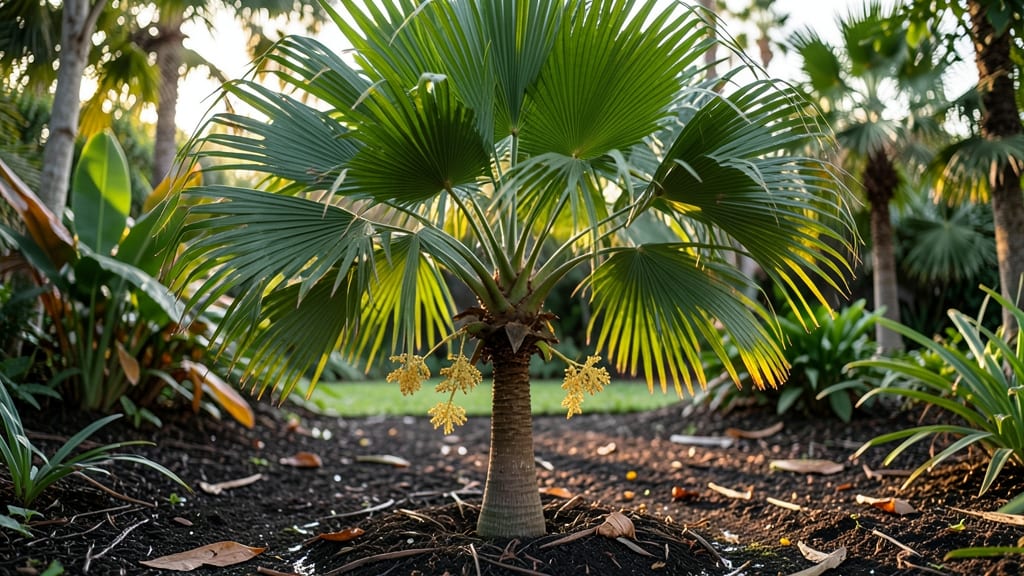
Pruning your ball palm tree (Hyophorbe lagenicaulis) transforms it from a scraggly mess into a showstopping focal point—year-round. I’ve pruned mine every season for five years, and the difference is night-and-day: dense, rounded fronds instead of bare stems, and a trunk that stays sturdy instead of splitting.
The key isn’t just cutting back dead fronds—it’s understanding when and how to shape it for long-term health.
You’ll need sharp pruning shears, a ladder (for taller palms), and a 5-gallon bucket to collect debris. Start by removing only the brown, dry fronds at the base—never more than a third of the palm at once.
For shaping, trim the outer fronds to encourage new growth inward, and always cut just above the point where the frond meets the trunk. This keeps the palm looking full without stressing it.
What you’ll end up with is a palm that stays compact and lush for decades, with fewer pests and diseases creeping in. The new growth after pruning is especially vibrant, almost neon-green in the right light, and the shape holds up through heat waves and storms.
Plus, you’ll save money on replacements—my palm has thrived without a single new frond in years.
Works for both container-grown palms and in-ground plants in zones 10-11. The same principles apply whether you’re trimming a 3-foot potted palm or a 20-foot landscape specimen. Here’s how to do it without killing your palm—or your patience.
📚 In This Guide
- What you need
- Instructions
- Tips and common mistakes
- Wrapping up and next steps
What you need
- ● Pruning shears or loppers – Choose bypass pruners (sharp, clean cuts) or loppers (for thicker fronds). Size: 6–8" blades for shears; 10–14" for loppers.
- ● Heavy-duty gloves – Garden gloves (thick, cut-resistant) to protect from sharp fronds and sap.
- ● Safety goggles – Non-prescription with side shields to shield against debris.
- ● Ladder or step stool – Height: Extend at least 3–4 ft above the tree’s tallest fronds for safety.
- ● Disposable pruning bags or tarp – Size: 30–50 gallon capacity to collect large fronds/debris.
- ● Rag or paper towels – For cleaning tools between cuts (prevents sap buildup).
- ○ Hand sanitizer or rubbing alcohol – 70%+ alcohol to disinfect tools and wounds (optional but recommended).
- ● Pruning saw – For thick, woody stalks (if your tree is mature). Type: Curved-tooth saw for clean cuts.
- ● Extension pole pruners – Reach: 6–10 ft to trim high fronds without a ladder.
- ● Septic wound treatment – Pruning sealant (like Tanglefoot Tree Wound Pruning Seal) for large cuts (controversial—skip if unsure!).
- ● Notebook & pencil – To sketch a pruning plan before you start (great for beginners!).
Step-by-Step guide to pruning your ball palm tree
Here's how I keep my ball palms lush and healthy with minimal stress.
Assess the Tree for Pruning Needs
Start by examining your ball palm closely for dead or damaged fronds. These are your first targets—they drain energy from healthy growth. Look for brown, brittle fronds that crumble easily when touched, or any fronds leaning precariously. I always check from the ground up, since lower fronds often hide damage.
Next, identify any fronds that are yellowing but still slightly green at the base. These are still alive and can recover if given time, so leave them for now. Focus only on completely dry, crispy fronds that have turned a uniform brown. The goal is to remove only what's truly dead, as over-pruning stresses the tree.
Gather the Right Tools and Safety Gear
For ball palms, you'll need sharp, clean pruning shears for smaller fronds and a sturdy pruning saw for thicker stems. I always sterilize my tools with rubbing alcohol between cuts to prevent disease spread. Wear thick gloves—palm fronds have sharp edges that can slice skin, and some varieties have tiny hairs that irritate.
Have a ladder rated for at least 300 pounds ready, positioned on stable, level ground. Test the ladder's stability by gently shaking it before climbing. Place it on the shadier side of the tree to avoid overheating the ladder material in direct sun. I keep a small broom nearby to sweep up debris after pruning, which helps maintain a tidy workspace.
Remove Dead Fronds Properly
Make your first cut about 6 inches below the point where the frond meets the trunk. This prevents water from pooling at the base and causing rot. For larger fronds, use the pruning saw to make a clean cut through the thick midrib first, then remove the smaller side branches with shears. Never tear fronds—this creates jagged wounds that invite pests.
After removing a frond, inspect the cut area for any signs of disease or insect activity. Healthy tissue should be clean and greenish-white. If you see black spots or sawdust-like frass (insect droppings), note the location and monitor it after pruning. I always step back to check the tree's balance after removing several fronds—uneven cuts can create an awkward silhouette.
Shape the Tree for Aesthetic Balance
Step back and view the palm from all sides to identify any fronds that disrupt the natural symmetry. Ball palms thrive with a rounded, even shape. If one side looks sparse, you might need to remove a few healthy but out-of-place fronds to encourage new growth in that area. I never remove more than 10% of the fronds in a single session—this keeps the tree from going into shock.
For fronds that are still green but growing in an awkward direction, you can bend them gently toward the center of the tree. Secure them with soft plant ties if needed, but remove these after 2-3 weeks to avoid damaging the frond. The key is gradual shaping—ball palms respond best to slow, incremental changes rather than dramatic transformations.
Clean Up and Monitor Recovery
After pruning, sweep up all debris and dispose of it in the trash—not the compost bin. Diseased fronds can spread pathogens, and healthy palm fronds decompose slowly. Water the base of the tree deeply to help it recover, but avoid getting water on fresh cuts. I usually water in the early morning so any moisture evaporates before evening.
Monitor the pruned areas for the next 4-6 weeks. New fronds should begin emerging from the center in about 3-4 weeks if conditions are right. If you notice yellowing at the tips of remaining fronds, it might indicate over-pruning or nutrient deficiency. In that case, apply a balanced palm fertilizer according to package instructions to support recovery.
Tips & tricks for pruning your ball palm tree
Mastering the art of pruning your ball palm doesn't have to be intimidating—just a few key insights make all the difference.
Identify the Right Fronds to Remove: In Step 1, focus on fronds that are completely dry and crispy to the touch. A simple test is to gently shake the frond—if it crumbles easily, it's ready to go. I've learned the hard way that removing fronds with even a hint of green at the base can stress the tree unnecessarily. The goal is to remove only what's truly dead, which helps the tree redirect its energy to new growth.
Safety First with Your Tools: When preparing your tools in Step 2, don't overlook the importance of sterilizing them between cuts. I keep rubbing alcohol handy to wipe down my pruning shears and saw after each use—this prevents the spread of disease from one cut to the next. Also, make sure your ladder is stable before climbing. I once watched a neighbor's ladder slip mid-prune, sending him tumbling to the ground. Always test stability by gently shaking the ladder before ascending.
Precision Cuts Prevent Future Problems: In Step 3, the 6-inch rule below where the frond meets the trunk is critical. This distance prevents water from pooling at the base, which could lead to rot. I've seen many ball palms develop fungal issues because homeowners cut too close to the trunk. For larger fronds, start with the pruning saw on the thick midrib—this makes the rest of the removal much easier and cleaner.
Gradual Shaping Builds Long-Term Health: When shaping your tree in Step 4, remember that ball palms respond best to slow changes. If you're tempted to remove more than 10% of the fronds in one session, resist the urge. I once over-pruned a palm and ended up with yellowing tips for months afterward. Instead, focus on creating balance by removing just a few out-of-place fronds at a time. For awkwardly growing fronds, gently bending them toward the center with soft plant ties can create a more natural shape over time.
Pro Tips for Ball Palm Tree
- Mastering the art of pruning your ball palm doesn't have to be intimidating—just a few key insights make all the difference.
- Identify the Right Fronds to Remove: In Step 1, focus on fronds that are completely dry and crispy to the touch.
- Safety First with Your Tools: When preparing your tools in Step 2, don't overlook the importance of sterilizing them between cuts.
Frequently asked questions
Got questions about keeping your ball palm tree looking its best? You’re not alone! Here are answers to the most common queries—from pruning timing to troubleshooting—so you can tackle maintenance with confidence.
When is the best time to prune a ball palm tree?
The ideal time to prune is year-round, but focus on late winter or early spring (before new growth starts) for major shaping. Avoid heavy pruning in summer or fall, as it stresses the tree. Light trimming to remove dead fronds can happen anytime—just don’t overdo it!
How do I tell if my ball palm tree needs pruning?
Watch for these red flags:
- Brown, dry fronds hanging on the trunk (dead weight).
- Fronds touching the ground or blocking walkways.
- Uneven growth or a "messy" appearance.
- Pests (like palm weevils) or fungal spots on leaves.
Can I prune too much? What happens if I cut too many fronds?
Yes! Over-pruning weakens the tree, exposing it to disease, pests, or even death. Never remove more than 1/3 of the fronds at once. Ball palms are slow to recover, so prioritize healthy, strategic cuts over drastic reshaping. Think "less is more"!
Do I need special tools for ball palm tree pruning?
Basic tools work, but these help:
- A sharp pruning saw (for thick fronds).
- Loppers or pruning shears (for smaller cuts).
- Heavy-duty gloves (palm fronds have sharp spines!).
- Disinfectant (to clean tools between cuts and prevent disease).
What should I do with the pruned fronds?
Don’t toss them!
- Compost them (if pest-free) for nutrient-rich soil.
- Use as mulch around other plants.
- Check for pests (like weevils) before composting.
- Recycle via local green waste programs if composting isn’t an option.
Pro Tip:
After pruning, give your ball palm a balanced fertilizer (like 8-8-8 or 10-10-10) to support new growth. Water deeply before and after to reduce shock.
Wrapping up and next steps
Pruning your ball palm tree isn’t just about aesthetics—it’s a year-round commitment to its health, growth, and beauty! 🌿 From removing dead fronds to shaping its iconic crown, these hacks ensure your palm thrives for years.
Whether you’re a pruning pro or a curious beginner, taking the time to care for your tree will reward you with a stunning, vibrant centerpiece in your landscape.
Ready to give your ball palm tree the TLC it deserves? Grab your tools, follow the steps, and enjoy the satisfaction of a well-maintained palm! Need more guidance? Check out our pruning schedule guide to stay on track all year long.