
Pruning
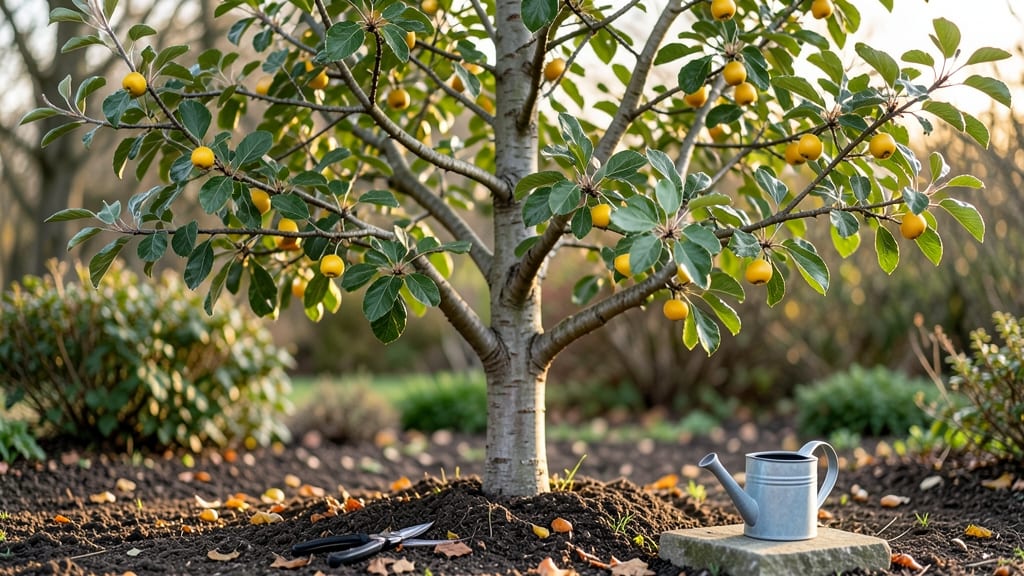
Late-winter pruning transforms your crab apple tree from a tangled mess into a fruitful work of art by next summer. 🌿 I learned the hard way—skipping this step means fewer apples, more disease, and branches that block your view of the backyard.
The key window? Right after the worst cold snaps but before buds swell, usually in February or March depending on your zone.
You’ll need sharp pruners, a ladder (for higher branches), and about 90 minutes to assess the tree’s structure. Look for dead wood first—it’s your top priority—then thin out crowded branches to let light and air circulate.
Crab apples thrive when they can see the sky, and proper pruning turns winter’s dormancy into spring’s productivity. The goal isn’t perfection; it’s shaping the tree to reward you with jewel-toned fruit all season.
What you’ll end up with is a tree that looks intentional, not wild, and produces more apples with fewer pests. The pruned branches make harvesting easier, and the open canopy means fewer hiding spots for diseases like apple scab.
Plus, wildlife adores the fruit—birds will thank you by turning your yard into a concert hall come spring.
Works for any mature crab apple, whether you’ve got a Malus ‘Adirondack’ or a local favorite. Just time it right—too early and you risk frost damage to fresh cuts, too late and you’ll encourage new growth that won’t survive spring frosts. Here’s how to do it without overcomplicating things.
📚 In This Guide
- What you need
- Instructions
- Tips and common mistakes
- Wrapping up and next steps
What you need
- ● Pruning shears: Bypass pruners (sharp, clean, and disinfected with rubbing alcohol or bleach). Quantity: 1 pair (or 2 if working on a large tree).
- ● Loppers: For thicker branches (1–2 inches in diameter). Quantity: 1 pair.
- ● Pruning saw: For branches thicker than 2 inches. Quantity: 1 (hand saw or folding saw).
- ● Gloves: Heavy-duty, cut-resistant gloves (e.g., leather or reinforced fabric). Quantity: 1 pair.
- ○ Ladder or step stool: Sturdy and tall enough to reach the tree’s highest branches safely. Optional: A helper!
- ● Disinfectant: 1-part bleach to 9-parts water (for sanitizing tools between cuts). Quantity: Small spray bottle or bucket.
- ○ Pruning sealant: Optional but helpful for larger cuts (e.g., tree wound paint or beeswax-based sealant).
- ● Trash bags or bucket: For collecting pruned branches. Quantity: 1–2 large bags or a wheelbarrow.
- ● Weather check: Choose a dry, calm day (avoid frost or rain). Ideal temps: 40–60°F (4–15°C).
- ● Tree inspection: Assess the tree’s health—look for dead, diseased, or crossing branches before pruning.
- ○ Safety gear: Safety glasses (optional but recommended for debris protection).
- ● Sharpener: A file or pruning tool sharpener to keep blades in top condition.
How to prune a crab apple tree in late winter
Late winter is the prime time to shape your tree for healthier growth and bigger harvests.
✂️ Step 1: Gather Tools and Assess the Tree
Start by collecting your tools: a sharp pruning saw for thick branches, bypass pruners for smaller limbs, and gloves to protect your hands. I always sanitize my tools with rubbing alcohol before I begin—this prevents spreading disease between cuts.
Next, examine the tree's structure. Look for dead, diseased, or crossing branches first. These are your top priorities. You'll also spot branches growing inward or rubbing against others, which can create wounds and invite pests. Mark these with a piece of twine or tape if you're unsure about removing them immediately.
Here's the thing—crab apple trees benefit from an open-center shape. This means removing branches that grow straight up or crowd the center. You want sunlight and air to reach all parts of the tree, even the inner branches. If your tree already has a dense center, plan to thin out 20-30% of the branches in this step.
✂️ Step 2: Remove Dead, Diseased, and Problem Branches
Begin with the dead or diseased branches. These are easy to spot—they're often brown, brittle, or lack leaves. Cut these back to the main trunk or a healthy lateral branch, making your cuts just outside the branch collar (that swollen area where the branch meets the trunk). This ensures the tree can heal properly.
Next, tackle crossing or rubbing branches. These create wounds that can become entry points for fungi and bacteria. When two branches cross, remove the weaker of the two—the one that's smaller in diameter or grows at a sharper angle. Always cut back to a healthy lateral branch or the trunk to encourage proper healing.
If you're unsure which branch to remove, here's a quick trick: look for the branch with the most buds or growth points. The stronger branch will have more potential to thrive after pruning. Don't skip this step—it's the foundation for a healthier tree.
✂️ Step 3: Thin Out the Canopy for Better Airflow
Now, focus on thinning the canopy to improve airflow and sunlight penetration. Start at the outer edges of the tree and work your way inward. Remove branches that grow straight up or are too close together. You're aiming for a balanced, open shape that lets light reach the inner branches.
For each branch you remove, look for a lateral branch growing at a 45-degree angle or less. This will take over the role of the branch you're cutting. If you're unsure, cut back to a bud that faces outward—this encourages growth in the direction you want. Avoid leaving stubs; always cut just outside the branch collar.
Real talk: this step can feel overwhelming if your tree is large. Work in sections, and take breaks if needed. You'll see the difference in just a few years—more sunlight on the fruit, fewer pests, and easier harvesting. And remember, it's better to remove a little too much now than to leave too many branches and struggle later.
✂️ Step 4: Shape the Tree for Optimal Fruit Production
Now it's time to shape the tree for maximum fruit production. Crab apple trees produce fruit on both old and new wood, so you'll want to encourage a mix of growth. Start by shortening overlong branches to promote bushier growth. Cut back to a bud or lateral branch that grows in the direction you want the branch to go.
Pay special attention to the scaffold branches—those larger branches that form the tree's framework. These should be spaced 8-12 inches apart and grow at a 45-degree angle or less. If a scaffold branch is too long or grows straight up, shorten it to encourage outward growth. You'll see stronger, more productive branches in the coming seasons.
Here's where it gets fun—watch how the tree responds. After pruning, you'll notice new growth budding in the spring. These new shoots will produce fruit, so you're essentially setting the stage for a better harvest. Just don't overdo it; aim to remove no more than 25% of the tree's foliage in a single pruning session.
⏰ Step 5: Clean Up and Monitor for Recovery
Once you've finished pruning, clean up the area thoroughly. Remove all pruned branches and leaves from the base of the tree to prevent pests and diseases from taking hold. This is also a great time to apply a fresh layer of mulch around the tree's base, keeping it 2-3 inches deep and 6 inches away from the trunk.
After pruning, keep an eye on the tree for the next few weeks. You'll see new growth buds forming within a few weeks, and the tree will start to fill out again. If you notice any oozing sap or unusual discoloration at the pruning sites, don't panic—this is normal as the tree heals. Just make sure your cuts were clean and outside the branch collar.
Here's the moment that matters: in late spring, you'll see the first signs of new fruit buds forming. That's your reward for a job well done. Pruning in late winter sets the stage for a healthier, more productive tree all year round. And don't forget to repeat this process every 2-3 years to keep your crab apple tree thriving.
Tips & tricks for pruning your crab apple tree
Late winter pruning transforms your crab apple tree—here's how to make every cut count toward a healthier harvest.
Tool Prep Matters: Don't rush sanitizing your tools! I learned this the hard way after seeing fungal infections spread between cuts. Use rubbing alcohol on pruning saws and bypass pruners, then wipe down with a clean cloth. For stubborn sap buildup, soak tools in warm, soapy water for 10 minutes before sanitizing. This extra step prevents disease from becoming your tree's worst enemy.
Branch Selection Strategy: When choosing which branches to remove in Step 1, look for the "three D's"—dead, diseased, and damaged. For crossing branches, remove the one with fewer buds or that grows at a sharper angle. I always test branch strength by gently bending it—if it snaps easily, it's likely dead wood ready for removal. This visual check saves time during the actual pruning process.
Canopy Thinning Secrets: In Step 3, focus on creating that open-center shape by removing branches that grow straight up or inward. Aim to thin out 20-30% of branches—this might seem aggressive, but it's what creates the perfect balance. Here's my trick: work in sections, starting from the outer edges and moving inward. This prevents you from feeling overwhelmed and ensures you don't miss any problematic branches in the center.
Post-Pruning Care: After finishing, don't just leave the pruned branches on the ground. Collect and remove all debris from the base of the tree to prevent pests and diseases from taking hold. Apply fresh mulch (2-3 inches deep, 6 inches from the trunk) to protect roots and retain moisture. I also recommend taking a photo of your pruned tree—it's amazing how much you'll notice about its structure when you review it later.
Pro Tips for Winter Crab Apple Tree
- Late winter pruning transforms your crab apple tree—here's how to make every cut count toward a healthier harvest.
- Tool Prep Matters: Don't rush sanitizing your tools!
- Branch Selection Strategy: When choosing which branches to remove in Step 1, look for the "three D's"—dead, diseased, and damaged.
Frequently asked questions
Got questions about your winter crab apple tree? You’re not alone!
Here are some of the most common concerns—plus quick, actionable answers to keep your tree thriving year-round.
When is the exact best time to prune a winter crab apple tree?
Prune between late winter (just after dormancy) and early spring (before buds swell). Aim for February to March in most climates—this timing minimizes stress and disease risk while promoting vigorous growth. Avoid pruning in fall or extreme cold snaps (below 20°F/-7°C).
How much can I trim off without hurting the tree?
Remove no more than 25% of the tree’s total canopy in a single session. Focus on:
- Dead, diseased, or crossing branches
- Suckers or water sprouts
- Branches growing inward or downward
Will pruning reduce my crab apple harvest?
Not if done correctly! Pruning actually boosts fruit production by redirecting energy to healthy branches. However, avoid over-pruning—this can temporarily reduce yield. For winter crab apples, prioritize structural cuts over aggressive thinning. Patience pays off: Your tree may take 1–2 years to rebound with even more abundant blooms and fruit!
What should I do if my tree gets aphids or other pests after pruning?
Pruning reduces pest risks by improving airflow, but aphids or scale insects can still appear. Act fast:
- Spray with neem oil or insecticidal soap (organic options).
- Encourage natural predators like ladybugs by planting companion flowers.
- Avoid chemical pesticides—they can harm pollinators.
Can I use winter crab apple wood for anything besides fruit?
Winter crab apple wood is prized for:
- Firewood: Burns hot and slow (great for stoves).
- Crafts: Lightweight and easy to carve (ideal for bowls or turned objects).
- Compost: Chop small branches into mulch for nutrient-rich soil.
What if I missed the winter pruning window?
Don’t panic! You can still prune in early spring (before leaves emerge) or even summer (after fruiting). Just avoid heavy pruning in late summer/fall—it invites disease and weakens the tree’s winter resilience. If you’re late, focus on removing dead wood and shaping the tree lightly to prevent stress.
Wrapping up and next steps
Your winter crab apple tree is now primed for a bountiful harvest—thanks to your careful late-winter pruning!
By removing dead wood, shaping growth, and opening the canopy, you’ve set the stage for healthier branches, more fruit, and stunning winter interest. 🌿✨ This small effort now means years of easy maintenance and delicious rewards.
Ready to take it further? Mark your calendar for next year’s pruning (late winter, before buds swell) and consider adding a mulch layer around the base to protect roots. Your tree—and your future fruit baskets—will thank you!