
Pruning
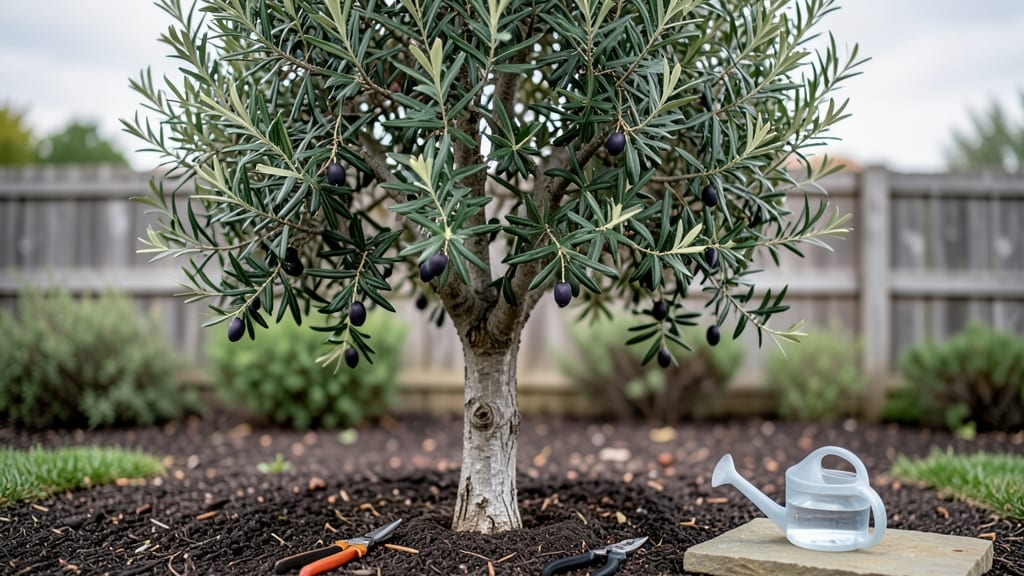
Mastering the Wilsoni olive tree pruning transforms your Mediterranean-inspired yard from ordinary to stunning. 🌿 This compact, silvery-leaved beauty thrives with strategic cuts that encourage dense growth and striking form.
I learned the hard way—skipping pruning leaves leggy branches and sparse foliage, but the right approach turns it into a showstopper.
Three simple steps keep your tree lush and manageable: prune in late winter before new growth starts, remove dead or crossing branches first, then shape the canopy by thinning out older wood. The key is patience—Wilsoni olives respond best to gradual shaping over several seasons, not aggressive cuts.
You’ll end up with a tree that stays compact enough for small yards but still makes a bold statement.
What you’ll gain is a tree that stays healthy, produces more silver foliage, and even yields small, edible olives if pollinated. The pruned branches make excellent cuttings for propagation too—so you can expand your olive collection without buying new plants.
Plus, the process takes just 30 minutes once you get the rhythm down.
Works in zones 8-11, where winter temps stay above 15°F, though a little frost protection goes a long way for young trees. For colder climates, grow it in containers and overwinter indoors. The same principles apply whether you’re shaping a patio tree or a landscape focal point—just adjust the scale.
📚 In This Guide
- What you need
- Instructions
- Tips and common mistakes
- Wrapping up and next steps
What you need
- ● Pruning shears – Bypass pruners (for small branches, 1/4”–3/8” thick)
- ● Loppers – 6”–8” bypass loppers (for branches 3/8”–2” thick)
- ● Pruning saw – 8”–10” curved-tooth saw (for thick branches 2”+ thick)
- ● Disinfectant – 70% isopropyl alcohol or 10% bleach solution (to sterilize tools)
- ○ Pruning sealant – Optional but helpful for large cuts (1”+) (e.g., Tanglefoot Tree Wound Pruning Sealer)
- ● Work gloves – Heavy-duty, cut-resistant (protects from thorns and splinters!)
- ● Ladder or step stool – Sturdy, non-slip (for taller trees)
- ● Heavy-duty trash bags – For collecting pruned branches
- ○ Sharpie or label markers – To mark branches for future reference (optional)
- ● Weather check – Prune on a dry, overcast day (avoid extreme heat or frost)
- ● Safety glasses – Protects eyes from debris
- ● Long sleeves & pants – Olive trees have sharp thorns!
- ● First-aid kit – Just in case (olive branches can be tough on skin!)
- ● Water & snacks – Hydration breaks keep you energized for the job!
Step-by-step guide to pruning a Wilsoni olive tree
Here's how to sculpt your tree's natural shape while keeping it healthy and productive.
✂️ Step 1: Identify and Remove Dead or Diseased Branches
Start by examining your Wilsoni olive tree for any branches that look brown, brittle, or completely devoid of leaves. These are your first targets—they won't regrow and may harbor pests or disease. Use clean, sharp pruning shears to make a clean cut just outside the branch collar, where the branch meets the trunk. This ensures the tree seals the wound properly.
I always work from the bottom up, removing smaller branches first. This gives me a clear view of the tree's structure as I go. If you spot any branches with signs of fungal infection (black spots, mold, or oozing sap), sterilize your tools with rubbing alcohol between cuts to prevent spreading.
Here's the thing—don't worry about making perfect cuts right away. Focus on removing what's clearly dead or unhealthy. You'll refine the shape in the next steps. Watch for branches that cross or rub against each other; these should also come out now to prevent future damage.
✂️ Step 2: Shape the Canopy for Airflow and Light
Wilsoni olive trees thrive with good airflow and sunlight reaching all parts of the canopy. Step back and look at your tree's overall shape—aim for an open, rounded form that allows light to filter through. Start by thinning out the interior branches that block sunlight from reaching the center. Remove about 25% of the smallest branches in this area first.
For the outer branches, focus on creating a natural, balanced silhouette. Cut back any branches that grow inward or downward, as these can create a dense, shaded interior that encourages disease. Use your pruning shears to make angled cuts just above an outward-facing leaf or bud. This encourages new growth in the direction you want.
Real talk: If you're unsure about a cut, leave it for now. It's better to remove less than too much. You'll notice the tree's natural growth patterns as you work—follow those rather than forcing a rigid shape. The goal is to mimic the tree's natural, Mediterranean growth habits.
✂️ Step 3: Refine the Structure and Encourage New Growth
Now it's time to fine-tune the tree's structure. Look for branches that are growing too close together and select the weaker of the two to remove. This opens up the canopy and reduces competition for resources. For any remaining branches that are too long, cut them back to a lateral branch or bud that faces outward.
If your Wilsoni olive tree has any suckers (shoots growing from the base or trunk), remove these immediately. They divert energy away from the main canopy. Use your pruning shears for larger branches and hand pruners for smaller ones. Always make cuts at a 45-degree angle just above a leaf node or bud to promote healthy regrowth.
This is the moment that matters: After pruning, step back and admire your work. You should see an open, airy canopy with light filtering through. Water the tree deeply right after pruning to help it recover. Over the next few weeks, you'll see new growth emerge from the cuts you made—this is a sign your tree is responding well.
Tips & tricks for pruning a Wilsoni olive tree
Confession: I skipped the pruning basics for years and ended up with a tree that looked like a tangled mess. These small details make all the difference.
Tool Prep is Non-Negotiable: Sterilize your pruning shears with rubbing alcohol before you start—this prevents spreading disease between cuts. I keep a small bottle of 70% isopropyl alcohol in my tool kit specifically for this. For larger cuts, use a sharp saw to avoid tearing the bark, which creates larger wounds that heal more slowly.
Step 1 Visual Cues: In Step 1, look for branches that have lost their bark or show dark, sunken spots—these are classic signs of disease. Healthy wood should be firm and slightly greenish when you scrape it with your fingernail. If you're unsure about a branch, take a small test cut and check the color of the inner wood before committing to removing it.
Canopy Shaping Secret: When shaping the canopy in Step 2, think of your tree like a Mediterranean village square—open in the center with sunlight filtering through. The 25% thinning guideline is your starting point, but don't hesitate to remove more if branches are clearly competing for sunlight. Remember, you can always remove more later, but you can't put back what you cut.
Post-Pruning Care: After finishing, give your tree a thorough watering to help it recover from the stress of pruning. I like to add a balanced fertilizer (10-10-10) to the soil after pruning to support new growth. The deep watering helps the tree transport nutrients to the fresh cuts, which is when new growth will emerge.
Pro Tips for Wilsoni Olive Tree
- Confession: I skipped the pruning basics for years and ended up with a tree that looked like a tangled mess.
- Tool Prep is Non-Negotiable: Sterilize your pruning shears with rubbing alcohol before you start—this prevents spreading disease between cuts.
- Step 1 Visual Cues: In Step 1, look for branches that have lost their bark or show dark, sunken spots—these are classic signs of disease.
Frequently asked questions
When is the best time to prune a Wilsoni olive tree?
The ideal window is late winter or early spring (February–March), just before new growth begins. Avoid pruning in fall or winter, as this can expose the tree to cold damage. Pro tip: If you must prune in summer, do it early (June) to minimize stress.
How do I know if I’m over-pruning my Wilsoni olive tree?
Over-pruning shows up as sparse foliage, weak branches, or excessive water sprouts. A general rule: Never remove more than 25% of the canopy in one session. If you see Wilsoni struggling to produce olives or leaves, you’ve likely gone too far—scale back next time!
Can I prune a Wilsoni olive tree in any season?
While late winter/early spring is best, light pruning (removing dead or diseased branches) can happen year-round. Avoid heavy cuts in summer (heat stress) or deep winter (dormancy). Never prune during flowering (spring) or fruit set—this harms olive production!
What’s the difference between pruning for shape vs. fruit production?
Shape-focused pruning opens the canopy for airflow () and sunlight, while fruit-focused pruning targets water shoots (suckers) and overcrowded branches. For Wilsoni trees, balance both: Thin out dense areas to improve air circulation and trim back vigorous growth to redirect energy to fruit-bearing branches.
Do I need special tools for Wilsoni olive tree pruning?
Basic tools suffice: bypass pruners (for small branches), loppers (thicker limbs), and a pruning saw for large cuts. Sterilize blades with rubbing alcohol between cuts to prevent disease. Pro tip: A pole pruner helps reach high branches safely!
Wrapping up and next steps
Mastering Wilsoni Olive Tree pruning unlocks a thriving, productive Mediterranean beauty—and you’ve got the skills now! 🌿 With the right tools, timing, and techniques, your tree will reward you with lush foliage and bountiful harvests for years.
Whether you’re a beginner or refining your green thumb, every snip brings you closer to canopy perfection.
Ready to take the next step? Schedule a pruning session on a clear day, grab your shears, and transform your Wilsoni Olive Tree into a stunning centerpiece. Your future harvests will thank you! 🌟