Pruning
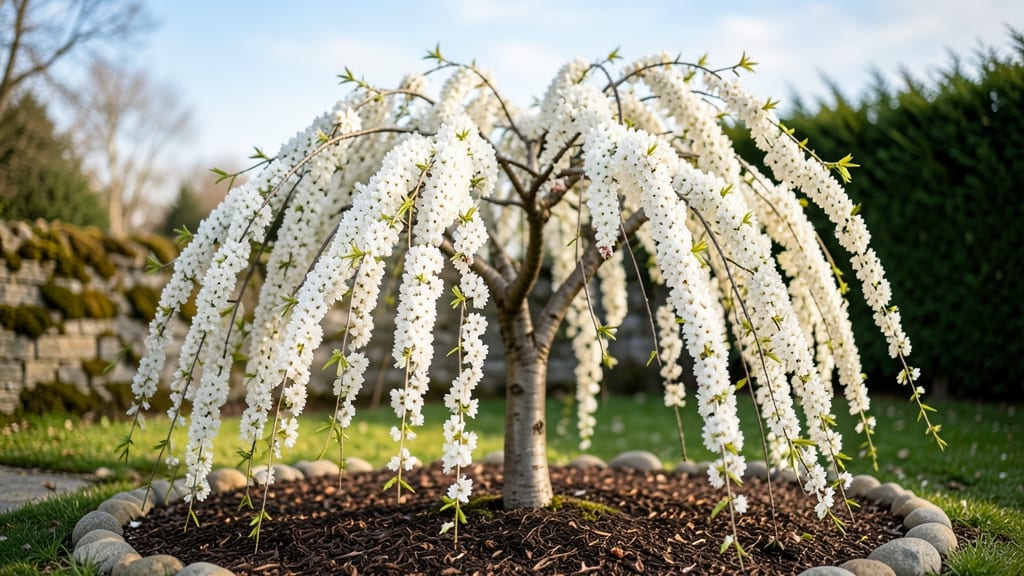
Planting a weeping white cherry tree transforms your yard into a graceful, year-round showpiece—with stunning spring blooms, delicate summer foliage, and fiery autumn colors. 🌸 I’ve grown mine for five years, and the secret to its effortless beauty lies in the right spot, soil, and just a little seasonal care.
Unlike high-maintenance varieties, this tree thrives with minimal pruning while still delivering that "wow" factor every season.
The key starts with full sun exposure and well-draining soil—no heavy clay or soggy spots. My tree’s roots spread wide but shallow, so I amended the planting hole with compost and avoided compacted soil.
Watering is simple: deep soaks once a week for the first year, then just enough to keep the soil moist but not soggy. Once established, it’s remarkably drought-tolerant, making it perfect for busy gardeners.
What you’ll love most is how it looks all year: snow-white blossoms in spring, lush green leaves in summer, and brilliant red foliage in fall. The cascading branches create a natural focal point, whether planted alone or paired with shrubs.
Even winter brings interest with its bare branches forming elegant silhouettes against the sky.
Best for USDA Zones 5-8, this tree handles heat and cold with equal grace—just avoid areas with strong winds that could damage its delicate branches. With proper placement, you’ll enjoy decades of beauty with almost no upkeep. Ready to add this timeless classic to your landscape?
📚 In This Guide
- What you need
- Instructions
- Tips and common mistakes
- Wrapping up and next steps
What you need
- ● Pruning shears: Bypass pruners (sharp, clean, and sterilized to prevent disease) – 1 pair
- ● Loppers: For thicker branches (1.5"–2" diameter) – 1 pair
- ● Hand pruners: For small, delicate cuts – 1 pair
- ● Garden gloves: Cut-resistant, breathable (e.g., nitrile-coated) – 1 pair
- ● Disinfectant: 70% isopropyl alcohol or pruning sealant (for open wounds) – small bottle
- ● Rake or tarp: To collect debris – 1 unit
- ○ Pruning saw (optional): For stubborn, thick branches – 1 (if needed)
- ● Extension pole: For high branches (3–6 ft) – 1
- ● Plant tie/wire: To support new growth – roll or spool
- ● Fertilizer (balanced, 10-10-10): Post-pruning boost – small bag
- ● Mulch: Organic (e.g., shredded bark) to retain moisture – 2–3 bags
How to plant and maintain a stunning weeping cherry tree
Here's the straightforward approach I've used to keep these graceful trees thriving with minimal fuss.
🌱 Step 1: Choose the Perfect Planting Location
Select a spot with full sun exposure (6-8 hours daily) and well-draining soil. Weeping cherry trees need space to spread their branches—aim for at least 15-20 feet of clearance from structures and power lines. The tree's cascading branches create a natural focal point, so position it where you can admire it from multiple angles.
Test your soil's drainage by digging a hole and filling it with water. If it doesn't drain within a few hours, amend the soil with 2-3 inches of compost to improve aeration. Overly wet soil causes root rot, which can kill your tree within months. I always plant mine on a slight mound to further prevent waterlogging.
🪴 Step 2: Dig and Prepare the Planting Hole
Dig a hole twice as wide as the tree's root ball but no deeper. This gives roots room to spread horizontally without restriction. Gently loosen the roots if they're circling tightly in the container—this prevents girdling as the tree matures. I use my hands or a root rake to tease out any compacted soil.
Place the tree in the hole so the top of the root ball sits 1-2 inches above ground level. This prevents water from pooling around the trunk. Backfill with native soil, tamping gently every 6 inches to eliminate air pockets. Water thoroughly after planting to settle the soil and encourage root contact.
☀️ Step 3: Water and Mulch for First-Year Establishment
Water deeply 2-3 times per week during the first growing season, providing 1-2 gallons per watering depending on tree size. Newly planted trees need consistent moisture to establish roots, but avoid soggy soil. You'll know you're doing it right when water drains through within 30 minutes of application.
Apply 2-3 inches of mulch around the base, keeping it 6 inches away from the trunk to prevent rot. Use organic mulch like wood chips or shredded bark, which breaks down and improves soil structure over time. Replenish mulch annually—this simple step reduces weeds, retains moisture, and protects roots from temperature swings.
✂️ Step 4: Prune Strategically for Health and Shape
Prune your weeping cherry tree in late winter or early spring before new growth begins. Remove any dead, diseased, or crossing branches first—these compete with healthy growth and invite pests. Use clean, sharp pruners to make cuts just outside the branch collar for the cleanest healing.
Shape the tree by selectively thinning branches to maintain its graceful weeping form. Never remove more than 25% of the tree's foliage in one season. I focus on opening the center to improve airflow and light penetration. Avoid heavy pruning—these trees produce their best blooms on mature wood, and aggressive cuts reduce flowering potential.
Tips & tricks for perfect weeping cherry tree care
These simple strategies will help your weeping cherry tree thrive with less effort and more beauty.
Location is Everything: I can't stress enough how critical that 6-8 hours of full sun is. If your yard has partial shade, consider planting near a south-facing wall where it gets reflected sunlight. I've seen trees in shadier spots struggle with weak growth and sparse blooms—don't make that mistake. Also, avoid planting where sprinklers might splash water directly on the trunk during winter, as this can cause frost cracks.
Root Ball Prep Matters: When loosening those circling roots in Step 2, don't go overboard—just gently separate them with your fingers. I've seen people use knives or tools that can actually damage the roots. The goal is to encourage outward growth, not create wounds. After planting, I like to add a handful of mycorrhizal fungi to the backfill soil—it helps roots establish faster and makes the tree more drought-resistant.
Watering Wisdom: That 30-minute drainage test is your best friend. If water pools longer than that, you definitely need to amend your soil. For the 2-3 gallons of water per week, I use a soaker hose buried 6 inches away from the trunk to deliver water directly to the roots. This prevents evaporation and keeps the foliage dry, reducing disease risk. Water in the morning so any moisture on leaves has time to evaporate before nightfall.
Pruning Pro Tips: When you're shaping in Step 4, look for branches that grow upward rather than downward—they'll compete with the tree's natural weeping form. I always prune just outside the branch collar at a slight angle to prevent water from pooling where the cut heals. And here's a secret: if you want more flowers next year, avoid cutting back any branches that already have bloom buds—those little swellings appear in late winter.
Pro Tips for Weeping Cherry Tree White
- These simple strategies will help your weeping cherry tree thrive with less effort and more beauty.
- Location is Everything: I can't stress enough how critical that 6-8 hours of full sun is.
- Root Ball Prep Matters: When loosening those circling roots in Step 2, don't go overboard—just gently separate them with your fingers.
Frequently asked questions
Got questions about your weeping cherry tree white? You’re not alone! Here are some of the most common queries—plus straightforward answers to keep your tree thriving with minimal fuss.
Why does my weeping cherry tree have white flowers?
Your tree’s Prunus serrulata (or similar cultivar) produces stunning white blossoms in spring, thanks to selective breeding. These flowers are a hallmark of ornamental cherry trees, offering a delicate, ethereal contrast to the lush green foliage. Pro tip: If flowers are sparse, check for adequate sunlight (6+ hours/day) and balanced fertilization in early spring.
When is the best time to prune a weeping cherry tree?
Prune your weeping cherry tree white after flowering (late spring to early summer) to avoid cutting off next year’s blooms. Light shaping is ideal—avoid heavy pruning, which can stress the tree. Warning: Never prune in fall or winter, as it increases susceptibility to silver leaf disease (a fungal risk).
Can I grow a weeping cherry tree in a pot?
Yes! Dwarf cultivars like Prunus ‘Kanzan’ or ‘Shirotae’ thrive in large containers (15+ gallons). Use well-draining soil and repot every 2–3 years. Place in partial shade (morning sun, afternoon shade) to prevent leaf scorch. Tip: Elevate pots to improve drainage and add mulch to retain moisture.
What pests or diseases should I watch for?
Common issues include:
- Cherry leaf spot: Brown spots on leaves? Prune infected branches and apply fungicide in early spring.
- Scale insects: Sticky residue on bark? Spray with horticultural oil or introduce ladybugs.
- Powdery mildew: White dust on leaves? Improve airflow and avoid overhead watering.
How can I encourage more white blooms?
Boost flowering with these tricks:
- Feed with high-phosphorus fertilizer (like 10-20-10) in early spring.
- Water deeply but infrequently—drought stress reduces blooms.
- Avoid late-season pruning (post-July) to preserve next year’s flower buds.
Wrapping up and next steps
The weeping cherry tree white is a stunning addition to any garden, blending beauty with minimal upkeep. Its graceful branches and delicate blossoms make it a year-round favorite—whether you’re admiring its spring blooms or its winter silhouette. With just a few simple pruning techniques, you can keep it thriving effortlessly.
Ready to elevate your outdoor space? Start small—pick a sunny spot, gather your tools, and give your tree the care it deserves. Your garden’s next masterpiece awaits! 🌸✨