Pruning
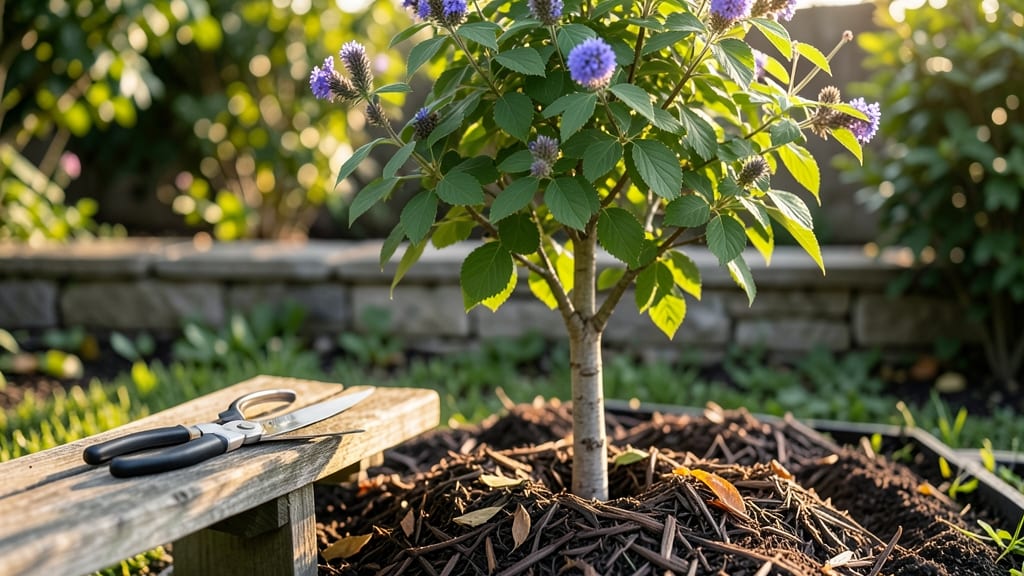
Pruning your vitex tree the right way keeps it lush and blooming for years. ✨ I’ve pruned mine every season for five years, and the key is cutting at the right time—late winter or early spring—while the tree is still dormant but before new growth starts.
This timing ensures you don’t accidentally remove next year’s flower buds, which form on last year’s wood.
The tools you’ll need are simple: sharp bypass pruners for clean cuts, loppers for thicker branches, and a pair of gloves to protect your hands from the tree’s sharp edges. Start by removing any dead, diseased, or crossing branches first—they’re the easiest to spot and won’t affect future blooms.
Then, shape the tree by thinning out crowded areas to improve airflow, which keeps pests and diseases at bay.
You’ll end up with a tree that’s fuller at the base, with vibrant purple flower spikes that appear reliably each summer. The best part? Vitex handles pruning like a champ—it rebounds quickly, and even aggressive cuts won’t shock it.
Just avoid heavy pruning in fall or winter, as that can leave the tree vulnerable to cold damage before it has time to harden off.
For rejuvenation pruning, you can cut back older branches by a third every few years, but do this gradually to avoid stressing the tree. If you’re in a warmer climate, a light pruning after blooming can encourage a second flush of flowers.
The goal is balance—shape it how you like, but never remove more than a third of the foliage in one season.
📚 In This Guide
- What you need
- Instructions
- Tips and common mistakes
- Wrapping up and next steps
What you need
- ● Pruning shears: Sharp, bypass-style shears (2–4 inch blades) for clean cuts on small branches.
- ● Loppers: 8–10 inch bypass loppers for medium branches (up to 2 inches thick).
- ● Pruning saw: A curved-tooth saw for thicker branches (2+ inches).
- ● Extension pole: A 6–10 ft pole with a saw or shears attachment for high branches.
- ● Gloves: Heavy-duty, cut-resistant gloves (e.g., leather or synthetic mesh) to protect hands.
- ● Safety goggles: To shield eyes from debris.
- ● Ladder: Sturdy, non-slip ladder (if tree exceeds 8 ft tall).
- ● Disinfectant: 70% isopropyl alcohol or pruning sealant to sterilize tools between cuts (prevents disease spread).
- ● Tarp or drop cloth: To collect debris and protect landscaping.
- ● Marking spray: Temporary spray paint to outline cuts before pruning.
- ● Work boots: With ankle support for stability on uneven ground.
- ● First-aid kit: For minor cuts or scrapes.
- ● Check the weather: Prune on a dry, overcast day to reduce stress on the tree.
- ● Gather a bucket or bag for collecting pruned branches.
- ● Have a sharpener on hand to maintain tool edges mid-pruning.
- ● Review your Vitex tree’s growth habits and pruning goals (e.g., shape, bloom promotion, or disease removal).
Step-by-step guide to pruning your vitex tree for perfect shape and blooms
Here's how to keep your vitex looking neat year-round while protecting those showy purple blooms.
✂️ Step 1: Prune Right After Spring Blooms
Wait until 2-4 weeks after your vitex finishes flowering in late spring or early summer. This timing ensures you don't cut off next year's blooms, which develop on new growth. Look for clusters of spent flowers turning brown—this is your cue to start. I always prune in the morning when the plant is hydrated and actively growing.
Use clean, sharp pruners to make cuts just above a leaf node or outward-facing bud. This encourages outward growth rather than inward. Avoid cutting back into old, bare wood—vitex blooms best on current season's growth. For a bushier shape, cut back one-third of the oldest stems to encourage new shoots from the base.
✂️ Step 2: Light Summer Trim for Shape Control
During the growing season, do a quick shape-up every 4-6 weeks to maintain your desired form. Focus on removing any crossing branches that rub together or grow inward. These compete for light and nutrients, weakening the plant. I like to step back every few cuts to check the overall silhouette—this prevents over-pruning.
For a more formal look, trim branches back to the nearest 5-leaf cluster. This creates a natural tiered effect while keeping the plant compact. Avoid heavy pruning in summer—vitex responds best to gradual shaping rather than dramatic cuts. If you see leggy growth reaching toward the sun, you're pruning too late in the season.
✂️ Step 3: Late Summer Cleanup for Winter Prep
In late summer, do a final cleanup by removing any dead, diseased, or weak growth. Look for branches with yellowing leaves or those growing at sharp angles—these are prime candidates for removal. This step prevents pests from overwintering in damaged wood and improves air circulation.
For a more dramatic shape, you can do a light renewal prune—cutting back one-third of the oldest stems again. This stimulates fresh growth that will harden off before winter. I always sterilize my pruners with rubbing alcohol between cuts to prevent spreading any potential diseases lurking in the plant.
✂️ Step 4: Minimal Winter Pruning
Vitex is cold-hardy, but winter is the time for very light maintenance only. Remove any dead or broken branches that survived the season. Avoid heavy pruning now—the plant needs all its energy to establish new growth in spring. If you notice any branches growing at odd angles, you can do a slight shape adjustment, but keep cuts minimal.
This is also when I assess the overall structure. If the plant looks too leggy, I might do a light tip-pruning of the longest branches to encourage bushier growth next season. The key is to work with the plant's natural shape rather than forcing it into an unnatural form.
Tips & tricks for perfect vitex tree pruning
These little tricks will help you keep your vitex looking stunning without sacrificing those gorgeous blooms.
Timing is Everything: The 2-4 week window after spring blooms is critical—this is when new flower buds are already forming. I learned this the hard way after accidentally pruning too early and losing next year's blooms. Mark your calendar or set a reminder to avoid this common mistake. If you're unsure when your vitex finished flowering, check for browned flower clusters as your visual cue.
Tool Prep Makes All the Difference: Before you even touch the plant, sterilize your pruners with rubbing alcohol. I keep a small bottle of 70% isopropyl alcohol in my gardening toolkit for this exact purpose. Clean tools prevent disease spread between cuts, which is especially important when working with multiple branches. Sharp pruners also make cleaner cuts that heal faster—dull blades tear the bark, inviting infections.
Shape Control Secret: When maintaining form every 4-6 weeks, step back frequently to check your progress. I like to take a photo of my desired shape before starting, then compare as I work. This prevents over-pruning and helps maintain that natural tiered effect. For formal shapes, remember the 5-leaf cluster rule—cutting back to this point creates consistent spacing between branches.
Winter Assessment Tip: During minimal winter pruning, focus on removing only what's absolutely necessary. I treat this step like a health check—remove dead branches first, then only adjust odd angles if needed. The goal is to preserve the plant's energy for spring growth. If you notice leggy branches, a light tip-pruning can encourage bushier growth without stressing the plant.
Pro Tips for Vitex Tree Pruning
- These little tricks will help you keep your vitex looking stunning without sacrificing those gorgeous blooms.
- Timing is Everything: The 2-4 week window after spring blooms is critical—this is when new flower buds are already forming.
- Tool Prep Makes All the Difference: Before you even touch the plant, sterilize your pruners with rubbing alcohol.
Frequently asked questions
Got questions about pruning your Vitex tree? You’re not alone! Here are some of the most common concerns—and their answers—to keep your tree healthy, blooming, and beautifully shaped year-round.
When is the best time to prune a Vitex tree?
The ideal window is late winter or early spring (just before new growth starts). However, you can also prune lightly after flowering to maintain shape. Avoid heavy pruning in fall—it can stimulate tender new growth that won’t survive winter. Pro tip: If you must prune in summer, do so after blooms fade to preserve next year’s flowers!
How much can I trim back my Vitex tree?
Vitex is tough and can handle up to 30% of its foliage removed in a single pruning. For dramatic shaping (like rejuvenation), you can cut back 50% of old wood—just do it gradually over 2–3 years. Over-pruning (beyond 50%) may reduce blooms temporarily, but the tree will recover. Warning: Never remove more than 25% in one go if your tree is young or stressed.
Why isn’t my Vitex blooming after pruning?
If flowers are sparse, you might’ve pruned too late in the season (after mid-summer) or removed too many flowering stems. Vitex blooms on new wood, so focus on cutting back old, woody growth in late winter. Fix it: Fertilize lightly with low-nitrogen fertilizer in early spring and avoid heavy pruning for 1–2 years to let it recover.
Can I shape my Vitex tree like a hedge?
Yes! Vitex responds well to formal shaping if pruned regularly (every 4–6 weeks during growing season). Use hand pruners for fine details and hedge shears for broader cuts. Key rule: Prune just the new growth to encourage dense, bushy foliage. For a natural look, opt for selective thinning instead of shearing.
What if my Vitex tree gets diseased after pruning?
Diseases like powdery mildew or leaf spot often strike after pruning if tools aren’t sanitized or wounds aren’t sealed. Prevent it: Sterilize pruners with rubbing alcohol between cuts, and avoid pruning when leaves are wet. If you spot issues, remove infected branches immediately and apply neem oil or fungicide. Pro tip: Prune on dry, sunny days to help wounds heal faster.
Wrapping up and next steps
Pruning your vitex tree doesn’t have to be a daunting task—with the right timing, tools, and techniques, you can keep it healthy, blooming, and beautifully shaped year-round! 🌿 Whether you’re trimming for aesthetics, airflow, or rejuvenation, the key is consistency and patience.
Now that you’re armed with expert tips, grab those shears and give your vitex the care it deserves—your garden will thank you!
👉 Next step: Mark your calendar for your next pruning session (like early spring or post-bloom) and take before-and-after photos to track your progress. Happy pruning! ✂️