
Pruning
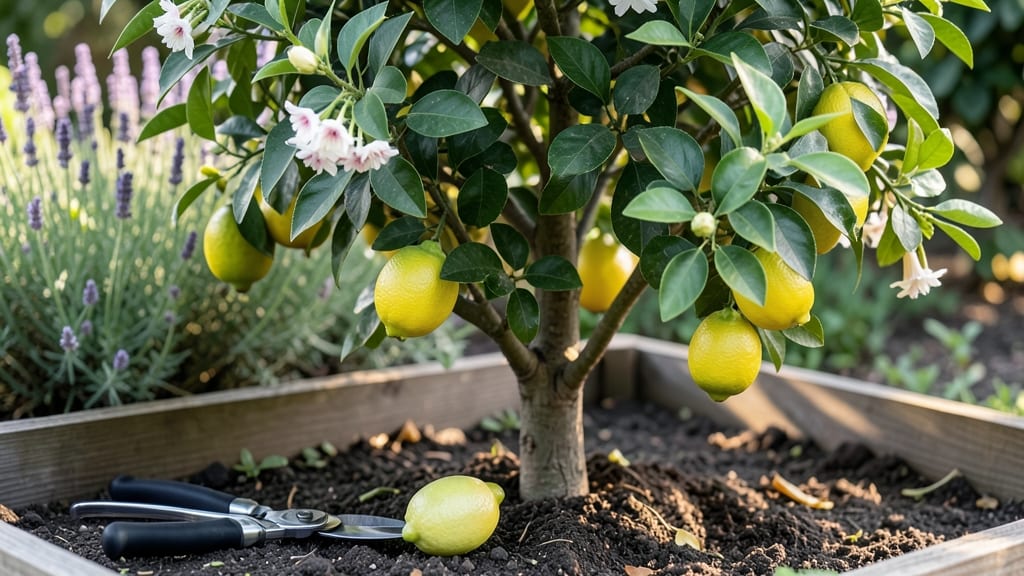
The right cuts now mean double the lemons next summer. 🌿 Trimming your lemon tree isn’t just about shaping—it’s the secret to keeping your tree productive year after year.
I’ve watched my own tree go from sparse blooms to heavy fruit loads simply by making a few strategic cuts at the right time.
Most people prune once and call it done, but lemon trees respond best to three key pruning sessions—dormant season for structure, spring for airflow, and summer to encourage new growth.
You only need basic tools: sharp bypass pruners, rubbing alcohol for sterilizing cuts, and a ladder if your tree’s over 6 feet tall. The goal? Open up the canopy so sunlight reaches the center and air circulates freely.
By summer’s end, you’ll see thicker branches, more blossoms, and fruit setting where there were bare stems before. The tree stays compact enough for your yard while producing enough lemons to make homemade preserves.
And because we’re removing diseased or crossing branches, your tree stays healthier longer—no more sudden dieback or fruit rot.
This works for both dwarf varieties in containers and full-sized trees in the ground. Whether you’re dealing with a leggy young tree or an overgrown veteran, the same principles apply. Let’s get those pruners ready—your tree’s next harvest starts with today’s cuts.
📚 In This Guide
- What you need
- Instructions
- Tips and common mistakes
- Wrapping up and next steps
What you need
- ● Bypass pruners: Sharp, clean pruners (4-6 inch blades) for cutting branches up to ½ inch thick.
- ● Loppers: Heavy-duty loppers (8-10 inch blades) for thicker branches (½ to 1½ inches in diameter).
- ● Hand saw: Pruning saw with a fine-toothed blade for branches thicker than 1½ inches.
- ● Disinfectant: 70% isopropyl alcohol or a 10% bleach solution (1 part bleach to 9 parts water) to sterilize tools between cuts.
- ● Gloves: Sturdy gardening gloves (cut-resistant if your tree has thorns).
- ○ Pruning sealant: (Optional but helpful) A wound dressing like tree paint or pruning paste to seal larger cuts.
- ● Ladder or step stool: For reaching higher branches safely (ensure it’s stable and non-slip).
- ● Trash bags or bucket: To collect pruned branches and debris.
- ● Sharpie or marker: For labeling branches if you’re doing a structured pruning plan.
- ● Hose or water spray bottle: To rinse tools and clean sap off cuts.
- ● Know your lemon tree’s variety (e.g., Meyer, Eureka, Lisbon) and its age—young trees need gentler pruning.
- ● Check the season: Best time to prune is late winter/early spring (before new growth starts).
- ● Assess the tree’s health: Look for dead, diseased, or crossing branches to prioritize.
- ● Have a plan: Sketch a rough outline of cuts if you’re new to pruning.
How to trim a lemon tree for maximum fruit production
Here’s the method I’ve used for years to keep my lemon trees thriving and loaded with fruit.
🌿 Step 1: Identify the Right Time for Trimming
Trim your lemon tree in late winter or early spring, just before new growth begins. This timing ensures you’re not cutting into next year’s fruit buds, which form on new wood. Look for dormant branches—they’ll be leafless and slightly woody to the touch. Avoid trimming during summer fruit production, as heavy cuts can stress the tree and reduce yield.
If you’re in a warmer climate where winters are mild, you can trim throughout the year, but always wait until after a flush of fruit has finished ripening. Never trim right after a heavy harvest—give the tree at least 4-6 weeks to recover before pruning again.
✂️ Step 2: Remove Dead, Diseased, or Crossing Branches
Start by cutting out any dead, damaged, or diseased branches—they’re easy to spot because they’re brown, brittle, or lack leaves. Use clean, sharp pruning shears to make a clean cut just outside the branch collar (the swollen area where the branch meets the trunk). This prevents tearing and promotes faster healing.
Next, remove crossing or rubbing branches—these create wounds where pests and diseases can enter. If two branches are growing toward each other, cut the weaker one at its base. You’ll know it’s the right choice if the remaining branch is thicker and healthier. Don’t worry about making the tree look perfect—focus on airflow and light penetration first.
☀️ Step 3: Shape the Tree for Light and Airflow
Step back and assess the tree’s shape. Lemon trees need open centers to allow sunlight to reach the inner branches, which is where most fruit forms. Aim to create a rounded canopy by cutting back branches that grow inward or downward. Start with the outermost branches—these are the easiest to trim without disturbing the tree’s structure.
For vertical growth, cut back 1/3 of the length of the branch to encourage bushier, fruit-bearing growth. Avoid cutting into the main scaffold branches (the thick, sturdy arms of the tree)—these are the backbone of your lemon tree. If you’re unsure, err on the side of caution and leave them alone.
🌱 Step 4: Encourage New Growth and Fruit Production
After shaping, focus on stimulating new growth by trimming back the tips of branches that are growing too long or leggy. This encourages the tree to produce lateral branches, which bear more fruit. Cut just above a leaf node (the bump where leaves attach) to promote branching. You’ll see new shoots emerging within 4-6 weeks—this is your sign that the tree is responding well.
If your lemon tree is overloaded with fruit, thin out some of the smaller branches to prevent the tree from becoming stressed. Heavy fruit loads can weigh down branches, so aim to leave only the healthiest, most accessible fruit on the tree. This ensures the remaining fruit grows larger and tastier.
💧 Step 5: Clean Up and Monitor Recovery
After trimming, sterilize your pruning tools with rubbing alcohol to prevent the spread of disease. Collect and dispose of any fallen branches or debris—this keeps pests and fungal spores from lingering near your tree. Water the tree deeply to help it recover from the pruning stress, but avoid overwatering, which can lead to root rot.
Watch for new growth in the coming weeks. Healthy branches will sprout bright green leaves and may even produce small flowers by mid-spring. If you notice yellowing leaves or stunted growth, your tree might be struggling—adjust watering or check for pests. With proper care, your lemon tree will reward you with abundant fruit for years to come.
Tips & tricks for perfect lemon tree trimming
These simple strategies will help you maximize fruit production while keeping your lemon tree healthy and thriving.
Timing is Everything: In Step 1, when you're identifying the right time to trim, pay close attention to the tree's natural cycle. The late winter/early spring timing is ideal because it allows the tree to heal before summer's heat stress. In warmer climates, I always wait until after a fruit flush finishes—this gives the tree energy reserves to recover. The 4-6 week recovery period after harvest is non-negotiable for maintaining fruit quality next season.
Precision Cutting Technique: For Step 2, when removing dead or crossing branches, make your cuts just outside the branch collar—this is where the tree's natural healing begins. I use clean, sharp pruning shears every time, and I always sterilize them with rubbing alcohol before and after. The key is to make clean cuts at a 45-degree angle just above a leaf node. This technique prevents tearing and promotes faster healing, which is especially important for citrus trees that are sensitive to wounds.
Shape for Sunlight: In Step 3, when shaping your tree, remember that sunlight is the most critical factor for fruit production. I always aim to create an open center that allows light to reach the inner branches. For vertical growth, cutting back 1/3 of the length encourages bushier growth without disturbing the main scaffold branches. This technique has given me the best fruit yields because it maximizes sunlight exposure to the fruit-bearing branches.
Recovery Monitoring: After completing all steps, watch for new growth as your indicator of success. In Step 5, when monitoring recovery, look for bright green leaves and small flowers by mid-spring—these are signs your tree is responding well. If you notice yellowing leaves or stunted growth, it's usually a sign of overwatering or pest issues. I always keep a close eye on watering patterns after pruning, as citrus trees are particularly sensitive to root rot during recovery.
Pro Tips for Trimming Lemon Tree
- These simple strategies will help you maximize fruit production while keeping your lemon tree healthy and thriving.
- Timing is Everything: In Step 1, when you're identifying the right time to trim, pay close attention to the tree's natural cycle.
- Precision Cutting Technique: For Step 2, when removing dead or crossing branches, make your cuts just outside the branch collar—this is where the tree's natural healing begins.
Frequently asked questions
Got questions about trimming your lemon tree? You’re not alone! Here are answers to the most common concerns to help you keep your tree healthy and productive.
When is the best time to trim a lemon tree?
The ideal time to trim is late winter or early spring (just before new growth starts). This encourages healthy blooming and fruiting. Light pruning can also be done after harvest to remove dead or overgrown branches. Avoid heavy cuts in summer or fall, as this can stress the tree.
How much should I trim off my lemon tree?
Remove no more than 20-30% of the tree’s foliage in one session. Focus on dead, diseased, or crossing branches first. For shaping, trim back to just above a leaf node or outward-facing bud. Over-pruning can reduce fruit production, so be gentle!
Will trimming my lemon tree increase fruit production?
Yes! Strategic trimming improves airflow and sunlight exposure, which boosts flowering and fruiting. Prune to open the canopy, remove overcrowded branches, and encourage new growth. Just avoid cutting back too aggressively—balance is key for a fruitful harvest.
What if my lemon tree isn’t producing fruit after trimming?
Several factors could be at play: age (young trees need 2-3 years to bear fruit), lack of sunlight, or improper pruning. Ensure your tree gets 6-8 hours of sun daily and fertilize with citrus-specific nutrients. If it’s still struggling, check for pests or nutrient deficiencies.
Can I trim a lemon tree in a pot the same way as one in the ground?
Yes, but with a few adjustments! Potted lemon trees need more frequent trimming to control size and shape. Prune lightly every few months to prevent root-bound stress. Also, avoid heavy cuts—root space is limited, so focus on shaping and air circulation.
What should I do if I accidentally trim too much?
Don’t panic! If you’ve over-pruned, stop cutting immediately and focus on recovery. Water deeply, fertilize lightly, and avoid stressing the tree further. New growth should return in a few weeks. For severe cases, consider a balanced citrus fertilizer to support regrowth.
Wrapping up and next steps
Trimming your lemon tree isn’t just about keeping it tidy—it’s the secret to bountiful harvests and healthier growth! By mastering the art of strategic cuts, you’ll encourage more flowers, fruit, and vibrant foliage year-round.
Whether you’re a seasoned gardener or just starting out, every snip is a step toward a thriving citrus tree.
Ready to see your lemon tree flourish? Grab your pruners and start shaping those branches today! For extra guidance, download our pruning checklist or revisit our FAQs to tackle any lingering questions. Your future lemons are waiting—go make them happen! 🍋✨