
Pruning
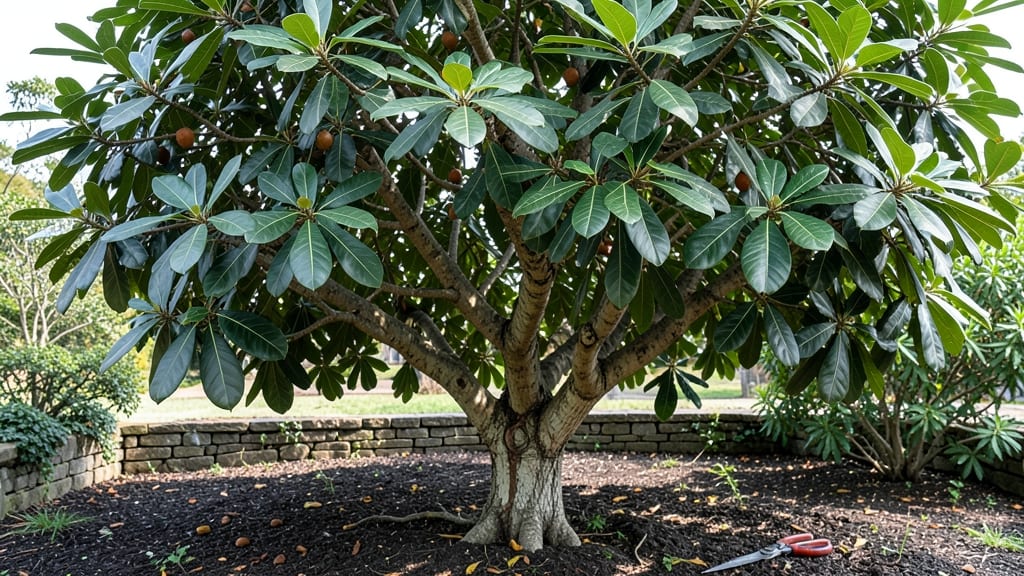
Pruning your badam tree isn’t just about shaping branches—it’s about protecting that frost-tender canopy when Pacific Northwest winters roll in. I’ve learned the hard way that skipping winter pruning means brittle wood and fewer nuts next spring.
The key is timing: prune in late winter before buds swell, and you’ll encourage sturdy growth that survives our damp, chilly springs.
You’ll need sharp bypass pruners, a ladder (for taller trees), and a clear day to work—mistakes show up fast in our wet climate. Focus on removing dead wood first, then thin out crowded branches to let sunlight reach the center.
Badam trees reward precision: every cut opens the canopy to better air flow, which cuts down on fungal issues that thrive in our damp air.
What you’ll end up with is a tree that looks like it belongs in a California orchard, not just your backyard. The branches will be strong enough to hold heavy almond clusters, and the open structure lets light reach all the way to the ground—meaning more nuts and fewer pests.
By late summer, you’ll see those signature badam pods forming, and you’ll know your winter prep paid off.
This method works for both young trees and established ones, though younger trees need lighter pruning. If you’re in a colder microclimate, delay pruning until after the last frost date—our unpredictable springs make timing everything. Let’s get those branches looking like they’re ready for whatever PNW weather throws at them.
📚 In This Guide
- What you need
- Instructions
- Tips and common mistakes
- Wrapping up and next steps
What you need
- ● Pruning shears: Bypass pruners (sharp, 6–8" blades) for small branches. Pro tip: 💡 Sanitize blades with rubbing alcohol between cuts to prevent disease!
- ● Loppers: 1 pair (10–12" blades) for thicker branches (½–1½" diameter).
- ● Pruning saw: 1 handheld saw (8–10" blade) for large branches (1½"+ diameter).
- ○ Extension pole: 1 (optional, 6–10 ft) for high branches—saves time and effort!
- ● Gloves: 1 pair of heavy-duty, cut-resistant gloves (e.g., Mechanix or leather).
- ● Disposable pruning bags: 2–3 (for collecting debris and preventing pests).
- ● Rubbing alcohol (70%+): Small bottle (for tool sanitization).
- ● Sealing wax: 1 tube (e.g., Tree Seal Tape) for large cuts (2"+ diameter).
- ● Ladder: Sturdy, non-slip ladder (if tree exceeds 8 ft). Safety first!
- ● Work boots: With ankle support (for uneven terrain).
- ● Pole pruner: For ultra-high branches (12–20 ft).
- ● Spray bottle: With water (to clean tools mid-pruning).
- ● Notebook/pencil: To sketch pruning plans or note frost-damaged areas.
- ● Check weather: Prune on a dry, frost-free day (ideal temp: 40–65°F).
- ● Gather debris bags before starting—you’ll thank us later! 😅
- ● Wear long sleeves/pants to protect from thorns or sap.
Step-by-Step badam tree pruning for Pacific Northwest climates
Here's how to shape your frost-hardy badam tree for strong growth and winter resilience.
Assess the Tree's Structure in Late Winter
Start pruning in late February or early March, when the tree is still dormant but before new growth begins. Look for dead, diseased, or crossing branches—these are your first targets. Dead branches will be brittle and snap easily when bent, while crossing branches create weak points where disease can enter.
Examine the tree's overall shape from multiple angles. A healthy badam tree should have an open center that allows light and air to circulate freely. If you notice branches growing inward or rubbing against others, mark them for removal. I like to use a simple one-third rule: never remove more than one-third of the tree's foliage in a single pruning session, especially in the first year.
Remove Problem Branches with Precision
Use clean, sharp pruning shears for branches under ½ inch thick, and a pruning saw for thicker branches. Make cuts just outside the branch collar—the swollen area where the branch meets the trunk. Avoid cutting flush with the trunk, as this can leave a wound that takes longer to heal.
For dead or diseased branches, cut back to the nearest healthy bud or branch junction. If a branch is too large to cut cleanly with a saw, make a three-cut technique: start with an undercut, then a top cut, and finally remove the branch. This prevents tearing the bark. Always sterilize your tools between cuts with rubbing alcohol to prevent spreading disease.
Thin the Canopy for Airflow and Sunlight
Focus on thinning the outer canopy to improve airflow and reduce frost damage. Remove branches that are growing too close together, as this creates shaded areas where moisture lingers and fungal diseases thrive. Aim to leave 6-8 inches of space between branches to allow sunlight to reach the center of the tree.
Pay special attention to water sprouts—fast-growing, vertical shoots that often appear after pruning. These branches are weak and compete with the tree's main structure for nutrients. Cut them back to a lateral branch or bud. You’ll know you’re doing it right when you see a more open, balanced shape with sunlight filtering through the branches.
Shape for Frost Resistance and Wind Protection
Badam trees in the Pacific Northwest benefit from a rounded, dome-like shape that sheds snow and ice more easily. Avoid creating sharp angles or heavy branches that can snap under winter weight. If your tree has branches growing downward, gently guide them upward by tying them to a stake with soft tree ties—this helps the tree develop a stronger, more upright structure over time.
Finally, check for sucker growth at the base of the tree. These aggressive shoots drain energy from the main tree. Cut them back to the ground as soon as you spot them. After pruning, apply a layer of mulch around the base (but not touching the trunk) to protect roots from freezing temperatures and retain moisture.
Tips & tricks for perfect badam tree pruning
These practical strategies will help you prune your badam tree like a seasoned gardener, ensuring long-term health and resilience.
Timing is Everything: The late February to early March window is critical because it occurs during dormancy but before new growth begins. This timing allows the tree to heal quickly and prevents stress that could invite pests or disease. If you miss this window, wait until late winter when the tree is still dormant—just avoid pruning too close to spring growth. Confession: I skipped this timing once and ended up with more sucker growth than I could handle!
Precision Cuts for Faster Healing: When making cuts in Step 2, focus on the branch collar—the swollen area where the branch meets the trunk. Cutting just outside this collar ensures the tree can seal the wound faster. For larger branches, the three-cut technique prevents bark tearing, which is especially important for badam trees that need to recover quickly from winter stress. I learned this the hard way after seeing a large branch tear and take months to heal.
Canopy Care for Winter Resilience: In Step 3, aim for that 6-8 inch spacing between branches to maximize sunlight penetration and airflow. This spacing is crucial for Pacific Northwest winters, where heavy snow and frost can damage dense canopies. I always think of it like creating a natural umbrella—open enough to let snow slide off easily but still providing plenty of shade in summer.
Mulch Matters: After pruning, apply a 2-3 inch layer of mulch around the base, keeping it clear of the trunk. This layer acts like a thermal blanket, protecting roots from freezing temperatures while retaining moisture. I use a mix of wood chips and compost, which also adds nutrients as it breaks down over time.
Pro Tips for Tree Of Badam
- These practical strategies will help you prune your badam tree like a seasoned gardener, ensuring long-term health and resilience.
- Timing is Everything: The late February to early March window is critical because it occurs during dormancy but before new growth begins.
- Precision Cuts for Faster Healing: When making cuts in Step 2, focus on the branch collar—the swollen area where the branch meets the trunk.
Frequently asked questions
How cold can a badam tree handle in the PNW?
A mature Prunus dulcis (almond tree) can survive down to 10°F (-12°C), but young trees or grafted varieties may need winter protection. In the PNW’s wet, chilly climate, mulch heavily and avoid late-season pruning to prevent frost damage. Pro tip: If you’re in Zone 8 or colder, plant near a south-facing wall for extra warmth!
When’s the best time to prune my badam tree?
Prune during late winter or early spring (February–March) while the tree is still dormant but before buds swell. Avoid pruning in fall—it can stimulate new growth vulnerable to frost. Warning: Never prune after a hard freeze, as it stresses the tree and invites disease.
How much can I trim without harming the tree?
Aim to remove no more than 25% of the canopy in a single session. Focus on:
- Dead, diseased, or crossing branches
- Suckers at the base
- Overcrowded growth inside the canopy
What if my badam tree isn’t producing nuts?
Almond trees need cross-pollination—plant at least two compatible varieties (like ‘Nonpareil’ and ‘Butte’) 50–100 feet apart. Poor nut production can also stem from:
- Improper pruning (too heavy)
- Nutrient deficiency (test soil for nitrogen/boron)
- Frost damage to flowers (common in early PNW springs)
Can I grow a badam tree in a container?
Yes, but it’s challenging—almond trees have deep roots and need 15+ gallons of soil per year of growth. Use a fast-draining mix (like cactus soil) and repot every 2–3 years. Warning: Container trees rarely bear nuts well and may struggle with PNW’s winter rains. Better to plant in-ground!
Wrapping up and next steps
Pruning your tree of badam (almond tree) in the Pacific Northwest doesn’t have to be intimidating—it’s all about timing, technique, and a little patience! 🌿 By following the right steps, you’ll encourage a frost-resistant, healthy canopy while maximizing fruit production.
Remember, consistency is key, and your tree will reward you with lush growth and delicious nuts for years to come.
Ready to take the next step? Mark your calendar for the next pruning season and gather your tools—your almond tree is counting on you! For extra guidance, consider joining a local gardening group or consulting a horticulturist to fine-tune your approach. Happy pruning! 🌱