
Pruning
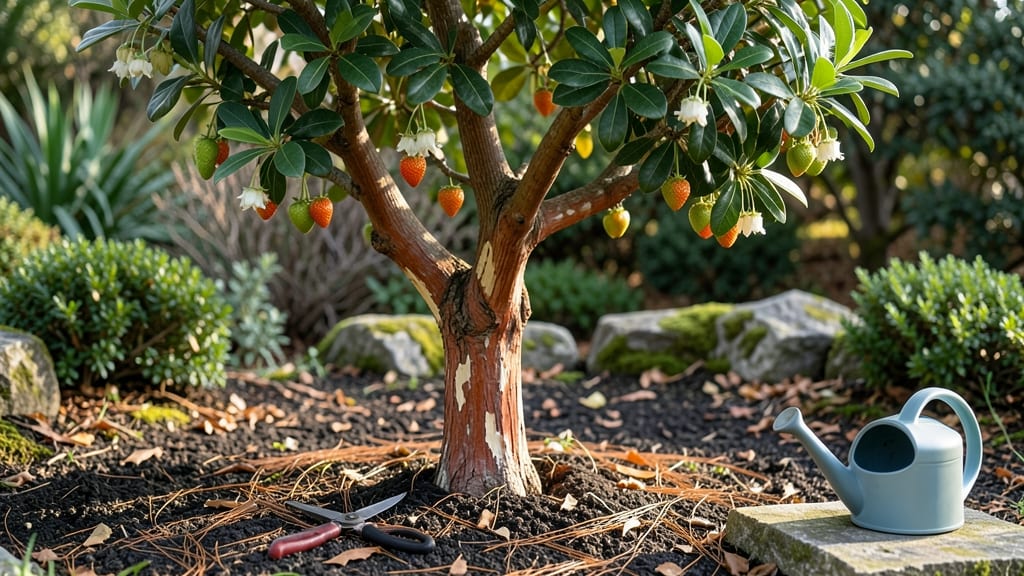
Pruning your strawberry tree (Arbutus unedo) isn’t just about shaping—it’s about unlocking its full potential for bold red bark, fragrant white flowers, and sweet, strawberry-like fruit. I learned the hard way that skipping pruning leads to dense, tangled growth that chokes out those prized berries.
The right cuts at the right times transform this Mediterranean beauty into a showstopper that rewards you year-round.
This evergreen shrub thrives with three strategic cuts: a light winter cleanup, a spring shaping pass, and a summer fruit-promoting trim. You’ll need sharp pruners, a ladder (for taller trees), and just 30 minutes of focused attention—no fancy tools required.
The payoff? A tree that stays compact, blooms reliably, and produces fruit even in partial shade, where other plants struggle.
After pruning, you’ll notice new growth within weeks—shiny green leaves that smell like pine on a warm day, followed by clusters of delicate flowers.
The fruit may take a year or two to mature, but once it does, the flavor is a cross between strawberry and pear, with a hint of vanilla. Even the bark becomes a winter feature, peeling to reveal vibrant orange-red underneath.
Works beautifully in containers for small spaces or as a specimen plant in larger gardens. The key is patience—this isn’t a fast grower, but the rewards make it worth every cut. Ready to turn your strawberry tree into the star of your landscape?
📚 In This Guide
- What you need
- Instructions
- Tips and common mistakes
- Wrapping up and next steps
What you need
- ● Pruning shears: Bypass pruners (for small branches, 1/4"–3/8" thick)
- ● Loppers: 6"–8" bypass loppers (for branches 3/8"–2" thick)
- ● Pruning saw: Curved-tooth saw (for branches 2"–4" thick)
- ● Gloves: Heavy-duty, cut-resistant (to protect from thorns!)
- ● Disinfectant: 70% isopropyl alcohol or pruning sealant (to prevent disease)
- ○ Sharpie or label tags: For marking branches to remove (optional but helpful!)
- ● Bucket or tarp: To collect clippings (compost later or dispose)
- ● Extension pole: For hard-to-reach branches (10–15 ft, if needed)
- ● Safety glasses: To shield eyes from debris
- ● Mulch: Organic mulch (e.g., pine straw) to protect roots post-prune
- ● Hose or spray bottle: To clean tools and rinse sap off cuts
- ● Camera: Snap before/after shots to track progress!
- ● Weather: Prune on a dry, overcast day (avoid rain for 24 hours before/after)
- ● Timing: Align cuts with the 3 key pruning windows (early spring, post-fruit, late winter)
- ● Safety: Wear closed-toe shoes and check for bees/wasps in tree cavities!
Step-by-Step guide for pruning your strawberry tree (Arbutus unedo)
Pruning this evergreen beauty just three times a year keeps it lush and flowering.
Light Pruning After Flowering in Late Spring
This is your first chance to shape the tree while it's still actively growing. Start by removing any dead or crossing branches—these compete for energy and can stunt growth. Use clean, sharp pruners to make cuts just above a leaf node or outward-facing bud to encourage new growth in the right direction.
Focus on thinning out the center of the tree first. Strawberry trees grow best with good airflow, and dense centers trap moisture, inviting fungal issues. Remove up to 20% of the total branches in this first cut, but never take more than one-third of the foliage at once. You'll see new shoots forming within a few weeks—this is your signal the tree is responding well.
I like to step back every few cuts and look at the tree from all angles. The goal is to maintain an open, vase-like shape that lets sunlight reach the center. If you're unsure about a cut, hold the branch aside and imagine how it will look without it—your eye will tell you what the tree needs.
Summer Maintenance Pruning in Mid-July
This isn't about heavy pruning—just tidying up. Remove any water sprouts (those fast-growing, weak branches that pop up vertically) as soon as you spot them. These drain energy from the tree and rarely produce anything useful. Snip them off at the base where they emerge from the main branch.
Check for any branches that are growing inward or rubbing against others. These will eventually damage each other and create entry points for pests. Make clean cuts at the base of the offending branch, and avoid leaving stubs—this prevents disease from settling in.
Here's the thing—strawberry trees are forgiving, but timing matters. If you prune too late in summer, you risk encouraging new growth that won't harden off before winter. Aim to finish all summer cuts by early August at the latest. You'll notice the tree looks fuller and more balanced after this light touch-up.
Major Renewal Pruning in Late Winter
This is the most important cut of the year, and it's all about rejuvenation. Wait until after the worst cold snaps but before new growth starts—typically February or early March in most climates. Start by removing any dead, diseased, or damaged branches first. These are easy to spot—they'll be brown, brittle, or missing bark.
Next, focus on older branches that have outgrown their usefulness. Strawberry trees produce their best fruit on younger wood, so prioritize branches that are three years old or older. Cut these back to a younger, vigorous section of the branch. You'll see the tree's natural shape more clearly now that it's dormant—this helps guide your cuts.
Don't be afraid to make bold cuts here. Up to one-third of the tree's total branches can be removed in this pruning, but space it out over 2-3 years if your tree is very large. After this pruning, you'll likely see a surge of new growth in spring—this is the tree's way of rebounding from the winter and preparing for another flowering season.
Post-Pruning Care for a Healthy Recovery
After any major pruning, it's crucial to give your strawberry tree the right conditions to recover. Water deeply once a week for the first month after pruning, keeping the soil consistently moist but not soggy. The tree will be directing energy toward healing wounds and producing new growth, so it needs extra hydration.
Apply a balanced, slow-release fertilizer in early spring to support new growth. I like to use a 10-10-10 formula spread lightly around the base of the tree, keeping it 6 inches away from the trunk to avoid burning the roots. This gives the tree the nutrients it needs to bounce back strong.
Finally, keep an eye out for any signs of stress. If you see yellowing leaves or wilting branches, it could be a sign of over-pruning or disease. In most cases, a healthy strawberry tree will show new buds within 4-6 weeks of pruning—this is your green light that everything is on track.
Tips & tricks for pruning your strawberry tree
These practical insights will help you prune your Arbutus unedo with confidence and precision, ensuring your tree stays healthy and productive year after year.
Timing is Everything: The late spring pruning in Step 1 should happen immediately after flowering when you can clearly see the tree's structure. This timing ensures you're removing branches that have already served their purpose for that season's bloom while leaving the energy reserves for new growth. If you miss this window, you risk pruning off next year's flower buds, which form on old wood.
Tool Precision Matters: Using clean, sharp pruners is non-negotiable for making clean cuts that heal properly. Dull tools crush the bark and create jagged edges that invite disease. I've found that bypass pruners with a 5-6 inch blade length work best for most branches. For thicker branches, consider using a pruning saw with a fine-tooth blade to avoid tearing the bark. Always sterilize your tools with rubbing alcohol between cuts to prevent spreading any potential infections.
Visualizing the Tree's Shape: When thinning in Step 1, imagine your tree as a vase with an open center. The goal is to create a shape where sunlight can penetrate to the inner branches. Hold each branch you're considering removing aside and look at the tree from all angles. This simple visualization technique helps me avoid over-pruning while ensuring good airflow. Remember, you can always remove more later, but you can't put back what you've cut.
Winter Pruning Strategy: For the major renewal pruning in Step 3, focus on removing branches that are three years old or older. These older branches often produce fewer flowers and fruit than the younger, more vigorous growth. When making these cuts, aim to remove the branch just above an outward-facing bud or leaf node. This encourages new growth in the direction you want, maintaining your tree's natural shape while promoting healthier, more productive branches.
Pro Tips for Strawberry Tree Arbutus Unedo
- These practical insights will help you prune your Arbutus unedo with confidence and precision, ensuring your tree stays healthy and productive year after year.
- Timing is Everything: The late spring pruning in Step 1 should happen immediately after flowering when you can clearly see the tree's structure.
- Tool Precision Matters: Using clean, sharp pruners is non-negotiable for making clean cuts that heal properly.
Frequently asked questions
Got questions about pruning your Arbutus unedo (strawberry tree)?
Here are answers to the most common ones—so you can keep your tree thriving year-round!
When is the best time to prune a strawberry tree?
The ideal time is late winter or early spring (before new growth starts) for structural pruning. Light shaping can also be done in summer after fruiting, but avoid heavy cuts then. Never prune in fall—it disrupts dormancy and weakens the tree.
Can I prune my strawberry tree at any time of year?
While light maintenance (removing dead branches or pests) is okay year-round, avoid heavy pruning in fall or winter. Pruning too late can expose the tree to frost damage, and spring cuts may delay flowering. Stick to the 3 key cuts (dormant, post-fruit, and renewal) for best results.
Will pruning affect my strawberry tree’s fruit production?
Pruning boosts fruit quality by improving airflow and sunlight—just don’t overdo it! Heavy cuts can reduce next year’s harvest, but strategic thinning (removing crowded branches) actually enhances fruit size and sweetness. Focus on renewal cuts to balance growth and production.
What should I do if my strawberry tree has dead or diseased branches?
Remove dead/diseased branches at any time—they drain energy from the tree. Use sterilized tools and cut 1-2 inches below the damage to healthy wood. If fungal issues (like Arbutus canker) appear, prune early in the dormant season and dispose of debris properly.
Are there alternatives to pruning for keeping my strawberry tree healthy?
While pruning is key, mulching (with organic matter) and watering deeply but infrequently help too. For pests, neem oil or horticultural oil works well. However, no substitute replaces proper pruning—it’s essential for long-term health, especially in dense or older trees.
Wrapping up and next steps
The strawberry tree (Arbutus unedo) thrives with just a few mindful cuts—whether you’re shaping it for beauty, health, or fruit! 🌿 By mastering the three key pruning seasons (late winter, post-flowering, and late summer), you’ll encourage vibrant blooms, lush foliage, and those delicious (if tart!) berries.
Remember: patience and sharp tools are your best friends!
Ready to transform your tree into a showstopper? Grab your pruners and start small—even a single cut can make a difference. Happy pruning! 🌟