
Pruning
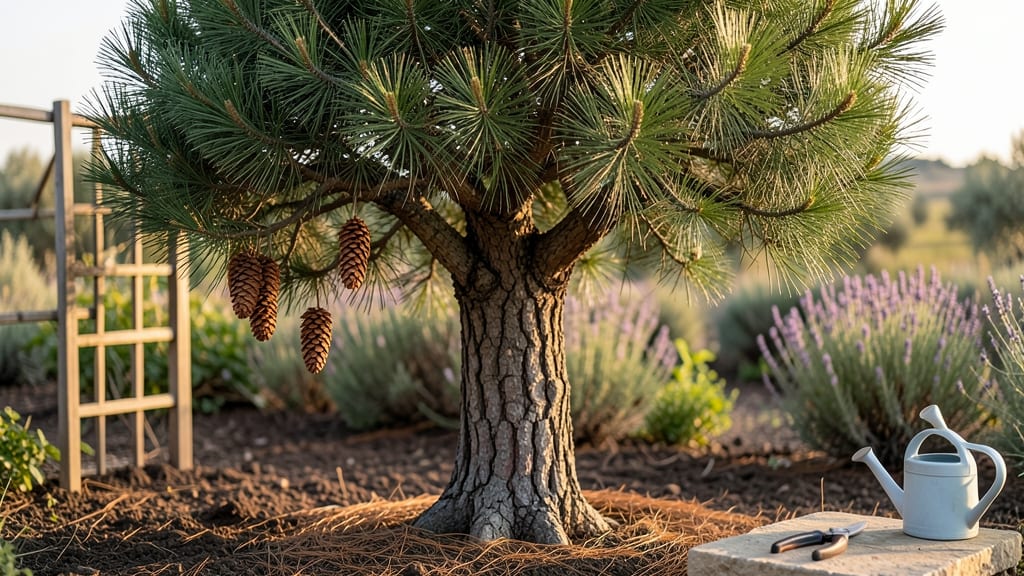
Proper stone pine tree care turns those "no thanks" spots into their perfect paradise—dry, sunny patches where most plants surrender, but these tough evergreens flourish. 🌞 I’ve watched mine stand tall through droughts that turn neighbors’ gardens into dust bowls, their needles staying vibrant and their pinecones heavy with potential.
The secret isn’t just drought tolerance; it’s a Mediterranean mindset where water is scarce but beauty isn’t.
You’ll need well-draining soil (think gravelly or sandy mixes) and full sun—at least 6 hours daily, more if possible. Watering’s the trickiest part: soak the roots deeply once a week in dry spells, then let the soil dry completely between sessions.
Overwatering kills these trees faster than pests ever could. Pruning’s simple too—just remove dead branches in late winter or early spring, and you’re done.
What you’ll end up with is a tree that’s drought-proof, pest-resistant, and stunning year-round. Those iconic pinecones? Edible, too—roasted seeds taste like buttery almonds. The scent of fresh pine needles in summer and the rustic charm of its gnarled branches in winter make it a standout in any landscape.
Even in heatwaves, it stays lush while others struggle.
Works beautifully in Mediterranean climates but adapts to zones 7-10 with proper care. If your soil’s heavy clay, amend it with sand or grit—stone pines hate soggy feet.
And don’t worry about pests; their tough bark and resin keep most critters at bay. Here’s how to keep yours thriving for decades.
📚 In This Guide
- What you need
- Instructions
- Tips and common mistakes
- Wrapping up and next steps
What you need
- ● Pruning shears: Bypass pruners (sharp, 6-8" blades) for clean cuts on small branches.
- ● Loppers: Heavy-duty (20-24" blades) for thicker branches (up to 2" diameter).
- ● Pruning saw: Curved-tooth saw for branches over 2" thick (avoid crushing bark).
- ● Gloves: Heavy-duty, cut-resistant gloves (gardening or pruning-specific).
- ● Disinfectant: 70% isopropyl alcohol or 10% bleach solution (1 part bleach to 9 parts water) to sterilize tools between cuts.
- ● Rake or broom: For clearing fallen needles/pine cones post-pruning.
- ● Watering can or hose: With a gentle spray nozzle for post-pruning hydration.
- ● Mulch: Organic mulch (pine bark, wood chips) – 2-3 inches deep, kept 6" away from the trunk.
- ● Pole saw: Extendable saw for high branches (if your tree is mature).
- ○ Tree wound dressing: Pruning sealant (optional; stone pines heal well without it).
- ● Ladder: Sturdy, non-slip ladder (if pruning high branches).
- ● Safety glasses: To protect against debris.
- ● Drip irrigation kit: For efficient drought-proofing (if expanding your setup).
Step-by-Step guide for cultivating a thriving stone pine tree
Mastering stone pine care means embracing its Mediterranean resilience—here's how to nurture it through seasons.
🪴 Step 1: Select the Perfect Planting Site
Stone pines thrive in full sun with at least 6-8 hours of direct exposure daily. Choose a location with well-draining soil—they despise soggy roots. If your soil is heavy clay, amend it with 3-4 inches of coarse sand or gravel to improve drainage. The tree's natural habitat is rocky, so mimic this by planting in slightly elevated beds if possible.
Here's the thing—stone pines hate competition. Space your tree 20-30 feet from other plants to prevent root crowding. If planting near a structure, ensure at least 15 feet of clearance for mature branch spread. The first year is critical—watch for yellowing needles, which signals poor drainage or root stress.
💧 Step 2: Establish a Watering Routine
Newly planted stone pines need deep watering twice weekly for the first year. Water slowly at the base until 6-8 inches of soil are thoroughly moist. Avoid overhead watering—it promotes fungal diseases. After the first year, reduce to once every 2-3 weeks during dry spells, letting the tree's deep roots seek moisture naturally.
Real talk: Overwatering kills stone pines faster than drought. Check soil moisture by inserting your finger 3 inches deep—if it's damp, wait another week. Mature trees are remarkably drought-tolerant, but young specimens need consistent moisture to establish their root systems. Mulch with 2-3 inches of wood chips to retain moisture and regulate soil temperature.
☀️ Step 3: Prune Strategically for Health and Shape
Prune stone pines in late winter or early spring before new growth begins. Remove dead, diseased, or crossing branches first—these compete for resources. Use clean, sharp pruners to make cuts just outside the branch collar. Never remove more than 25% of the canopy in one season; this stresses the tree.
The goal is to maintain an open center that allows sunlight to reach the inner branches. Thin out crowded growth to improve air circulation, which prevents fungal infections. Stone pines naturally develop a picturesque, irregular shape—avoid over-pruning to preserve their Mediterranean charm. Watch for sap bleeding after cuts; this is normal and indicates healthy tissue.
✂️ Step 4: Fertilize Sparingly for Long-Term Vitality
Stone pines are slow growers and don't need frequent feeding. Apply a balanced 10-10-10 fertilizer in early spring only if the tree shows signs of nutrient deficiency—yellowing needles or stunted growth. Use half the recommended dose to avoid burning roots. Organic options like composted manure or bone meal work well but must be applied sparingly.
Here's where it gets tricky: Stone pines in nutrient-rich soil grow faster but develop weaker wood. In their native Mediterranean climate, they thrive on poor, rocky soils. If your tree looks lush but floppy, it's getting too much fertilizer. Always water thoroughly after applying fertilizer to leach excess nutrients away from the root zone.
🌿 Step 5: Protect Against Pests and Environmental Stress
Stone pines are relatively pest-resistant, but watch for pine needle scale and aphids, which thrive in dry conditions. Treat infestations with horticultural oil or insecticidal soap, applying in early morning to avoid burning foliage. For severe cases, a systemic drench with imidacloprid may be necessary—but use as a last resort.
In coastal areas, salt spray can damage needles. If your tree is near the ocean, rinse foliage with fresh water during dry spells. Young trees benefit from windbreaks during their first two years. Mature stone pines handle wind beautifully, but their shallow roots make them prone to uprooting in storms. Stake only if your region experiences extreme winds.
Tips & tricks for perfect stone pine tree care
Between us, these Mediterranean survivors need just the right touch—here's how to keep yours thriving without overcomplicating things.
Site Selection Secrets: The 6-8 hours of direct sunlight in Step 1 is non-negotiable, but here's what nobody tells you: East-facing locations get morning sun without afternoon heat stress. If planting in containers, use a minimum 24-inch diameter pot with drainage holes—stone pines resent crowded roots. I've seen them struggle in west-facing spots where afternoon sun becomes scorching, so consider afternoon shade in hot climates.
Watering Wisdom: That twice-weekly deep watering for the first year is critical, but timing matters just as much as quantity. Water in the early morning to prevent fungal growth from overnight moisture. The 3-inch soil moisture check is your best friend—if it's damp at that depth, your tree's telling you it's had enough. I've ruined two stone pines by ignoring this simple test, so don't make my mistake: patience with watering pays off in stronger roots.
Pruning Precision: When you're pruning in late winter, focus on creating that open center by removing branches that cross or rub against each other. These are the hidden culprits behind future fungal infections. And here's a pro move: After pruning, apply a thin layer of tree wound sealant to larger cuts—it prevents sap bleeding and reduces stress on the tree. The 25% canopy rule is strict, but you can remove up to 30% if it's all dead/diseased wood in one go.
Fertilizer Finesse: The 10-10-10 fertilizer recommendation is spot-on, but here's the trick: Mix it with the top 2 inches of soil rather than applying it to the surface. This mimics the tree's natural Mediterranean environment where nutrients are locked in rocky soil. And if you're using organic options, composted manure should be aged for at least 6 months first—fresh manure can burn roots. The "lush but floppy" warning is real, so when in doubt, fertilize less rather than more.
Pro Tips for Stone Pine Tree Care
- Between us, these Mediterranean survivors need just the right touch—here's how to keep yours thriving without overcomplicating things.
- Site Selection Secrets: The 6-8 hours of direct sunlight in Step 1 is non-negotiable, but here's what nobody tells you: East-facing locations get morning sun without afternoon heat stress.
- Watering Wisdom: That twice-weekly deep watering for the first year is critical, but timing matters just as much as quantity.
Frequently asked questions
about stone pine tree care—because even drought-proofing legends need a little guidance! Here’s what you’ve been wondering:How often should I prune my stone pine tree?
Prune your stone pine once a year during late winter or early spring (before new growth starts). Focus on removing dead, diseased, or crossing branches. Avoid heavy pruning—these trees thrive on a natural, open shape and over-trimming can stress them.
Can stone pines survive in containers or small gardens?
Stone pines adapt well to containers if given well-draining soil and adequate space (at least 3–4 feet in diameter). For small gardens, opt for dwarf varieties like Pinus pinea ‘Fastigiata’. Just ensure they get full sun (6+ hours/day) and occasional deep watering.
Why are my stone pine needles turning yellow or brown?
Yellowing needles often signal overwatering or poor drainage, while brown tips may mean drought stress or salt buildup (common in coastal areas). Check soil moisture—stone pines hate soggy roots! If needed, amend soil with sand or gravel and reduce irrigation. Learn more here.
Do stone pines attract pests? How do I protect them?
Stone pines are pest-resistant, but watch for pine bark beetles or aphids in stressed trees. Prevent issues with regular pruning to improve airflow and avoid fertilizing (they thrive in lean soil). If pests appear, use neem oil or insecticidal soap as a natural remedy.
How cold-hardy are stone pines? Can they handle frost?
Stone pines tolerate USDA Zones 7–10 and can survive brief dips to 10°F (-12°C). Young trees may need winter mulch to protect roots, while mature trees handle frost well. In colder zones, plant them in sheltered, sunny spots away from wind.
What’s the best soil mix for stone pines?
Use a fast-draining, sandy loam with a slightly acidic to neutral pH (6.0–7.5). Mix in perlite or coarse sand to prevent root rot. Avoid heavy clay—stone pines despise waterlogged soil! For containers, a 50/50 blend of potting mix and grit works perfectly.
Wrapping up and next steps
Caring for your stone pine tree is all about embracing its natural resilience while giving it the right support to thrive—even in dry, Mediterranean climates! 🌿 With the right pruning techniques, soil prep, and watering balance, you’ll enjoy its stunning foliage and edible pine nuts year-round.
Remember, patience and consistency are key, but the rewards—like a lush, drought-tolerant centerpiece—are absolutely worth it.
Ready to take the next step? Schedule a pruning session this season and watch your stone pine flourish! Or, share your progress with fellow gardeners for tips and inspiration. Happy growing! 🌟