Tools
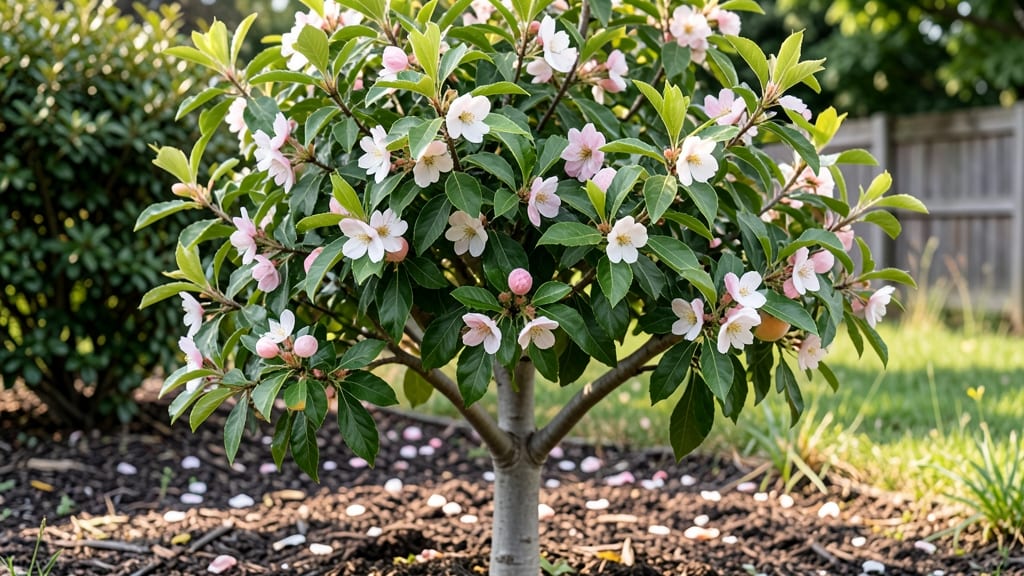
A peach tree garden transforms any yard into a sun-drenched paradise where golden fruit hangs heavy with summer’s promise. 🌿 I planted mine after years of dreaming about that first juicy slice—now it’s the centerpiece of my backyard, blending beauty with bounty.
The key isn’t just the tree itself, but how you design around it: companion plants that protect roots, ground covers that keep weeds at bay, and strategic spacing for airflow that prevents disease.
Start with space: a mature peach tree needs 15-20 feet of clearance, but dwarf varieties can thrive in 8-10 feet. Pair it with lavender to repel pests or rosemary to improve flavor, then add a drip irrigation line to save time and keep roots happy.
The right setup means fewer struggles and more time enjoying those sweet, velvety fruits by midsummer.
By autumn, you’ll have a canopy that provides shade, a harvest that feeds the family, and a garden that neighbors envy. The tree’s spring blossoms perfume the air, its summer shade cools the patio, and its fall foliage adds warm hues before winter.
This isn’t just gardening—it’s creating a living, breathing centerpiece that gives back all year.
Whether you’ve got a small suburban lot or acres to fill, the principles scale easily. The same design logic applies: sun, space, and smart companions. Let’s make your peach tree the star of your outdoor space—without the headaches that come with poor planning.
📚 In This Guide
- What you need
- Instructions
- Tips and common mistakes
- Wrapping up and next steps
What you need
- ● Peach Tree Varieties: 3–5 disease-resistant saplings (e.g., Elberta, Redhaven, or Reliance), sized 1–2 inches in diameter.
- ● Soil: 50+ cubic yards of well-draining, slightly acidic soil (pH 6.0–6.5); mix in compost or aged manure.
- ● Fertilizer: 10–20 lbs of 10-10-10 NPK (balanced) or organic options like bone meal.
- ● Mulch: 2–3 inches of wood chips or straw to retain moisture and suppress weeds.
- ● Drip Irrigation Kit: 50–100 ft of tubing, emitters, and a timer for consistent watering.
- ● Pruning Tools: 1 pair bypass pruners (sharp for clean cuts).
- ● 1 pruning saw (for thicker branches).
- ● Support Stakes: 4–6 wooden or metal stakes (5–6 ft tall) + tree ties.
- ● Pest Control: Neem oil spray, copper fungicide, and floating row covers (for young trees).
- ● Soil Test Kit: To check nutrient levels before planting.
- ● Drip Irrigation Monitor: For smart watering alerts.
- ● Tree Guards: Plastic wraps to protect trunks from critters.
- ● Shade Cloth: 30–50% coverage for young trees in hot climates.
- ● Fruit Thinning Shears: For shaping harvests (post-bloom).
Step-by-Step guide to designing a thriving peach tree garden
Here's how to craft a sun-drenched peach tree haven that yields fruit year after year.
🌱 Step 1: Select the Perfect Planting Location
Peaches crave full sun—at least 6-8 hours daily. Scout your yard for the warmest, most sheltered spot, ideally against a south-facing wall or fence. This protects young trees from harsh winds while maximizing sunlight exposure.
Here's the thing—peaches need winter chill hours (400-600 hours below 45°F) to fruit properly. Check your USDA zone to ensure your chosen varieties match your climate. I always verify chill requirements before planting to avoid disappointment.
Test the spot by observing how sunlight moves across it throughout the day. The ideal location stays warmest in summer and doesn't collect cold air pockets in winter. Avoid low areas where frost lingers longer—peach blossoms need spring warmth to open properly.
☀️ Step 2: Prepare Soil and Plant with Proper Spacing
Peach trees need well-draining soil with a pH between 6.0-7.0. Work in 2-3 inches of compost and a balanced 10-10-10 fertilizer into the top 12 inches of soil before planting. Peaches hate soggy roots, so amending heavy clay is especially important.
Dig a hole twice as wide as the root ball but no deeper. The top of the root flare (where roots meet trunk) should sit 1-2 inches above ground level. This prevents water from pooling around the trunk and causing rot. I always double-check this—buried root flares are a common mistake.
For four trees, space them 20-25 feet apart in a square pattern. This allows proper air circulation, reducing disease risk while giving each tree room to develop strong branches. Mark the spots with stakes before digging to ensure even spacing.
💧 Step 3: Establish Watering and Mulching Systems
Water deeply once weekly during the first growing season, providing 1-2 gallons per tree. New trees need consistent moisture to establish roots, but avoid waterlogging. You'll know you're doing it right when the soil 6 inches down feels damp but not saturated.
Apply 3 inches of wood chip mulch in a 3-foot diameter circle around each tree, keeping mulch 6 inches away from the trunk. This conserves moisture, regulates soil temperature, and suppresses weeds. Refresh mulch annually as it breaks down.
Here's where it gets fun—watch for new leaves appearing within 4-6 weeks of planting. This is your signal the tree is rooting in well. If leaves yellow, you're either overwatering or the soil needs more organic matter.
✂️ Step 4: Prune for Structure and Fruit Production
Prune young trees in late winter to establish an open-center shape. Remove any crossing branches and weak growth, cutting back to an outward-facing bud. This creates a strong framework that supports fruit later. I always make cuts just above a bud or branch collar.
In summer, thin out excess fruit to 6-8 inches apart on branches. Overloaded branches break under fruit weight. You'll see the best-sized peaches develop first—leave these and remove smaller ones. This ensures larger, higher-quality fruit next season.
Don't skip annual pruning after the first year. Remove any dead, diseased, or rubbing branches in late winter before buds swell. This keeps air circulating and prevents fungal issues. A well-pruned tree produces fruit more efficiently and lives longer.
Tips & tricks for perfect peach tree garden design
These practical insights will help you avoid common pitfalls and create a thriving orchard that produces fruit for years.
Sunlight Strategy: The 6-8 hours of daily sunlight mentioned in Step 1 is non-negotiable, but here's the thing—morning sun is more important than afternoon. Position trees to catch east-facing sunlight first, as it warms the blossoms and helps them open properly. In hot climates, afternoon shade helps prevent sunburn on peach skins. I've seen trees in full afternoon sun develop scalded patches even with proper watering.
Soil Test Tip: Before amending your soil in Step 2, get a pH test kit from your local extension office. While the target is 6.0-7.0, I've found peaches actually perform best around 6.5 in most regions. If your soil tests too acidic, work in lime (not quicklime—use garden lime) at a rate of 5 pounds per 100 square feet. Test again after 2-3 months to confirm the adjustment.
Winter Chill Hack: The 400-600 chill hours requirement can be tricky in warmer zones. If you're in Zone 8 or above, look for low-chill varieties like 'Redhaven' or 'Elberta' that need only 300-400 hours. For existing trees not getting enough chill, consider planting near a reflective surface like a light-colored wall that can help capture and retain heat during winter months.
Pruning Visual Cues: When summer-thinning fruit in Step 4, look for peaches that are slightly larger than others—they'll be the best producers. Remove fruit clusters that are too close together, aiming for that 6-8 inch spacing. A good rule of thumb is to leave one peach per bud along the branch. I always prune on a dry day when branches are firm, not after rain when they're more fragile.
Pro Tips for Peach Tree Garden
- These practical insights will help you avoid common pitfalls and create a thriving orchard that produces fruit for years.
- Sunlight Strategy: The 6-8 hours of daily sunlight mentioned in Step 1 is non-negotiable, but here's the thing—morning sun is more important than afternoon.
- Soil Test Tip: Before amending your soil in Step 2, get a pH test kit from your local extension office.
Frequently asked questions
Got questions about crafting your dream peach tree garden? You’re not alone! Here are answers to the most common queries to help you grow a thriving, sun-drenched orchard with minimal stress.
When is the best time to plant peach trees in my region?
The ideal window is late winter or early spring, before buds swell but after the last frost. For colder climates (zones 5–7), plant in late winter; warmer zones (8+) can plant in fall. Pro tip: Check your USDA hardiness zone and aim for 6–8 weeks before the last frost date for root establishment.
How much space do peach trees need, and can I grow them in containers?
Peach trees thrive with 15–20 feet of space between trees for airflow and sunlight. For containers, dwarf varieties (like ‘Bonanza’ or ‘Redhaven’) work best in 15–20 gallon pots with well-draining soil. Warning: Container trees need annual repotting and may produce smaller yields.
What are the most common pests/diseases, and how do I prevent them?
Watch for peach leaf curl (fungus), borers (larvae tunneling in bark), and aphids. Preventative tips:
- Spray dormant oil in late winter to kill overwintering pests.
- Prune for airflow and remove fallen leaves.
- Use neem oil or insecticidal soap for aphids.
Can I grow peach trees from seed, or should I buy grafted trees?
While peach pits can sprout, seedlings take 5–7 years to bear fruit and may not match the parent tree’s quality. Buy grafted trees (like ‘Elberta’ or ‘Sanguinelle’) for consistent flavor, disease resistance, and faster fruiting (2–4 years). Seedlings are fun for experimentation but not practical for harvests!
How long does it take for a peach tree to produce fruit?
Grafted trees typically bear fruit in 2–4 years, while seed-grown trees can take 5–10 years. Boost early fruiting:
- Plant dwarf or semi-dwarf varieties (faster maturity).
- Fertilize with nitrogen-rich compost in spring.
- Avoid over-pruning young trees.
What’s the best way to extend my peach harvest season?
Plant multiple varieties with staggered ripening times (e.g., early ‘Redhaven’, mid-season ‘J.H. Hale’, late ‘Contender’). For cooler climates, use row covers or black plastic mulch to warm soil. Bonus: Store picked peaches in the fridge for 5–7 days to enjoy them longer!
Wrapping up and next steps
Creating a peach tree garden is a rewarding journey that blends beauty, productivity, and joy—whether you're a seasoned gardener or a curious beginner. 🌿 With the right design, soil, and care, your sun-kissed canopy will thrive for years, gifting you with juicy peaches and a stunning landscape.
The key? Start small, plan smart, and nurture with patience.
Ready to take the next step? Sketch your layout, gather your tools, and plant that first sapling this season! Your future harvests—and the sweet scent of summer—will thank you.