
Pruning
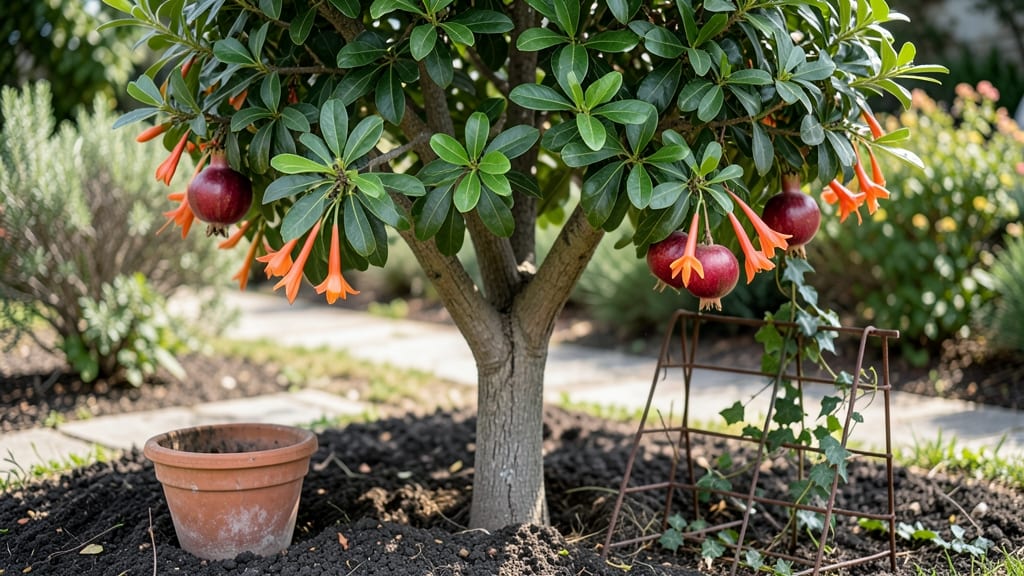
The Parfianka pomegranate tree thrives in Pacific Northwest winters, producing stunning fruit where others fail. I planted mine after years of struggling with tender varieties—this one survived Zone 7 winters with no protection, and the deep red fruit tastes like summer in December.
The secret lies in its thick bark and adaptability, but getting it right starts with the soil.
This tree isn’t fussy, but it does demand well-draining soil—think sandy loam mixed with compost—and 6+ hours of direct sun daily. My first mistake was planting it in heavy clay; now I amend the soil with 3 inches of organic matter before transplanting.
Water deeply once a week (more in summer), but avoid soggy roots—they’re the #1 killer of young trees.
By late summer, you’ll see glossy green leaves and tiny white flowers that turn into golf-ball-sized fruit by fall. The real magic happens in pruning: cut back one-third of the oldest branches each winter to keep it compact and productive.
With proper care, your tree will reward you with harvests for decades—and neighbors begging for cuttings.
Whether you’re growing in a large container or full ground, Parfianka delivers where others quit. The fruit stays fresh on the tree until frost, and the birds? They’ll leave it alone if you prune regularly. Let’s get yours growing strong—your future self will thank you.
📚 In This Guide
- What you need
- Instructions
- Tips and common mistakes
- Wrapping up and next steps
What you need
- ● Pruning shears: Bypass shears (sharp, 6–8" blades) for small branches. Pro tip: 💡 Sanitize with rubbing alcohol between cuts to prevent disease!
- ● Loppers: 1 pair (for branches ½"–2" thick). Look for ratcheting or bypass styles.
- ● Pruning saw: 1 handheld saw (for branches >2" thick). A bow saw works best for pomegranate’s dense wood.
- ● Gloves: 1 pair of cut-resistant, garden gloves (thorns are sharp!).
- ○ Disposable pruning bags: 1–2 (for collecting debris). Optional: A tarp to lay underneath.
- ● Rag or paper towels: For wiping sap/resin off tools.
- ● Ladder or step stool: Adjustable height (8–12 ft) for tall trees. ⚠️ Safety first: Use a stable, 3-sided ladder!
- ○ Pole pruner (optional):strong> Extendable (10–15 ft) for high branches.
- ● Pruning sealant: 1 small tube (like Tanglefoot Tree Wound Pruning Seal) for large cuts. ✨ Pro tip: Only use on cuts >½" thick!
- ● Timing: Prune in late winter/early spring (before buds swell) or summer (after harvest). Avoid pruning in fall.
- ● Weather: Choose a dry, overcast day (humidity slows healing).
- ● Tree health check: Inspect for diseased or dead wood before starting.
Step-by-step guide to planting and cultivating a Parfianka pomegranate tree
Here's how to establish this cold-hardy variety for reliable fruit production in your Pacific Northwest landscape.
Select the Optimal Planting Site and Prepare the Soil
The Parfianka thrives where summers are warm enough to ripen fruit but winters stay above -15°F—critical for this variety's survival. Choose a location with full sun exposure (at least 6-8 hours daily) and protection from harsh winter winds. I always test the spot by observing how long it stays dry after rain—pomegranates hate soggy roots.
Before planting, amend the native soil with 3-4 inches of compost mixed into the top 12 inches of soil. Pomegranates prefer well-draining, slightly acidic to neutral soil (pH 5.5-7.0). If your soil is heavy clay, create a 12-inch deep planting mound to improve drainage. The root system of a young Parfianka is delicate—don't rush this preparation step.
Plant at the Correct Depth and Stake for Support
Dig a hole twice as wide as the root ball but only as deep—the top of the root ball should sit 1-2 inches above ground level after backfilling. This prevents water from pooling around the trunk. I gently loosen any circling roots with my fingers before placing the tree in the hole; circling roots strangle growth over time.
Backfill with native soil mixed with the remaining compost, tamping lightly to eliminate air pockets. Water deeply to settle the soil, then install a 4-5 foot stake positioned 3-4 inches from the trunk. Secure the tree with a soft tree tie, leaving room for trunk expansion. Mulch the base with 2-3 inches of wood chips, keeping it 6 inches away from the trunk to prevent rot.
Establish Proper Watering and Fertilization Routines
Water deeply once weekly during the first growing season, providing 1-2 gallons per watering to encourage deep root growth. You'll know you're doing it right when the soil 12 inches down stays moist but not waterlogged. Overwatering is the #1 killer of young pomegranates—always check soil moisture before watering again.
In early spring, apply a balanced 10-10-10 fertilizer at half-strength when new growth appears. This variety responds well to low-nitrogen fertilizer (like 5-10-10) after the first year to promote fruiting. I avoid high-nitrogen fertilizers—they produce lush foliage at the expense of fruit production. Monitor for yellowing leaves, which indicate either overwatering or nutrient deficiency.
Prune for Structure and Fruit Production
Prune in late winter or early spring before new growth begins, removing dead, crossing, or inward-growing branches. I always make cuts just outside the branch collar to prevent damage to the trunk. The goal is to create an open vase shape that allows sunlight to penetrate the center—pomegranates need good air circulation to prevent fungal diseases.
Thin out excessive fruit in early summer, leaving 6-8 fruits per branch. This ensures larger, higher-quality fruit. The Parfianka produces both seedless and seeded varieties—if you want seedless fruit, remove the seeded blooms first. Watch for sunburnt fruit in hot climates; shading with lightweight fabric during extreme heat protects the skin.
Protect During Winter and Monitor for Pests
In regions where temperatures dip below -10°F, wrap the trunk with tree wrap and mound 4-6 inches of mulch around the base. The Parfianka handles cold better than most varieties, but young trees benefit from this extra insulation. I also prune back any damaged winter branches in early spring before new growth starts.
Watch for aphids and scale insects on new growth, which can stress the tree. A neem oil spray applied in early summer prevents most infestations. The Parfianka's thick skin makes it less susceptible to fruit rot, but remove any cracked or damaged fruit immediately to prevent fungal spread. With proper care, this variety rewards you with sweet, cold-hardy fruit for decades.
Tips & tricks for perfect Parfianka pomegranate cultivation
Here's what I've learned after years of growing this hardy variety in Pacific Northwest climates.
Site Selection Strategy: The 6-8 hours of daily sun requirement is non-negotiable for fruit ripening. I recommend testing potential sites by observing how quickly they dry after rain—pomegranates despise soggy feet. In windy areas, plant near a natural windbreak like a fence or building. The Parfianka's cold tolerance (-15°F) makes it ideal for our region, but microclimates matter: south-facing slopes get more sun and warmth.
Soil Preparation Insight: That 3-4 inches of compost mixed into 12 inches of soil isn't just decoration—it's insurance against poor drainage. For heavy clay soils, the 12-inch mound creates a perfect root environment. I always test soil pH before planting; if your soil is too acidic (below 5.5), add lime to reach that neutral range. The root system will thank you for this foundation work.
Planting Depth Technique: Positioning the root ball just 1-2 inches above ground level prevents waterlogging, which is deadly for young trees. I've seen many gardeners bury the root flare too deep—this smothers the tree and causes rot. When backfilling, mix the remaining compost thoroughly with native soil to create a nutrient-rich root zone. The 4-5 foot stake should be installed at a 45-degree angle for maximum stability.
Winter Protection Detail: While the Parfianka handles -15°F well, those first few winters are critical. I've found that wrapping the trunk with tree wrap and adding 4-6 inches of mulch creates a microclimate that protects young bark from temperature swings. In particularly harsh winters (below -10°F), I add extra mulch around the base to insulate the roots. This extra care pays off with stronger trees that bear fruit sooner.
Pro Tips for Parfianka Pomegranate Tree
- Here's what I've learned after years of growing this hardy variety in Pacific Northwest climates.
- Site Selection Strategy: The 6-8 hours of daily sun requirement is non-negotiable for fruit ripening.
- Soil Preparation Insight: That 3-4 inches of compost mixed into 12 inches of soil isn't just decoration—it's insurance against poor drainage.
Frequently asked questions
Got questions about growing the Parfianka pomegranate tree in your Pacific Northwest garden? You’re not alone! Here are answers to the most common queries—from pruning tips to winter survival strategies.
How cold-hardy is the Parfianka pomegranate tree, really?
The Parfianka is one of the toughest pomegranates out there, surviving down to -15°F (-26°C) with proper care. However, young trees or newly planted specimens may need winter protection (like burlap wraps or mulch) until established. Pro tip: Plant in a sheltered spot to avoid harsh winds!
When and how should I prune my Parfianka pomegranate?
Prune in late winter or early spring (before buds swell) to shape the tree and remove dead wood. Focus on open-center pruning to encourage airflow—cut back about 1/3 of the oldest canes annually. Avoid heavy pruning in fall, as it can stimulate tender new growth vulnerable to frost. Bonus: Prune after harvest to redirect energy for next year’s fruit!
Why aren’t my Parfianka pomegranates ripening?
Pomegranates need full sun (6+ hours/day) and consistent warmth to ripen. If your fruit stays green or tart, check for:
- Shade issues—relocate if nearby trees or structures block sunlight.
- Insufficient heat—PNW summers may need a microclimate (e.g., south-facing wall).
- Over-fertilizing with nitrogen—shift to a low-N, high-P/K fertilizer (like 5-10-10) in late summer.
Can I grow Parfianka pomegranate in a container?
Yes! Use a large pot (20+ gallons) with drainage holes and a well-draining mix (cactus/succulent blend + compost). Move containers indoors or to a garage during winters below 20°F (-7°C). Watch out: Container-grown trees may need more frequent watering and winter protection.
What pests should I watch for with Parfianka pomegranates?
Common culprits include:
- Aphids (sap-sucking pests on new growth)—blast off with water or use neem oil.
- Scale insects (bumpy brown spots)—scrub with soapy water or introduce ladybugs.
- Fruit borers (tunnels in pomegranates)—remove infested fruit and apply kaolin clay as a barrier.
Wrapping up and next steps
The Parfianka pomegranate tree is a game-changer for Pacific Northwest gardeners—its cold-hardy nature and stunning canopy make it a must-have for fruit lovers who crave resilience and beauty. 🌱 With the right pruning techniques, you’ll enjoy bountiful harvests and a thriving tree for years to come.
Ready to transform your garden? Start small: pick a sunny spot, gather your tools, and begin pruning this season. Your future self—and your taste buds—will thank you!