Blooming
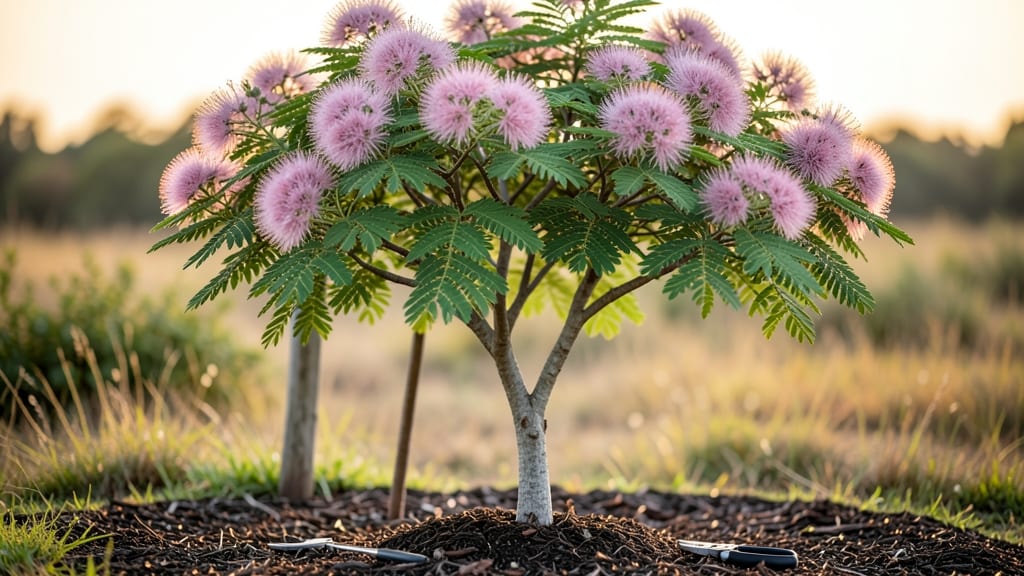
Mimosa tree blossoms light up Pacific Northwest gardens with their signature fluffy pink clouds—but only if you nail the growing conditions. I’ve learned the hard way that these trees need full sun, well-draining soil, and protection from winter winds to keep blooming reliably.
The key isn’t just planting; it’s creating the right microclimate where they thrive year-round.
These trees adore 6+ hours of direct sunlight daily and soil that drains fast—think sandy loam mixed with compost. In the PNW’s damp climate, mulching around the base helps prevent root rot while keeping roots cozy.
Prune in late winter to shape the tree and encourage those iconic spring blooms, but avoid heavy cuts after June or you’ll risk losing next year’s flowers.
When happy, a mimosa tree bursts into pink, fern-like blossoms from late spring through summer, with occasional late-season blooms if conditions stay mild. The secret to long-term success? Consistent watering during dry spells and a light feeding of balanced fertilizer in early spring.
Even in rainy Seattle, these trees reward patience with months of soft, romantic color.
Watch for aphids or spider mites—common pests that love mimosa trees—by inspecting new growth regularly. A strong spray of water usually does the trick, but severe infestations may need neem oil. With the right care, your mimosa will become the star of your garden, blooming reliably for decades.
📚 In This Guide
- What you need
- Instructions
- Tips and common mistakes
- Wrapping up and next steps
What you need
- ● Mimosa tree (Albizia julibrissin) seedlings or seeds: 1–3 seedlings (for mature trees, 6–12 ft tall, already blooming) 5–10 seeds (if starting from scratch; germination takes 10–30 days)
- ● Well-draining soil mix: 50% native PNW soil (sandy loam preferred) 30% compost (organic matter for nutrients) 20% perlite or coarse sand (for drainage)
- ● Fertilizer: Balanced 10-10-10 granular fertilizer (1 lb per tree) or Slow-release osmocote (14-14-14) for year-round feeding
- ● Mulch: 3–4 inches of wood chips or straw (to retain moisture and regulate soil temp)
Step-by-step guide to cultivating vibrant mimosa tree blossoms in the Pacific Northwest
Here’s how to coax year-round blooms from your mimosa tree, even in the PNW’s cooler climate.
Select the Right Mimosa Variety for Your Climate
Not all mimosa trees thrive in the Pacific Northwest’s mild winters and damp summers. Choose Albizia julibrissin ‘Summer Chocolate’ or Albizia julibrissin ‘Pink Cascade’—both tolerate cooler temperatures better than standard varieties. These varieties also handle the region’s humidity without developing fungal issues.
If you’re planting from seed, start with nursery-grown trees instead of seeds—they mature faster and adapt better to local conditions. Look for established plants with thick, dark green foliage and no signs of yellowing leaves, which signals poor health or disease.
Plant in Well-Draining Soil with Full Sun Exposure
Mimosa trees demand full sun (6+ hours daily)—even the PNW’s partial shade won’t cut it. Find a spot where the tree gets morning sun and afternoon light, as direct afternoon sun can scorch leaves in summer. If your yard is shaded, consider a south-facing wall or fence to maximize sunlight.
Use loamy, well-draining soil—mimosa trees hate soggy roots. Amend heavy clay soil with 2-3 inches of compost and a handful of sand or perlite to improve drainage. Test the soil’s moisture by pressing your finger 2 inches deep—if it feels damp after 24 hours, your drainage is good.
Water Deeply but Infrequently to Encourage Strong Roots
Newly planted mimosa trees need deep watering twice a week for the first month, then taper to once a week once established. Water slowly at the base (not overhead) to avoid fungal diseases like powdery mildew, which thrives in the PNW’s damp air. Aim for 1-2 gallons per watering—enough to moisten the soil 12 inches deep.
Check soil moisture by digging 2 inches down—if it’s dry, water again. Overwatering is the fastest way to kill mimosa trees, so resist the urge to water daily. Once roots establish (after 6-8 weeks), the tree becomes drought-tolerant and needs water only during dry spells.
Prune Strategically to Stimulate Blooms Year-Round
Prune mimosa trees in late winter or early spring (February-March) before new growth starts. Remove dead, diseased, or crossing branches first, then cut back overly long branches by ⅓ to encourage bushier growth and more blooms. Use clean, sharp pruners to make cuts just above a leaf node.
Here’s the key: Never prune in fall—it stimulates new growth that won’t harden off before winter, leading to frost damage. After pruning, apply a balanced 10-10-10 fertilizer around the base to replenish nutrients. You’ll see new pink or white blossoms within 4-6 weeks of pruning.
Protect Against PNW-Specific Pests and Diseases
The Pacific Northwest’s mild winters mean aphids, spider mites, and scale insects can overwinter on mimosa trees. Inspect leaves weekly in spring and summer for sticky residue (aphids) or fine webbing (spider mites). Spray infested areas with neem oil (mix 1 tablespoon per gallon of water) to deter pests without harming beneficial insects.
Fungal diseases like powdery mildew appear as white, powdery patches on leaves. Improve airflow by pruning dense branches and avoid overhead watering. If mildew appears, spray leaves with a baking soda solution (1 teaspoon baking soda + 1 quart water + a drop of dish soap) every 7-10 days until it clears.
Tips & tricks for Pacific Northwest-friendly mimosa tree blossoms
Let me share the insights I’ve gathered from growing mimosa trees in the Pacific Northwest—these are the little details that make all the difference between a tree that barely blooms and one that bursts with color year-round.
Variety Matters: The two PNW-friendly varieties mentioned—Albizia julibrissin ‘Summer Chocolate’ and Albizia julibrissin ‘Pink Cascade’—aren’t just suggestions, they’re your best bet. I’ve seen standard varieties struggle with the region’s damp winters, but these two varieties have proven resilient. When selecting a nursery-grown tree, pay extra attention to the leaves: they should be deep green without any yellowing, which is a red flag for stress or disease.
Sunlight Strategy: Mimosa trees absolutely demand full sun, but here’s the trick for PNW gardens: position your tree to get morning sun and afternoon light rather than direct afternoon sun, which can scorch leaves. If your yard is particularly shaded, consider planting near a south-facing wall or fence to maximize sunlight exposure. I’ve had to relocate a mimosa twice before finding the perfect spot—don’t rush this step!
Pruning Precision: When you prune in late winter or early spring (February-March), focus on cutting back overly long branches by one-third to encourage bushier growth. The key is to make clean cuts just above a leaf node—this is where new growth will sprout. I learned this the hard way by making uneven cuts that left the tree looking ragged. After pruning, apply that balanced 10-10-10 fertilizer right away to give your tree the nutrients it needs to produce those stunning blossoms within 4-6 weeks.
Watering Wisdom: The deep watering routine—twice a week for the first month, then once a week—is non-negotiable for establishing strong roots. But here’s what nobody tells you: use a moisture meter or dig down 2 inches to check soil moisture before watering. I’ve caught myself overwatering more than once, thinking the tree needed more when it was actually fine. Once roots establish after 6-8 weeks, you’ll notice your mimosa becomes surprisingly drought-tolerant, which is a game-changer for our unpredictable PNW weather.
Pro Tips for Mimosa Tree Blossoms
- Variety Matters: The two PNW-friendly varieties mentioned—Albizia julibrissin ‘Summer Chocolate’ and Albizia julibrissin ‘Pink Cascade’—aren’t just suggestions, they’re your best bet.
- Sunlight Strategy: Mimosa trees absolutely demand full sun, but here’s the trick for PNW gardens: position your tree to get morning sun and afternoon light rather than direct afternoon sun, which can scorch leaves.
Frequently asked questions
Got questions about mimosa tree blossoms?
Here are some of the most common ones—plus quick answers to help you enjoy their beauty year-round in the Pacific Northwest.
When do mimosa trees bloom, and how long does it last?
Mimosa trees (like the Albizia julibrissin) typically bloom in late spring to early summer (May–July), with vibrant pink or purple puffball flowers that last 2–4 weeks. For year-round color, opt for Acacia varieties (e.g., Acacia dealbata), which bloom in winter or early spring and rebloom sporadically.
Are mimosa blossoms safe in the rainy Pacific Northwest climate?
Yes! Mimosa trees thrive in PNW’s mild, wet winters—just ensure they’re planted in well-draining soil to avoid root rot. Acacia species (like the "Silver Wattle") are especially hardy, tolerating coastal fog and occasional frost. Prune lightly in late winter to encourage new growth and blooms.
What’s a good alternative if mimosa trees don’t grow well in my yard?
Try these PNW-friendly bloomers for year-round color:
- Western Redbud (Cercis occidentalis) – Spring blooms, drought-tolerant.
- Oregon Grape Holly (Mahonia aquifolium) – Evergreen + winter berries.
- Japanese Maple (Acer palmatum) – Stunning foliage and seasonal blooms.
- Camellia – Winter/early spring flowers, loves shade.
Why aren’t my mimosa blossoms opening, or are they falling off?
Common causes:
- Too much shade – Mimosa trees need 6+ hours of sun daily.
- Overwatering – Let soil dry slightly between waterings.
- Pests – Spider mites or aphids can stress blooms. Spray with neem oil if needed.
- Age – Young trees (under 3 years) may not bloom heavily.
Can I cut mimosa blossoms for arrangements, or do they last long in a vase?
Cut blooms in the morning for the longest vase life (3–5 days). Trim stems at an angle, remove lower leaves, and change water every 2 days. Add a flower food packet to extend freshness. Pro tip: Avoid direct sunlight on arrangements to prevent wilting.
Wrapping up and next steps
Mimosa tree blossoms bring year-round charm to the Pacific Northwest, offering vibrant color, low maintenance, and eco-friendly beauty. Whether you’re planting one for shade, pollinators, or simply joy, their resilience and adaptability make them a standout choice. 🌸
Ready to transform your space? Start by choosing the right variety for your climate and soil, then follow the care tips to keep your mimosa thriving. With a little effort, you’ll enjoy their blossoms—and the compliments—for seasons to come!