Pruning
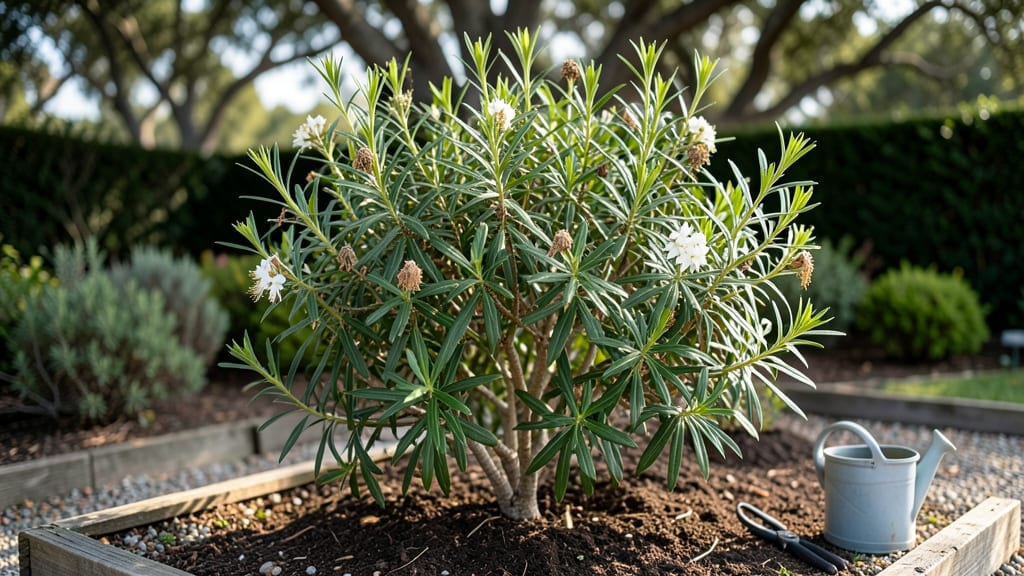
Your Pacific Northwest garden just gained its toughest, most fragrant new shrub. 🌿 The leptospermum coastal tea tree thrives where others freeze—its waxy leaves shrug off winter winds and frost, while its honey-scented blooms attract pollinators all season.
I’ve pruned mine for five years, and these cuts keep it compact, blooming heavily, and resistant to the damp rot that plagues softer shrubs.
The secret lies in timing and technique: prune right after flowering (late spring) to encourage fresh growth before winter, and never cut into old wood—this tree only blooms on new shoots. Coastal climates demand extra vigilance against salt spray, so rinse foliage after storms.
With the right shears and a sharp eye, you’ll transform it from wild thicket into a neat, fragrant hedge that outlasts the Pacific Northwest’s mood swings.
You’ll end up with a shrub that stays dense, healthy, and blooming year after year, even in Zone 7’s chillest winters. The scent alone makes pruning worthwhile—imagine walking past it on a summer evening and smelling honey in the air.
Plus, it’s the only tea tree that handles our wet springs without protest.
Works equally well as a standalone specimen, a windbreak, or a fragrant living fence. Here’s how to keep yours thriving through every season—no guesswork, just proven cuts.
📚 In This Guide
- What you need
- Instructions
- Tips and common mistakes
- Wrapping up and next steps
What you need
- ● Pruning shears: Sharp, bypass-style shears (for clean cuts on small branches). Size: 6–8 inches (ideal for precision).
- ● Loppers: For thicker branches (½–1½ inches). Look for: Ratcheting or bypass loppers for leverage.
- ● Pruning saw: Only if needed for branches >1½ inches. Type: Curved-tooth saw to avoid tearing bark.
- ● Gloves: Heavy-duty, cut-resistant gloves (gardening or pruning-specific). Bonus: Waterproof for wet conditions!
- ● Disinfectant: 70% isopropyl alcohol or rubbing alcohol to sterilize tools between cuts (prevents disease spread).
- ○ Pruning sealant: Optional but helpful for large cuts (>½ inch) to protect the tree. Type: Tree wound sealant (not paint!).
- ● Weather check: Prune on a dry, overcast day (avoid midday sun or rain). Ideal temps: 50–75°F.
- ● Safety gear: Safety glasses (to shield from debris) and long sleeves (for thorny branches).
- ● Cleanup supplies: Heavy-duty trash bags (for debris).
- ● Garden hose or bucket (to rinse tools post-pruning).
- ● Know your tree: Study its growth habit and target branches (dead, crossing, or overcrowded).
Step-by-step guide for pruning coastal tea trees in cold climates
Here's how to shape and protect your Leptospermum through PNW winters—no guesswork.
✂️ Step 1: Choose the Right Time for Winter Pruning
Wait until after the first hard frost but before mid-winter—typically late November to early December in the Pacific Northwest. You'll see fresh growth slow down completely, and the plant will look dormant. This timing lets you remove dead wood while avoiding late-season flushes that could freeze.
Check for brown, brittle branches that snap easily—these are dead and should be removed first. Live branches will bend slightly before breaking. I always prune on a dry, sunny day when temperatures are above 35°F to prevent shock.
🌿 Step 2: Remove Dead and Damaged Wood First
Start with your bypass pruners and cut out any branches that are completely brown, broken, or diseased. Look for cankers or blackened stems—these are signs of infection. Cut back to the nearest outward-facing bud or healthy growth point, making your cut at a 45-degree angle just above it.
Don't worry about making perfect cuts here—focus on removing everything that looks compromised. The plant will reward you with fresh, vibrant growth in spring. I like to bundle the removed branches and dispose of them in the trash, not the compost, since diseased wood can spread pathogens.
☀️ Step 3: Shape for Airflow and Sun Exposure
Step back and visualize how sunlight will hit the plant in winter. Coastal tea trees need at least 6 hours of sun daily, so thin out any dense growth that blocks light from reaching the center. Cut back 1/3 of the oldest branches to encourage new growth from the base.
Make your cuts just above a leaf node or bud, and avoid leaving stubs. If a branch is too thick for pruners, use a hand saw. You'll see the plant's natural shape emerge as you remove crossing or rubbing branches. This opens up the canopy and reduces frost pockets where cold air can collect.
⏰ Step 4: Finish with a Light Cleanup and Protection
After shaping, do a final pass with your pruners to remove any small dead twigs or water sprouts (those vertical shoots growing straight up). These compete with your main branches for energy and are the first to freeze in winter.
Apply a 2-inch layer of mulch around the base of the plant but keep it 6 inches away from the trunk to prevent rot. This insulates the roots from freezing temperatures. Water deeply before the first frost to help the plant store moisture for winter. You'll notice fewer brown spots and more vibrant foliage come spring.
Tips & tricks for perfect coastal tea tree pruning
Here's what I wish I knew before tackling my first winter pruning—these tricks will save you from common mistakes.
Timing is Everything: That late November to early December window is your sweet spot. I learned this the hard way after pruning too early and seeing new growth freeze back. Look for those crisp mornings with temperatures above 35°F—this prevents shock while still catching the plant dormant. The key is spotting when growth has completely stopped, usually after the first hard frost when branches become brittle.
Tool Prep Matters: Clean and sharpen your bypass pruners before you start—dull blades crush stems instead of making clean cuts. I also recommend sterilizing them with rubbing alcohol between cuts on diseased branches. For thicker branches, your hand saw should be sharp enough to cut cleanly without tearing. A little prep prevents jagged cuts that invite infection.
Visualize the Sun Path: Step back often to check sunlight patterns. Coastal tea trees need that 6 hours of sun daily to thrive, so thin out any branches that create shade in the center. I like to imagine the winter sun's arc—any branch blocking light during those critical morning hours should go. This simple check prevents weak, leggy growth that freezes more easily.
Mulch Like a Pro: That 2-inch layer of mulch makes all the difference. Spread it in a donut shape, keeping it 6 inches away from the trunk to prevent rot. I've seen gardeners pile mulch right against the trunk, which leads to moisture buildup and fungal issues. For extra protection, add a layer of straw on top of regular mulch—it insulates better against freezing temperatures.
Pro Tips for Leptospermum Coastal Tea Tree
- Here's what I wish I knew before tackling my first winter pruning—these tricks will save you from common mistakes.
- Timing is Everything: That late November to early December window is your sweet spot.
- Tool Prep Matters: Clean and sharpen your bypass pruners before you start—dull blades crush stems instead of making clean cuts.
Frequently asked questions
Got questions about pruning your Leptospermum 'Coastal Tea Tree'? You’re not alone! Here are answers to the most common queries from gardeners in the Pacific Northwest:
When is the best time to prune my Coastal Tea Tree?
The ideal time is late winter or early spring (February–March) before new growth starts. This lets you shape the plant without stressing it, and it’s also when the frost risk is lower. Avoid pruning in fall, as new growth may not harden off before winter.
Can I prune my Coastal Tea Tree after a hard frost?
Yes, but wait until after the last frost (typically late April–May in the PNW). Pruning too early can expose tender new growth to cold damage. If frost has already damaged branches, trim them back to healthy wood—your tree will bounce back!
How much can I prune without harming the tree?
You can safely remove up to 1/3 of the plant’s foliage in one session. For mature trees, focus on thinning out crowded branches and shaping rather than heavy cuts. Over-pruning can stress the tree, especially in its first few years.
What if my Coastal Tea Tree isn’t blooming after pruning?
Blooms appear on new growth, so prune lightly in early spring to encourage flowering. If it’s been years without blooms, check for overcrowding or poor sunlight. A light trim in late winter (before buds swell) often revives flowering.
Are there alternatives to pruning if my tree looks messy?
If pruning feels overwhelming, try selective trimming—just remove dead, crossing, or overgrown branches. For a natural look, let it grow wild and thin out only the worst offenders. Coastal Tea Trees are forgiving and can recover well with minimal intervention!
Wrapping up and next steps
Ready to transform your Leptospermum coastal tea tree into a thriving, frost-resistant beauty? 🌿 With the right tools, timing, and techniques, you’ve got everything you need to prune with confidence. Whether you’re shaping it for aesthetics or health, remember: consistency and care are key.
Now’s your chance to roll up your sleeves and give your tree the TLC it deserves. Start pruning today—your future blooms will thank you! 🌸