
Pruning
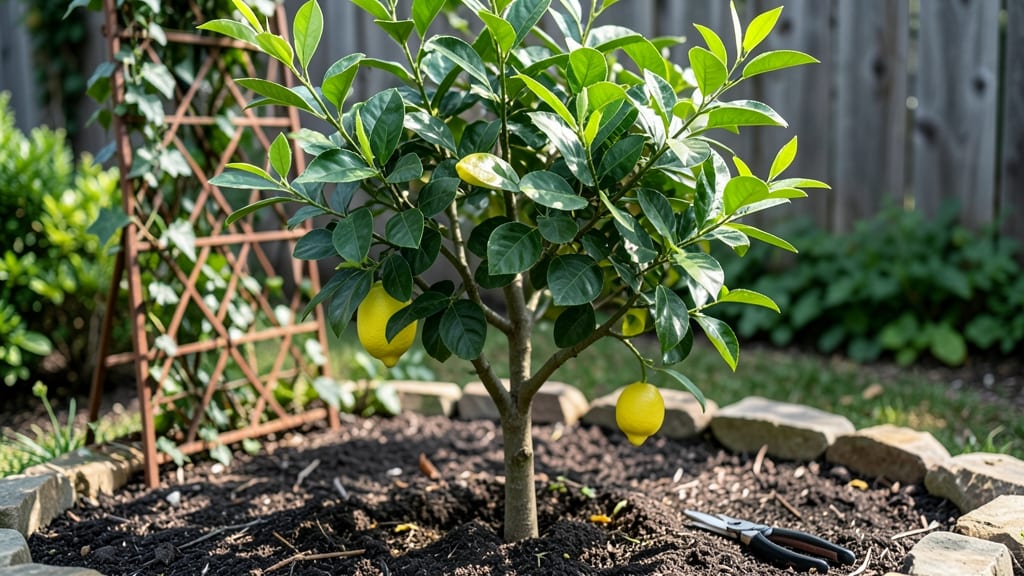
When your lemon tree sprouts wild growth, it’s not just unsightly—it’s stealing energy from your fruit. 🌱 I’ve wrestled with these stubborn suckers and water sprouts for years, and the right pruning turns them from pests into opportunities.
The key is knowing which growth to cut (and which to save) to keep your tree productive.
Most unwanted sprouts appear at the base or along branches, often after heavy pruning or damage. You’ll need sharp bypass pruners, rubbing alcohol for sterilizing cuts, and a clear day to work. The goal? Redirect your tree’s energy toward strong branches that bear fruit, not scraggly growth that never ripens.
By pruning correctly, you’ll see thicker branches, more blossoms, and lemons that actually reach full size. I’ve propagated some of those suckers into new trees—just dip the cuttings in rooting hormone and pot them up. It’s like getting free lemon trees while tidying up your existing one.
Timing matters: do the bulk of pruning in late winter or early spring, but you can trim water sprouts anytime they appear. The result? A tree that looks intentional, not overgrown, with fruit production that keeps up all year. Let’s get those branches in shape!
📚 In This Guide
- What you need
- Instructions
- Tips and common mistakes
- Wrapping up and next steps
What you need
- ● Pruning shears (bypass or anvil type) – Sharp, clean, and sterilized (1 pair). Size: 6–8 inches for precision.
- ● Hand pruners or loppers – For thicker branches (1 set). Size: 8–12 inches for branches up to 2 inches thick.
- ● Disposable gloves – Nitrile or heavy-duty garden gloves (1 pair) to protect from sap and thorns.
- ● Rubbing alcohol (70% or higher) – For sterilizing tools (small bottle).
- ○ Pruning sealant (optional but recommended) – Wound dressing (small jar) to prevent disease on large cuts.
- ● Trash bag or bucket – For collecting pruned branches (1 large bag or 5-gallon bucket).
- ● Notebook & pencil – To sketch your tree’s structure before pruning (1 small notebook).
- ● Extension pole saw – For high branches (if your tree is tall).
- ● Hose or spray bottle – To clean tools and rinse sap off cuts.
- ● Tree growth regulator – Like hydrogen peroxide spray (1 bottle) to promote faster healing.
- ● Safety glasses – If your tree has sharp thorns or you’re working near your face.
How to prune a lemon tree for healthy growth and bountiful fruit
Here's the straightforward method I've used to keep my lemon tree thriving for over five years.
🌱 Step 1: Choose the Right Time for Pruning
Timing is everything with lemon trees. I always prune right after harvest in late winter or early spring—just as new growth begins. This gives the tree time to recover before summer heat sets in. Avoid pruning in fall or winter when the tree is dormant, as this can leave it vulnerable to cold damage.
Look for tender new buds forming at the branch tips—this is your signal that the tree is waking up from dormancy. If you miss this window, wait until early summer after the main flush of growth has occurred, but be prepared for slightly slower recovery.
Real talk: If your tree is young (under 3 years old), focus on shaping rather than heavy pruning. Mature trees can handle more aggressive cuts, but always remove no more than 25% of the canopy in one session to avoid shocking the plant.
✂️ Step 2: Remove Dead, Diseased, or Crossing Branches
Start with the obvious—any branches that are dead, diseased, or broken need to go first. Use clean, sharp pruning shears to make cuts just above a leaf node or outward-facing bud. This encourages new growth in the right direction.
Next, look for crossing branches where limbs rub against each other. These create wounds that invite fungal infections. Remove the weaker of the two branches at its base. I always step back to check the overall shape—your goal is an open center that allows sunlight and air to reach all parts of the tree.
Don't skip this step (I learned the hard way). A single diseased branch left unchecked can spread to the entire tree within weeks. Sterilize your shears between cuts by wiping them with rubbing alcohol to prevent cross-contamination.
☀️ Step 3: Thin Out Overcrowded Areas for Better Airflow
Lemon trees produce fruit on new wood, so you want to maintain a balance between leafy growth and fruit-bearing branches. Start by identifying areas where branches are too close together—this is where airflow gets blocked, and humidity lingers, inviting pests and disease.
Use your shears to thin out about one-third of the smallest, inner branches in crowded areas. Focus on branches growing straight up (called "watersprouts") and weak, spindly growth—these rarely produce fruit and compete with stronger branches for nutrients.
Here's the thing—you're not just pruning to shape the tree, you're training it. Each cut should improve sunlight penetration and airflow. After thinning, you should be able to see light filtering through to the inner canopy. If not, keep going until you do.
🌿 Step 4: Shape the Tree for Optimal Fruit Production
Now it's time to refine the tree's structure. Lemon trees respond well to an open-center shape, where the main scaffold branches spread outward like a vase. Start by selecting 3-5 main branches that form a natural framework—these should be sturdy, outward-growing limbs about one-third down the trunk.
Prune back any suckers (shoots growing from the base of the tree) and low-hanging branches that don't contribute to the tree's structure. Cut these back to a leaf node or bud facing the direction you want new growth to go. Avoid leaving stubs—always make clean cuts just above a bud.
If your tree is already mature, you can lightly prune the tips of the main branches to encourage lateral branching and more fruit production. Just trim back the newest growth by about 1/3—this signals the tree to put energy into developing side branches instead of just vertical growth.
💧 Step 5: Post-Pruning Care for a Strong Recovery
After pruning, your lemon tree will need extra care to recover. Water deeply right after pruning to help the tree absorb nutrients through its now-larger root system. Keep the soil evenly moist (but not soggy) for the next 4-6 weeks, especially if you've made heavy cuts.
Apply a balanced fertilizer (like 10-10-10) 2-3 weeks after pruning to give the tree the nutrients it needs to heal and produce new growth. I like to mix it into the soil around the drip line (the outer edge of the tree's canopy) rather than just at the base.
Finally, keep an eye out for new growth—you should see buds swelling and tiny leaves unfurling within 2-3 weeks. If you don't see this within 4 weeks, your pruning may have been too aggressive. Next time, go lighter and focus on shaping rather than heavy cuts.
Tips & tricks for pruning your lemon tree
Here's what I've learned after years of trial and error with my own lemon trees—these tricks will help you avoid common mistakes and keep your citrus thriving.
Timing is Critical: The late winter/early spring window is your best bet for pruning, right after harvest when you see those tender new buds forming. If you prune too early in winter, the tree won't have time to recover before summer heat arrives. I've made the mistake of pruning in fall—my tree looked fine for weeks, then suddenly developed fungal spots. Always check for those new buds before you start cutting!
Tool Preparation Makes All the Difference: Your pruning shears need to be sharper than a chef's knife. Dull blades tear branches instead of making clean cuts, which invites disease. I sterilize my shears with rubbing alcohol between every cut, especially when dealing with diseased branches. You can also use a small file to sharpen them between sessions. This might seem like overkill, but trust me—it prevents cross-contamination that can ruin your entire tree.
Visualize the Open Center: When shaping your tree, imagine sunlight filtering through to the center. That's your goal! I like to step back every few cuts and look at the tree from all angles. You should be able to see through the canopy to the trunk. If you can't, keep thinning until you can. This open center shape isn't just about looks—it dramatically improves airflow, which prevents fungal diseases and encourages more fruit production on the outer branches.
Pro Tips for Lemon Tree Sprouting
- Here's what I've learned after years of trial and error with my own lemon trees—these tricks will help you avoid common mistakes and keep your citrus thriving.
- Timing is Critical: The late winter/early spring window is your best bet for pruning, right after harvest when you see those tender new buds forming.
- Tool Preparation Makes All the Difference: Your pruning shears need to be sharper than a chef's knife.
Frequently asked questions
Got questions about lemon tree sprouting? You’re not alone!
Whether you're a pruning pro or a citrus newbie, these answers will help you keep your lemon tree thriving year-round.
How do I encourage my lemon tree to sprout new growth?
Prune your lemon tree in late winter or early spring—just before new growth begins. Cut back overgrown branches by about one-third, focusing on outward-facing buds to improve airflow and sunlight exposure. Avoid heavy pruning in summer, as it can stress the tree. Pro tip: Fertilize lightly after pruning to support fresh sprouts!
When is the best time to prune for lemon tree sprouting?
The ideal time is late winter to early spring (just before buds swell) or right after harvest (fall). Avoid pruning in extreme heat or cold, as it can shock the tree. If you must prune in summer, do it early in the morning to reduce stress. Remember: Young trees need less pruning—focus on shaping!
What if my lemon tree isn’t sprouting after pruning?
Check these common issues:
- Lack of sunlight – Move the tree to a sunnier spot (6+ hours of light daily).
- Overwatering – Let soil dry slightly between waterings; soggy roots suffocate growth.
- Nutrient deficiency – Use a citrus-specific fertilizer in early spring.
- Pests/disease – Inspect leaves for aphids, mites, or fungal spots; treat with neem oil if needed.
Can I propagate lemon tree sprouts from cuttings?
Take 4–6 inch cuttings from healthy, non-flowering branches in spring or summer. Dip the cut end in rooting hormone, plant in moist perlite/sand mix, and cover with a plastic bag to retain humidity. Keep in bright, indirect light (no direct sun!) and mist daily. Roots should form in 4–8 weeks!
How do I prune lemon tree sprouts to keep the tree bushy?
Use the “open-center” method for a fuller shape:
- Remove suckers (shoots growing from the base or trunk).
- Trim crossing branches to prevent rubbing.
- Cut back overly long branches to encourage side shoots.
- Pinch back new growth tips (after 4–6 leaves) to promote branching.
Will pruning my lemon tree reduce fruit production?
Not if done right! Pruning increases fruit quality by improving airflow and sunlight penetration. However, avoid heavy pruning in fruit-bearing years—stick to light shaping. Over-pruning can temporarily reduce yield, but a well-maintained tree will rebound with bigger, sweeter lemons in the long run.
Wrapping up and next steps
Watching your lemon tree sprout new growth is a rewarding experience—and with the right pruning techniques, you’re well on your way to a bountiful, year-round citrus harvest! 🌿 By removing dead branches, shaping for sunlight, and encouraging healthy sprouts, you’ve given your tree the best chance to thrive.
Now, keep an eye on those fresh shoots, stay consistent with care, and soon you’ll be enjoying homegrown lemons in every season.
Ready to take the next step? Monitor your tree’s progress monthly and adjust pruning as needed. Happy growing—your kitchen (and taste buds) will thank you! 🍋✨