
Pruning
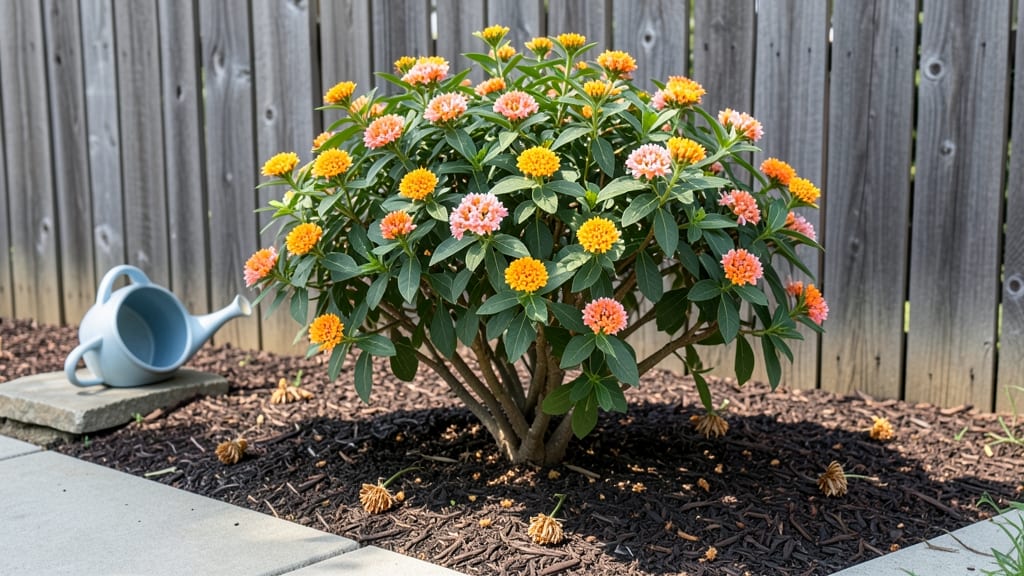
Creating a lantana tree form starts with a single, bold vision—one strong trunk crowned with cascading blooms. I learned the hard way that patience and precision are key; my first attempt looked more like a bush with a bad haircut than a graceful tree.
The secret lies in strategic pruning that shapes growth from the ground up, not just hacking back wild branches.
You’ll need sharp pruners, a sturdy stake for support, and a sunny spot with well-draining soil—lantanas hate soggy roots. Start with a young plant and prune early to encourage a single trunk, pinching back side shoots before they compete.
Think of it like training a young sapling: guide it upward while letting the top branches spread into a natural canopy of vibrant blooms.
By summer’s end, you’ll have a 3-4 foot lantana with a defined trunk and full, bushy foliage that blooms nonstop. The flowers—those clusters of pink, yellow, or purple—will draw butterflies like magnets, and your neighbors will ask how you did it.
The real magic happens in consistent pruning: trim back leggy growth in spring, shape the canopy in summer, and clean up in fall.
This method works for container lantanas too—just use a larger pot and the same pruning rules. The key is persistence; even if it looks messy at first, every cut brings you closer to that showstopping tree form you’re after. Ready to transform your lantana from bush to beauty?
📚 In This Guide
- What you need
- Instructions
- Tips and common mistakes
- Wrapping up and next steps
What you need
- ● Pruning shears: Sharp, bypass-style shears (4-6" blade) – 1 pair (sterilize with rubbing alcohol between cuts).
- ● Loppers: For thicker branches (1-2" diameter) – 1 pair (with a ratchet mechanism for ease).
- ● Hand pruners: For precision cuts on small stems – 1 pair (anvil-style for tougher growth).
- ● Garden gloves: Heavy-duty, cut-resistant – 1 pair (lantana thorns are no joke!).
- ● Disinfectant: 70% isopropyl alcohol or hydrogen peroxide – Small bottle (to prevent disease spread).
- ○ Pruning sealant: Optional but helpful for large cuts – Small tube (e.g., Tanglefoot Tree Wound Pruning Sealer).
- ● Lantana plant: Healthy, non-flowering stems (if shaping) or blooming branches (if thinning) – 1+ (mature bushes work best!).
- ● Extension pole saw: For high branches (if your lantana is a tall drink of water).
- ● Lantana fertilizer: Balanced 10-10-10 or bloom booster – Small bag (apply post-pruning for a growth boost!).
- ● Mulch: Organic (pine bark) or inorganic (gravel) – 2-3 inches (to retain moisture and suppress weeds).
- ● Camera/phone: To snap before/after pruning pics (because progress tracking is satisfying!).
Step-by-Step pruning guide for a full, flowering lantana tree form
Lantana thrives when pruned correctly—here's how to shape it into a lush, blooming tree form.
✂️ Step 1: Identify and Remove Dead or Weak Growth
Start by examining your lantana for any brown, brittle stems or branches that haven't produced new growth. These are your first targets—they won't recover and only compete with healthy growth for nutrients. Use clean, sharp pruners to cut these back to the main stem or a healthy lateral branch.
I always work from the bottom up, removing the worst offenders first. This gives me a clear view of the plant's structure. Look for stems that are thinner than a pencil or have no leaves—these are prime candidates for removal. Don't worry about making the plant look sparse yet; this step is purely about cleanup.
✂️ Step 2: Shape the Main Trunk and Primary Branches
For a tree form, you'll want to establish one central trunk and 3-5 main branches spaced evenly around it. Choose the strongest, most vertical stem as your main trunk and remove any competing vertical growth at its base. This encourages the plant to focus energy on that central leader.
Next, select 3-5 sturdy lateral branches to become your primary scaffold branches. These should emerge from the main trunk at a 45-degree angle or wider. If you don't have enough natural branches, you can encourage new ones by making a small cut just above a leaf node on the main trunk—this will stimulate branching.
✂️ Step 3: Prune for Bushiness and Flower Production
To create that dense, bushy look lantana is famous for, cut back the remaining branches by about one-third to one-half of their length. Make your cuts just above a set of leaves or a bud that's facing outward from the plant. This encourages growth in all directions rather than just upward.
Here's the thing—lantana flowers on new growth, so you want to stimulate plenty of fresh shoots. When you make these cuts, you're not just shaping the plant; you're setting it up for a summer of continuous blooms. Avoid cutting into old wood (the brown, woody stems)—these won't regrow leaves or flowers.
✂️ Step 4: Thin Out the Interior and Encourage Airflow
Lantana grows quickly, and dense centers can become shaded and prone to disease. Reach into the plant's interior and remove any crossing branches or growth that's growing toward the center of the plant. You're aiming for an open, vase-like shape that allows light and air to circulate freely.
Think of this as giving your lantana a spa treatment—more light means more blooms, and better airflow prevents fungal issues. Don't be afraid to be aggressive here. You can always prune back more later if needed, but you can't un-prune what you've already removed.
⏰ Step 5: Timing and Aftercare for Best Results
Prune your lantana in early spring before new growth begins, or right after the first flush of flowers finishes in late spring. This gives the plant plenty of time to recover and establish new growth before summer heat sets in. Avoid heavy pruning in fall—you want the plant to have energy stored for next year's growth.
After pruning, give your lantana a light application of balanced fertilizer (10-10-10 works well) to support new growth. Water deeply but don't overwater—the plant should have time to dry out between waterings. You'll see new shoots emerging within 2-3 weeks, which is your signal that the pruning was successful.
Tips & tricks for perfect lantana tree form pruning
Transforming your lantana into a stunning tree form takes precision—but these insider tips will help you avoid common pitfalls and achieve that lush, blooming structure every time.
Tool Prep is Non-Negotiable: Before you begin, sterilize your pruners with rubbing alcohol to prevent spreading disease between cuts. I learned this the hard way after pruning a healthy plant and later noticing mysterious spots on the leaves. Sharp, clean tools make all the difference in how well your lantana responds. In Step 1, when you're removing dead growth, take your time—rushing leads to jagged cuts that heal poorly.
The 45-Degree Rule in Step 2: When selecting those primary scaffold branches, pay close attention to their angle. Branches growing at exactly 45 degrees or wider create the strongest structure. If you have to choose between a perfect angle and a thicker branch, go for the angle—it's more important for long-term stability. This is where many gardeners make their first mistake: picking branches that are too vertical or too horizontal.
New Growth Stimulation in Step 3: The one-third to one-half reduction in Step 3 isn't arbitrary—it's the sweet spot for lantana. Cutting back too little won't stimulate enough new growth, while cutting back too much stresses the plant. Look for outward-facing buds when making your cuts; these will grow away from the center, creating that beautiful rounded shape. I always make a mental note to cut just above these buds—they're the plant's promise of future blooms.
Seasonal Timing Matters: The early spring timing in Step 5 is critical because lantana needs warm weather to recover from pruning. If you live in a cooler climate, wait until after the last frost date. In Step 5, when you're applying that 10-10-10 fertilizer, don't overdo it—lantana is drought-tolerant and prefers lean soil. Too much nitrogen will give you lots of leaves but fewer flowers, which is the opposite of what we want.
Pro Tips for Lantana Tree Form
- Transforming your lantana into a stunning tree form takes precision—but these insider tips will help you avoid common pitfalls and achieve that lush, blooming structure every time.
- Tool Prep is Non-Negotiable: Before you begin, sterilize your pruners with rubbing alcohol to prevent spreading disease between cuts.
- The 45-Degree Rule in Step 2: When selecting those primary scaffold branches, pay close attention to their angle.
Frequently asked questions
Got questions about shaping your lantana tree form for that perfect balance of beauty and bloom? You’re not alone! Here are some of the most common queries—plus quick, practical answers to keep your lantana thriving.
When is the best time to prune lantana for bushier growth?
Prune your lantana right after flowering (late spring to early summer) to encourage new growth and bushier form. Avoid heavy pruning in fall or winter, as lantana is semi-dormant and may struggle to recover. Light trimming to shape can happen year-round, but never cut into old wood—it won’t regrow!
How much can I trim back my lantana without killing it?
Lantana is tough! You can safely trim back up to one-third of its height or width in a single session. For dramatic shaping, space out pruning over 2–3 sessions. Always use clean, sharp shears to avoid tearing stems. Pro tip: If you’re unsure, start with a light trim and observe regrowth before going heavier.
Will pruning my lantana reduce its flowers?
Not at all! Pruning stimulates more blooms by promoting new growth and removing spent flowers. Focus on trimming back leggy stems and cutting just above a leaf node (where new shoots emerge). Bonus: Bushier plants = more surface area for those pollinator-loving flowers!
Are there alternatives to lantana for low-maintenance blooms?
If lantana’s aggressive growth or toxicity (to pets) concerns you, try firebush (Hamelia patens), abutilon (flowering maple), or pentas. These offer similar vibrant blooms with slightly less spread. Just note: None are completely pet-safe—always research before planting!
Why did my lantana stop blooming after pruning?
Lantana needs sunlight and regular deadheading to keep flowering. If blooms taper off post-prune, check for:
- Shade issues: Lantana thrives in full sun (6+ hours/day).
- Over-fertilizing: Too much nitrogen = leafy growth, fewer flowers.
- Stress: Underwatering or pests (like aphids) can halt blooms.
Wrapping up and next steps
Mastering the lantana tree form through pruning unlocks a vibrant, fuller plant with longer-lasting blooms—and you’ve got all the tools to make it happen! 🌸 Whether you’re trimming for shape, encouraging new growth, or simply keeping your lantana healthy, consistency is key.
Now that you’re armed with the right techniques and tips, roll up your sleeves and give your lantana the TLC it deserves.
Ready to transform your garden? Start small—pick one section of your lantana today and apply what you’ve learned. Watch as your plant responds with bold new growth and a burst of color! 🌿