
Pruning
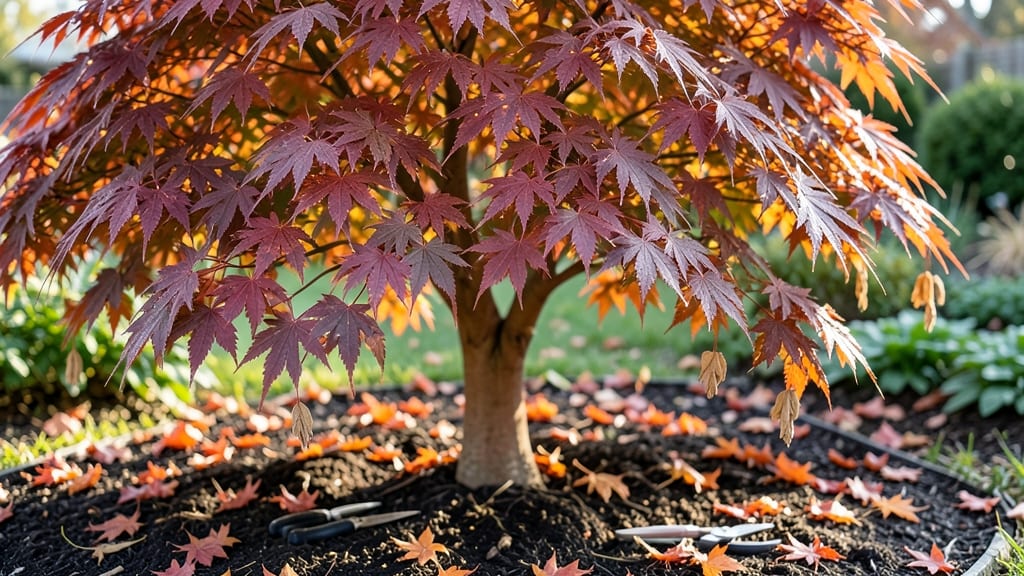
Japanese maple trees in autumn are nature’s living fireworks, and autumn pruning is how you keep those fiery leaves coming back year after year.
I’ve pruned my 15-year-old Acer palmatum every fall for a decade, and the difference between a tired, leggy tree and one that bursts with crimson, gold, and orange comes down to three simple cuts made at the right time.
The secret isn’t aggressive trimming—it’s strategic. You’re not shaping for winter; you’re removing dead branches, thinning crowded growth, and opening the canopy to let sunlight deepen those autumn hues. My tree now stays vibrant until hard frost, and the pruning takes less than 20 minutes with the right tools.
The key is timing: wait until after the first hard frost when the leaves have fallen but before winter dormancy sets in.
What you’ll end up with is a tree that looks like it stepped out of a Japanese garden magazine—bold, balanced, and bursting with seasonal color. The branches will hold their shape better through winter storms, and next spring’s new growth will be stronger.
Plus, you’ll avoid the heartbreak of broken limbs under snow.
This method works for both container-grown and in-ground Japanese maples, whether you’ve got a dwarf Osakazuki or a sprawling Bloodgood. The same principles apply, so grab your pruners and let’s turn your tree into an autumn showstopper.
📚 In This Guide
- What you need
- Instructions
- Tips and common mistakes
- Wrapping up and next steps
What you need
- ● Bypass pruners (sharp, clean, 10-12 inch handles) – 1 pair (for small branches).
- ● Loppers (longer handles, 18-24 inch) – 1 pair (for thicker branches ½–1.5 inch in diameter).
- ● Pruning saw (bow or curved blade) – 1 (for branches 2+ inches thick).
- ● Disposable gloves (nitrile or leather) – 1 pair (to protect hands from thorns/sap).
- ● Rubbing alcohol (70%+) – small bottle (for sterilizing tools between cuts).
- ○ Pruning sealant (optional, for large cuts) – small tube (helps prevent disease).
- ● Ladder or step stool – 1 (if tree is 6+ feet tall).
- ● Heavy-duty trash bags – 2-3 (for debris disposal).
- ● Hand lens or magnifying glass – Spots hidden pests or damaged areas.
- ● Tree wound dressing – For extra-large cuts (follow package instructions!).
- ● Spray bottle with water – Keeps tools clean and sap from sticking.
- ● Notebook & pen – Jot down notes on cuts for future reference.
Step-by-step guide for autumn Japanese maple tree pruning
Here's how to refresh your tree's structure while preserving its stunning autumn colors.
Assess the Tree's Autumn Health and Growth Patterns
Start by examining your Japanese maple tree in its current autumn state. Look for branches that have lost most of their vibrant foliage or display signs of disease, such as blackened leaves, fungal growth, or dead wood. These are your primary targets for removal. I like to work on a dry, overcast day—this makes it easier to see the tree's structure without harsh shadows.
Pay special attention to branches that cross or rub against each other. These create weak points where bark can be damaged, inviting pests and disease. Also, identify any branches growing straight up from the trunk—these often grow too vigorously and disrupt the tree's natural shape. Your goal is to maintain the tree's graceful, layered form while removing only what's necessary.
Make Strategic Cuts to Thin and Shape the Canopy
Begin with your first cut: thinning the canopy. Select branches that are about the thickness of a pencil or thinner and remove them entirely at their point of origin. I always start from the outer edges and work my way inward. This opens up the center of the tree, allowing more light to penetrate and encouraging new growth in spring. Make clean cuts just outside the branch collar—the swollen area where the branch meets the trunk.
Next, focus on shaping. Japanese maples have a natural, layered growth habit, so avoid heavy pruning that removes more than 20% of the foliage in one season. Instead, make small adjustments to maintain the tree's elegant silhouette. If a branch is growing too upright, cut it back to an outward-facing bud to encourage horizontal growth. Always use sharp, clean pruning shears to prevent tearing the bark.
Remove Dead, Diseased, or Weak Wood for Long-Term Health
Now, address any dead, diseased, or structurally weak branches. Start by removing entire branches that are completely devoid of leaves or show signs of decay. Cut these back to the trunk, ensuring your cut is smooth and flush with the branch collar. If a branch is only partially dead, prune it back to the first healthy bud or branch junction you encounter.
For branches with fungal infections or cankers, sterilize your pruning tools with rubbing alcohol between cuts to prevent spreading disease. Remove these branches entirely, and avoid leaving stubs. The goal is to eliminate any sources of infection before winter sets in. After removing the worst offenders, take a step back to assess the tree's overall balance. Your Japanese maple should still look full and vibrant, not skeletal.
Clean Up and Prepare for Winter Dormancy
Once all necessary cuts are made, gather the pruned branches and dispose of them properly. If any branches show signs of disease, place them in a sealed bag and dispose of them in the trash—not your compost pile. This prevents pathogens from spreading to other plants. I also like to give the tree a final inspection, checking for any remaining dead wood or signs of pests like spider mites.
After pruning, apply a thin layer of mulch around the base of the tree, keeping it at least 3 inches away from the trunk. This helps retain moisture and protect the roots during winter. Water the tree deeply to encourage new root growth before the ground freezes. Your Japanese maple is now ready for winter, with a cleaner structure and a stronger foundation for next year's spectacular autumn display.
Tips & tricks for perfect Japanese maple tree autumn pruning
Here's what nobody tells you about keeping your Japanese maple looking stunning after autumn's color show.
Timing is Everything: Early autumn is the best time to prune—aim for late September to early October when the tree has finished its peak color display but before the first hard frost. This timing allows the tree to heal before winter dormancy while still benefiting from the nutrients stored in the autumn leaves. If you missed this window, wait until early spring before buds swell, but avoid pruning in late winter when the tree is most vulnerable to frost damage.
Tool Preparation Matters: Sterilize your pruning tools with rubbing alcohol between cuts, especially when dealing with diseased branches. A dull blade tears bark and leaves jagged wounds that heal poorly. I keep a small bottle of 70% isopropyl alcohol in my toolkit and wipe down shears after every third cut. For larger branches, use pruning saws with sharp, clean teeth to make smooth cuts that won't damage the remaining bark.
Visual Cues for Healthy Cuts: When making cuts, look for the branch collar—the swollen area where the branch meets the trunk. Your cut should be just outside this collar, following its natural contour. If you cut too close, you'll damage the tree's ability to seal the wound. For branches thicker than your wrist, make a notch on the underside first, then complete the cut from the top—this prevents the branch from tearing and creates a cleaner wound that heals faster.
Post-Pruning Care: After finishing your cuts, give the tree a thorough watering to help it recover from the stress of pruning. The 3-inch mulch ring mentioned in Step 4 should be kept free of weeds to prevent competition for nutrients. I also recommend applying a balanced, slow-release fertilizer in early spring to help the tree recover and produce vibrant autumn colors next season. Avoid heavy fertilizing right after pruning—it stresses the tree further.
Pro Tips for Japanese Maple Tree In Autumn
- Here's what nobody tells you about keeping your Japanese maple looking stunning after autumn's color show.
- Timing is Everything: Early autumn is the best time to prune—aim for late September to early October when the tree has finished its peak color display but before the first hard frost.
- Tool Preparation Matters: Sterilize your pruning tools with rubbing alcohol between cuts, especially when dealing with diseased branches.
Frequently asked questions
Got questions about nurturing your Japanese maple tree in autumn? You’re not alone! Here are answers to the most common queries to help you keep those fiery autumn leaves glowing year after year.
When is the best time to prune a Japanese maple in autumn?
Prune your Japanese maple after the first hard frost (late October to early November) but before winter dormancy sets in. This timing minimizes stress while still allowing wounds to heal before cold snaps. Avoid pruning in late autumn if your region has unpredictable freezes—wait until early spring if needed!
Can I prune a Japanese maple in autumn if it’s still green?
Yes, but with caution! If your tree retains green leaves into autumn, focus on light pruning to shape it—avoid heavy cuts. Green leaves indicate active growth, and aggressive pruning can stress the tree. Prioritize removing dead or crossing branches first, then wait until full color change for major structural work.
How do I know if I’m pruning too late in autumn?
Watch for these red flags:
- Leaves turning brown before frost (sign of stress).
- Slow healing of cuts (ragged edges instead of smooth callusing).
- Sudden dieback in branches (a sign of winter damage).
What’s the best alternative if my Japanese maple is too small for autumn pruning?
For dwarf varieties (like Acer palmatum ‘Bloodgood’), focus on selective pruning—remove only 10–15% of foliage to maintain shape. Use hand pruners for precision, and avoid cutting into old wood (it won’t regrow). If the tree is very young, skip autumn pruning entirely and wait until late winter/early spring.
Why are my Japanese maple leaves turning brown and crispy after pruning?
Brown, crispy leaves post-pruning usually mean over-pruning or late-season stress. Check these fixes:
- Thin out cuts (never remove >30% of canopy in one go).
- Water deeply before and after pruning (1–2 inches of soil moisture).
- Apply a balanced fertilizer (10-10-10) in early spring to recover.
Wrapping up and next steps
There you have it—your Japanese maple tree is ready to shine brighter than ever in autumn! 🍁 By mastering these three strategic cuts, you’re not just pruning; you’re sculpting a masterpiece that will dazzle for seasons to come.
The key? Patience, precision, and timing—your tree will thank you with vibrant foliage and robust growth.
Now that you’re armed with the know-how, why not take the next step?
- 🌱 Plan your pruning schedule—mark those autumn dates on your calendar!
- 📸 Document your progress—before-and-after photos make the journey even more rewarding.
- 🌿 Explore advanced techniques like pollarding or espalier for a truly unique look.