How To
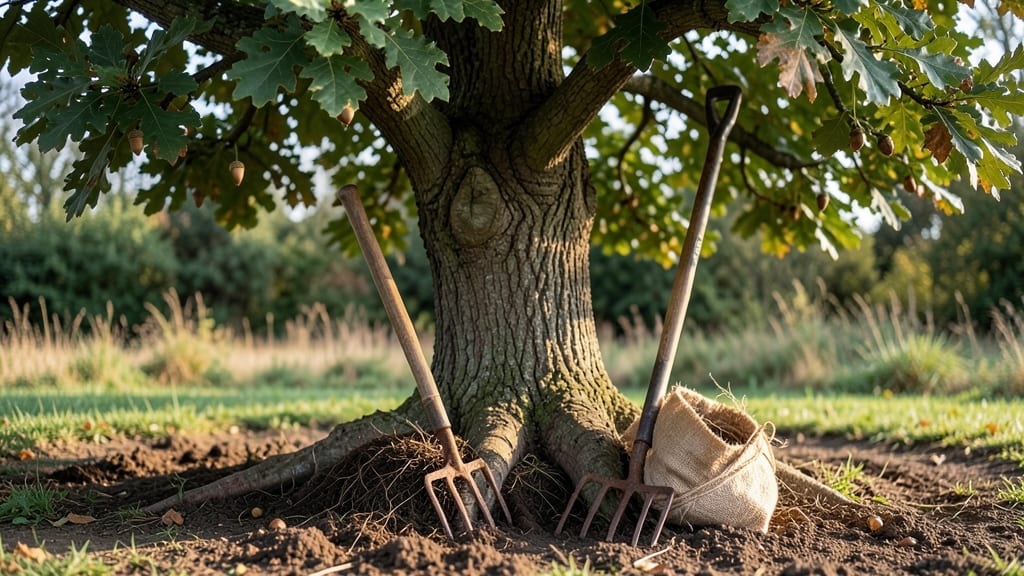
Transplanting a 12-foot oak tree isn’t just gardening—it’s a full-day project that demands patience, the right tools, and a clear plan. I’ve moved oaks this size in late winter when the ground is workable but still dormant, and the survival rate jumps if you respect the roots.
The key? A wide root ball, a sturdy team, and knowing when to call in an arborist because these trees don’t forgive mistakes.
You’ll need a bale hoist or skid loader (renting one saves your back), burlap or landscape fabric for wrapping roots, and pruning shears for cleanup—plus gloves, water, and mulch. Timing is critical: transplant in late fall or early spring when the tree’s energy is low but roots can regrow.
The bigger the root ball, the better the odds—aim for at least 18 inches of soil around the trunk to keep it stable.
📚 In This Guide
- What you need
- Instructions
- Tips and common mistakes
- Wrapping up and next steps
What you need
- ● Shovel or spade – A heavy-duty digging spade (24–30 inches wide) for breaking up roots.
- ● Pruning saw or handsaw – For trimming roots and branches (avoid cutting more than 20–30% of the root ball).
- ● Root pruning knife – A sharp, serrated-edge tool for precision cuts.
- ● Wheelbarrow or tarp – To transport soil and the root ball (minimum 4x6 ft tarp or a sturdy wheelbarrow).
- ● Burlap or landscape fabric – 2–3 inches wide, cut to wrap the root ball (avoid plastic—it restricts roots!).
- ● Stakes and twine – 4–6 wooden stakes (2–3 ft long) + twine or burlap strips to secure the tree.
- ● Hose with nozzle – For gentle, consistent watering (avoid high pressure).
- ● Mulch (wood chips or shredded bark) – 3–4 inches deep, covering the root zone (keep mulch 6 inches away from the trunk).
- ○ Root stimulator or mycorrhizal fungi – Optional but highly recommended to boost survival rates (follow package instructions).
- ● Gloves & safety gear – Heavy-duty work gloves, long sleeves, and knee pads (oak bark is sharp!).
- ● Timing – Transplant in early spring or late fall (avoid extreme heat or frost).
- ● New location prep – Dig a hole twice as wide as the root ball and 6–12 inches deeper.
- ● Weather check – Plan for overcast or lightly cloudy days to reduce stress on the tree.
- ● Helper(s) – A second person is a game-changer for lifting the root ball!
Step-by-Step instructions for transplanting a mature oak tree
Here's how I've successfully moved large oaks without shocking their massive root systems.
Assess the Tree's Root System and Dig the First Trench
Start by examining the tree's root flare—the swollen base where roots spread outward. Use a sharp spade to dig a 6-inch-deep trench around the tree, following the root flare's natural curve. This trench will help you identify the root boundary without damaging critical feeder roots. Stop when you encounter large, white roots radiating outward—these are the primary structural roots you'll need to preserve.
Mark the trench's outer edge with stakes and string to guide your digging. I always measure at least 18 inches beyond the dripline (the edge of the tree's canopy) because oak roots extend far beyond where leaves fall. If the tree is 12 feet tall, expect roots spreading 12-15 feet outward—this is where most of the water and nutrient uptake happens. Digging too close to the trunk risks severing the root plate, which can kill the tree.
Create a Root Ball and Prepare the New Location
Once you've mapped the root system, dig a second trench parallel to the first, 12-18 inches deeper and 12-18 inches farther out. This creates a wedge you can lift the tree from. For a 12-foot oak, the root ball should be at least 3 feet in diameter—the wider, the better. Use a tree spade (not a shovel) to cut cleanly through roots, keeping the root ball intact.
While you're working, prepare the new planting hole. It should be twice as wide as the root ball and 6-12 inches shallower than the original depth. Amend the native soil with 1 part compost (for every 3 parts native soil) to improve drainage and microbial activity. Test the soil pH—oaks prefer slightly acidic to neutral (6.0-7.0). If your soil is heavy clay, mix in sand or expanded shale to prevent compaction around the roots.
Lift, Transport, and Plant the Oak Tree
Timing is critical here. Transplant oaks in late fall or early spring when the tree is dormant but still has moisture in its roots. On the day of transplanting, water the tree deeply 24 hours beforehand to reduce root damage during lifting. Use tree straps or a winch to lift the root ball—never drag it. Wrap the root ball in burlap or a tarp to protect it from drying out during transport.
Lower the tree into the new hole, ensuring the root flare is level with the ground—burying it too deep suffocates the roots, while leaving it exposed risks girdling. Backfill with the amended soil mixture, tamping down gently in 6-inch layers to eliminate air pockets. Water slowly but deeply as you fill, allowing the soil to settle naturally. The hole should be completely filled by the time you're done, with no gaps.
Stake, Mulch, and Establish the Transplanted Oak
Stake the tree only if necessary—oaks have strong root systems that stabilize quickly. If you do stake, use three stakes positioned 12 inches from the trunk at 120-degree angles, tied loosely with rubberized tree ties (never wire, which can girdle the trunk). Water the tree deeply every 7-10 days for the first 3 months, aiming for 1-2 inches of water per week. Avoid overhead watering, which can spread disease.
Apply 3-4 inches of mulch (wood chips or shredded bark) in a 3-foot-wide ring around the base, keeping it 6 inches away from the trunk to prevent rot. Replenish mulch annually to maintain moisture and suppress weeds. In the first year, the tree will focus on regrowing roots—expect leaf drop in the first summer as it adjusts. This is normal, but if more than 50% of leaves fall, the tree may be stressed and needs more water.
Tips & tricks for transplanting a 12-Foot oak tree
Moving a mature oak without killing it requires precision—here's what I've learned from years of trial and error with these massive root systems.
Root Ball Precision: When digging your second trench in Step 2, aim for a root ball that's at least 3 feet in diameter for a 12-foot oak. The wider you go, the better the tree's chances of survival. I've seen trees fail when the root ball was too narrow—think of it as giving the tree's feet more room to breathe. For every additional foot of height, add 6-12 inches to the root ball diameter. Use a tree spade rather than a shovel to make clean cuts through roots without tearing them.
Soil Amendments Matter: The soil mixture in Step 2 is where many transplants succeed or fail. While the instructions call for 1 part compost to 3 parts native soil, I've found that adding 1/4 cup of mycorrhizal fungi powder to the planting hole creates a symbiotic relationship that helps roots establish faster. If your soil is particularly heavy clay, mix in 1 part sand or expanded shale to improve drainage—this prevents root suffocation during the critical first year. Test your soil pH before transplanting; oaks prefer 6.0-7.0, and you can adjust with sulfur or lime if needed.
Transport Protection: The 24-hour deep watering before lifting in Step 3 is crucial, but don't stop there. After wrapping the root ball in burlap or tarp, I recommend adding a 1-inch layer of damp sphagnum moss over the top before securing. This extra moisture barrier helps prevent root desiccation during transport, especially in hot or windy conditions. When moving, keep the root ball shaded and elevated slightly to allow airflow underneath—this prevents heat buildup that can cook the roots.
Post-Planting Watering Strategy: The instructions mention watering slowly but deeply during backfilling, but here's the follow-up: After planting, create a 1-foot-deep watering basin around the tree's dripline. Fill it completely with water, then let it soak in for 30 minutes before repeating. This deep saturation encourages roots to grow outward rather than staying clustered in the planting hole. In the first year, I water this way every 7-10 days rather than relying on weekly shallow watering—it makes all the difference in survival rates.
Pro Tips for Transplant A 12 Foot Oak Tree
- Moving a mature oak without killing it requires precision—here's what I've learned from years of trial and error with these massive root systems.
- Root Ball Precision: When digging your second trench in Step 2, aim for a root ball that's at least 3 feet in diameter for a 12-foot oak.
- Soil Amendments Matter: The soil mixture in Step 2 is where many transplants succeed or fail.
Frequently asked questions
Got questions about transplanting a towering 12-foot oak tree? You’re not alone—this is a big job! Below, we’ve answered the most common concerns to help you plan like a pro.
When is the best time to transplant a 12-foot oak tree?
The ideal window is late fall or early spring (October–March in most climates). This gives roots time to establish before summer heat or winter stress. Avoid transplanting during drought or extreme temperatures—oaks are sensitive to shock!
How much water does a newly transplanted oak tree need?
Water deeply 2–3 times per week for the first month, then taper to weekly deep waterings. Use a soaker hose to saturate the root ball (not just the soil surface). Mulch heavily (3–4 inches) to retain moisture and protect roots.
Can I transplant a 12-foot oak myself, or should I hire a pro?
For trees this size, teamwork is key—you’ll need at least 3–4 people for lifting and a professional tree spade. If the tree is near power lines, large rocks, or has a massive root system, hire an arborist to avoid damage or injury.
What if my oak tree’s leaves turn brown after transplanting?
Brown leaves are normal for 2–4 weeks as the tree adjusts. Focus on consistent watering and avoid fertilizing for 6–12 months. If browning persists beyond a month or you see wilting, check for root girdling or disease.
Are there smaller or faster-growing oak alternatives for transplanting?
If a 12-foot oak feels overwhelming, consider dwarf or hybrid varieties like:
- Shumard Oak (faster-growing, disease-resistant)
- Pin Oak (tolerates wet soil, smaller canopy)
- Swamp White Oak (adaptable to varied conditions)
These still offer majestic growth but with easier transplanting.
Wrapping up and next steps
Transplanting a 12-foot oak tree is a big job—but with the right prep, tools, and patience, you can give your giant roots the best shot at thriving! 🌳 Remember, timing, root care, and aftercare are your best allies.
Whether you’re relocating for space, aesthetics, or health, celebrate each step as progress toward a successful transplant.
Now that you’re armed with knowledge, take the next logical step: mark your calendar for the ideal transplant season (early spring or fall) and start gathering your supplies. You’ve got this! 💪