
Pruning
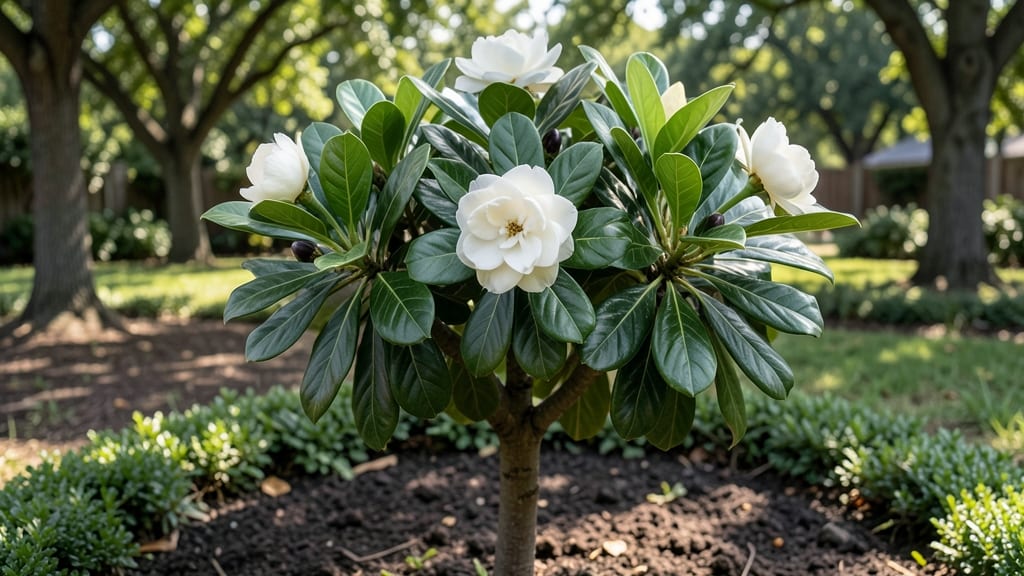
That gardenia standard tree thrives in Pacific Northwest summers—but its real magic happens in how you prune it year-round. I’ve learned the hard way that skipping winter pruning means fewer blooms by June, while over-pruning in spring stunts growth. The key is working with its natural rhythm, not against it.
This tree needs bright, indirect light and well-draining soil that stays moist but never soggy. In my zone 8 garden, I’ve found that mulching with 3-4 inches of bark keeps roots cool in summer and retains moisture through our dry spells.
The fragrance alone makes the effort worth it—imagine walking past a bush heavy with creamy-white blooms in July.
With the right pruning schedule, you’ll see stronger branches by spring and more abundant flowers by midsummer. The secret is light shaping in late winter and strategic cuts after blooming. I’ll show you exactly where to trim to avoid shocking the tree while encouraging bushier growth.
Whether you’re dealing with Pacific Northwest rain or summer heat, these adjustments keep your gardenia healthy through every season. Let’s get those shears ready—your tree’s next flush of blooms starts with a few simple cuts now.
📚 In This Guide
- What you need
- Instructions
- Tips and common mistakes
- Wrapping up and next steps
What you need
- ● Gardenia Standard Tree: A healthy, mature specimen (3–6 feet tall, depending on variety). Choose a disease-resistant cultivar like Gardenia jasminoides.
- ● Pruning Shears: Bypass pruners (sharp, clean, and 1.5–2.5 inches blade length) for small branches.
- ● Loppers: Bypass loppers (for branches ½–1.5 inches thick) with a 20–24-inch reach.
- ● Pruning Saw: Hand saw (for thick branches 1.5+ inches thick) with a 10–12-inch blade.
- ● Disinfectant: 70% isopropyl alcohol or a 10% bleach solution (1 part bleach to 9 parts water) to sterilize tools between cuts.
- ● Garden Gloves: Heavy-duty, cut-resistant gloves (gardening or pruning-specific) to protect hands from thorns.
- ○ Pruning Sealant: Optional but helpful for large cuts: Tree wound sealant (like Tanglefoot Tree Wound Pruning Sealer).
- ● Mulch: 2–4 inches of organic mulch (e.g., cedar chips or pine bark) to retain moisture and regulate soil temp.
- ● Weather Check: Prune on a dry, overcast day (avoid rain or wind) to minimize stress on the tree.
- ● Safety Gear: Safety glasses (if dealing with large branches) and closed-toe shoes.
- ● Time of Year: Best for late winter/early spring (Feb–March) in PNW’s mild climate. Light pruning can also occur in summer (June–July) to shape.
- ● Water Source: Hose or watering can to hydrate the tree post-pruning.
How to prune a gardenia standard tree for Pacific Northwest climates
Pruning gardenias in the Pacific Northwest requires a seasonal rhythm—timing matters more than technique.
Assess Growth and Plan Your First Cut
Start by examining your gardenia's structure in late winter, just as new buds form. Look for crossing branches, those growing inward or rubbing against others—these compete for energy and weaken the tree. I always prune these first, as they’re the easiest to spot and remove. Use sharp, clean pruning shears to make cuts at a 45-degree angle, about ¼ inch above a leaf node where new growth can emerge.
The Pacific Northwest’s mild winters mean gardenias stay semi-dormant but still active. Avoid heavy pruning now—focus only on shaping and removing dead wood. If you see yellowing leaves or bare stems, those branches are likely dead and should be cut back to healthy wood. Never leave stubs; they invite disease and rot.
Light Pruning in Early Spring for Bloom Stimulation
Once the first flush of flowers appears in early spring, it’s time for a lighter touch. Gardenias bloom on new wood, so prune just enough to open the canopy for better airflow and sunlight penetration. I trim back overly dense areas by about one-third, focusing on the outer edges of the tree to encourage an open, vase-like shape. This prevents fungal issues like powdery mildew, which thrives in the damp PNW climate.
Watch for new growth—it’ll appear as bright green shoots within 2-3 weeks of pruning. If you see leggy growth reaching toward the light, your tree needs more sun. Gardenias in the PNW often struggle with low light, so adjust pruning to redirect energy toward the center rather than outward. Avoid cutting back more than 20% of the foliage at once; this keeps the tree resilient.
Mid-Summer Maintenance to Encourage Fall Blooms
By mid-summer, your gardenia should be in full leaf. This is the time to deadhead spent blooms—snip off flower stalks just above the next set of leaves. This redirects the plant’s energy toward producing more flowers for fall, which is critical in the PNW’s cooler months. I also remove any water sprouts (shoots growing straight up from the trunk or branches) as they drain energy from the main structure.
Check for pests like aphids or spider mites, which love the humid PNW summers. If you spot them, prune affected areas immediately and treat with neem oil. Avoid heavy pruning now—your goal is to maintain shape, not reshape. If a branch is severely damaged, cut it back to the nearest healthy node, but limit this to no more than 10% of the tree’s total foliage.
Late Fall Cleanup for Winter Resilience
As temperatures drop in late fall, focus on sanitation. Remove all dead, diseased, or broken branches—these are entry points for fungal infections. I also thin out the canopy slightly to improve air circulation, which is vital in the PNW’s damp winters. Prune just enough to let light reach the inner branches, but avoid heavy cuts that stress the tree before dormancy.
This is also the time to shape for winter. Gardenias in the PNW benefit from a slightly rounded silhouette, which sheds rain and snow more effectively. If you notice branches growing at sharp angles, prune them back to encourage a more natural, balanced form. Never prune after mid-October, as new growth won’t harden off before winter and could be damaged by frost.
Post-Pruning Care for Pacific Northwest Conditions
After pruning, give your gardenia a deep watering to help it recover, especially if the PNW’s dry spells have stressed the roots. Apply a slow-release fertilizer in early spring to support new growth, but avoid high-nitrogen fertilizers—they promote leafy growth at the expense of flowers. Instead, use a balanced 10-10-10 or 8-3-9 formula to encourage blooming.
Monitor your tree closely in the weeks after pruning. If you see yellowing leaves, it could signal over-pruning or nutrient deficiency. Adjust care accordingly—mulch the base with 2-3 inches of organic mulch to retain moisture and regulate soil temperature. In the PNW, where winters are mild but summers can be dry, consistent moisture is key to keeping your gardenia thriving.
Tips & tricks for pruning gardenia standard trees in the Pacific Northwest
A few strategic adjustments can transform your gardenia from struggling to stunning—especially in the PNW's unique climate. Here's what I've learned after years of trial and error with these delicate trees.
Tool Selection Matters: Never use dull or rusty pruning shears—they crush stems instead of making clean cuts. I invest in high-quality, bypass pruners that cut cleanly at a 45-degree angle (as mentioned in Step 1), which promotes faster healing. For thicker branches, use loppers with a 3-inch cutting blade—they provide the leverage needed without damaging the branch collar. Always disinfect your tools between cuts with rubbing alcohol to prevent spreading disease, particularly important in the damp PNW climate.
Seasonal Timing is Everything: The PNW's mild winters mean gardenias stay semi-active year-round, so timing cuts is more nuanced than in colder climates. In Step 1, when you're pruning in late winter, focus on removing only dead wood and crossing branches—never more than 10-15% of the tree's total foliage. This minimal approach prevents stressing the tree during its semi-dormant period. The 2-3 week window for new growth in Step 2 is your best indicator—if you don't see fresh shoots within this timeframe after spring pruning, you've likely cut too aggressively.
PNW-Specific Pest Prevention: The humid summers create perfect conditions for aphids and spider mites, which can devastate gardenias. When you're doing mid-summer maintenance in Step 3, I recommend keeping a spray bottle of neem oil mixed with water (1 tablespoon per quart) handy. Spray the undersides of leaves where pests hide, and reapply every 7-10 days during peak summer months. This proactive approach prevents the need for heavy pruning later—something we want to avoid in the PNW's delicate balance of seasons.
Winter Pruning for Rain Shedding: The rounded silhouette mentioned in Step 4 isn't just about aesthetics—it's a functional adaptation for the PNW's frequent rain and occasional snow. When shaping in late fall, focus on creating a dome shape that allows water to run off rather than pool in the center. I've found that branches growing at angles steeper than 45 degrees from vertical are particularly prone to collecting moisture, so these get priority attention during your cleanup.
Pro Tips for Gardenia Standard Tree
- A few strategic adjustments can transform your gardenia from struggling to stunning—especially in the PNW's unique climate.
- Tool Selection Matters: Never use dull or rusty pruning shears—they crush stems instead of making clean cuts.
- Seasonal Timing is Everything: The PNW's mild winters mean gardenias stay semi-active year-round, so timing cuts is more nuanced than in colder climates.
Frequently asked questions
Got questions about keeping your gardenia standard tree thriving in the Pacific Northwest’s unique climate? Here are some of the most common ones—plus straightforward answers to help you prune like a pro!
When is the best time to prune a gardenia standard tree in the PNW?
The ideal window is late winter to early spring (February–March), just before new growth starts. This timing avoids shocking the plant with cold snaps while removing dead or weak branches. Skip summer pruning—it stresses the tree and can reduce flowering. For mild PNW winters, a light trim in early fall (September–October) can also work, but avoid heavy cuts.
Do I need to protect my gardenia from PNW rain and wind?
While gardenias are resilient, excessive rain and wind can damage blooms and branches. After pruning, apply a light layer of mulch (2–3 inches) to retain moisture and protect roots. For exposed trees, consider a windbreak (like a lattice or burlap screen) during stormy seasons. Never prune during wet weather—tools can spread disease, and cuts heal poorly.
How much can I trim back a mature gardenia standard tree?
Stick to the “one-third rule”: Never remove more than 1/3 of the tree’s foliage in a single session. For standard trees, focus on:
- Dead, diseased, or crossing branches (cut to the collar, not mid-branch).
- Overly dense growth to improve airflow (aim for an open vase shape).
- Trimming just above a leaf node to encourage new growth.
Will pruning my gardenia reduce its flowers?
Not if done right! Proper pruning actually boosts blooms by redirecting energy to healthy growth. Avoid shearing (cutting randomly)—instead, prune to shape and thin the canopy. For standard trees, prioritize:
- Removing spent blooms (deadheading) to encourage new flowers.
- Trimming back to the last set of leaves on leggy stems.
- Avoiding cuts closer than 1/4 inch to the trunk.
What’s a good alternative if my gardenia struggles in PNW conditions?
If your gardenia battles cold, humidity, or pests, consider these PNW-friendly alternatives with similar elegance:
- Camellia – Thrives in shade, handles rain, and blooms winter/spring.
- Olearia (Daisy Bush) – Drought-tolerant, fragrant, and loves coastal climates.
- Magnolia ‘Ann’ – Cold-hardy, disease-resistant, and produces stunning flowers.
- Pieris japonica – Evergreen with cascading blooms; tolerates acid soil.
Wrapping up and next steps
Cultivating a gardenia standard tree in the Pacific Northwest’s unique climate is entirely within reach—with the right pruning strategies! 🌿 By mastering year-round trimming, you’ll ensure lush blooms, strong growth, and resilience against regional challenges like damp winters or windy summers.
Remember, consistency is key: prune lightly in spring, shape in summer, and protect in fall/winter.
Now that you’re armed with expert tips, roll up your sleeves and give your gardenia the care it deserves! Ready for the next step? Explore our planting guide to set your tree up for long-term success—or share your pruning wins with fellow gardeners! 🌸