Trees
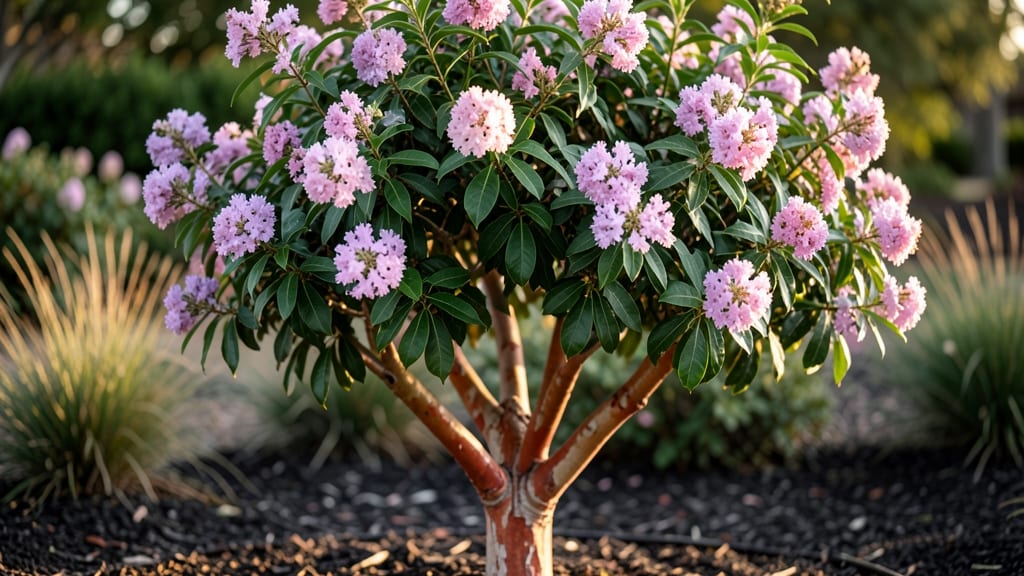
The Crepe Myrtle 'Tuscarora' isn’t just another tree—it’s the Pacific Northwest’s secret weapon for year-round interest, with its frost-resistant bark and stunning lavender blooms that last all summer. I planted mine last spring, and by July, the neighbors were asking what magic I’d used.
The real secret? This variety thrives where others fail, handling our damp winters and cool summers better than most.
You’ll need well-draining soil (even our clay-heavy yards work if amended with compost) and full sun—at least six hours daily. The planting hole should be twice as wide as the root ball but no deeper, and mulching within 24 inches keeps moisture steady without smothering roots.
Water deeply once a week after establishment, but avoid soggy soil—this tree hates wet feet.
By mid-summer, you’ll be rewarded with 3-foot-long flower panicles that attract hummingbirds and butterflies while the exfoliating bark adds winter texture. Prune in late winter to shape and remove dead wood, but never cut into old wood—this tree blooms on new growth, so aggressive pruning just delays flowers.
The payoff? A low-maintenance tree that outperforms most PNW varieties.
Perfect for urban yards, large containers, or as a focal point in mixed borders. Whether you’re replacing an old tree or adding structure to a new landscape, Tuscarora delivers reliable beauty with minimal fuss. Let’s get yours planted right—your future self will thank you.
📚 In This Guide
- What you need
- Instructions
- Tips and common mistakes
- Wrapping up and next steps
What you need
- ● Crepe Myrtle Tuscarora Tree: 1 container-grown plant (3- to 5-gallon size for best establishment). Look for healthy roots and vibrant foliage!
- ● Shovel or Trench Digger: 1 medium to large-sized shovel (or a trenching tool if planting multiple trees).
- ● Garden Gloves: 1 pair (to protect your hands from thorns and rough soil).
- ● Mulch: 2–3 bags of organic mulch (e.g., wood chips, shredded bark, or compost). Avoid inorganic mulches like rocks.
- ○ Watering Can or Hose with Nozzle: 1 (for deep watering). A soaker hose is optional but highly recommended.
- ● Pruning Shears: 1 pair (for trimming any damaged branches during planting).
- ○ Soil Amendment (Optional but Helpful): 1 bag of compost or well-rotted manure (to improve soil drainage and fertility).
- ● 1 bag of sand (if your soil is heavy clay, mix in 20–30% sand to improve aeration).
- ● Tree Stake & Ties: 1–2 stakes and soft ties (to support young trees in windy areas, especially in the Pacific Northwest).
- ● Tree Guard or Protective Barrier: 1 (to deter animals or protect the trunk from lawn equipment).
- ● Slow-Release Fertilizer: 1 packet (apply sparingly after planting to avoid burning roots).
- ● pH Test Kit: 1 (to check soil acidity—Crepe Myrtles prefer slightly acidic to neutral soil, pH 6.0–7.0).
- ● Wheelbarrow: 1 (for mixing soil amendments if needed).
Step-by-Step guide to planting and cultivating Crepe Myrtle Tuscarora trees
Here's how to establish this hardy Pacific Northwest favorite with minimal fuss.
🌱 Step 1: Choose the Perfect Planting Location
Select a site with at least 6 hours of direct sunlight daily—Tuscarora thrives in full sun but tolerates partial shade in hotter inland areas. The Pacific Northwest's mild summers mean even urban spaces with afternoon sun work well. Avoid low spots where cold air pools, as this frost-resistant variety still benefits from good airflow.
Test your soil's drainage by digging a 12-inch deep hole—if water pools after 30 minutes, amend with 3 inches of compost mixed into the native soil. Tuscarora dislikes soggy roots, which can lead to root rot despite its cold tolerance. The ideal planting spot balances sun exposure with natural shelter from harsh winter winds.
🪴 Step 2: Prepare the Planting Site and Transplant
Dig a hole twice as wide as the root ball but only as deep—planting too deep suffocates the tree's lower trunk. Gently remove the tree from its container and loosen any circling roots with your fingers. You'll notice the fibrous root system is dense; this helps establish quickly in Pacific Northwest's moist climate.
Place the tree in the hole so the top of the root ball sits 1-2 inches above ground level—this prevents water from pooling at the trunk. Backfill with native soil mixed with 1 cubic yard of compost (for 4 trees), tamping lightly as you go. Water deeply to settle the soil, then create a 2-foot diameter watering basin around the base.
☀️ Step 3: Establish Proper Watering and Mulching Routine
Water newly planted Tuscaroras twice weekly for the first month, providing 10-15 gallons per tree each time. The Pacific Northwest's frequent drizzle means supplemental watering is crucial during dry summer spells. You'll know you're doing it right when the soil 2 inches down remains consistently moist but not saturated.
Apply 3 inches of wood chips over the watering basin, keeping mulch 6 inches away from the trunk to prevent rot. This mimics the tree's native habitat while conserving moisture. After the first year, reduce watering to once weekly during summer droughts—mature Tuscaroras are remarkably drought-tolerant once established.
✂️ Step 4: Prune for Structure and Flower Display
Wait until late winter or early spring before pruning—this timing ensures you remove dead wood while allowing new growth to begin with the longer daylight hours. Remove any crossing branches or those growing toward the center, cutting back to the nearest outward-facing bud. Tuscarora's natural vase shape emerges beautifully with minimal intervention.
For flowering encouragement, prune lightly each summer after blooms fade—this prevents overgrowth that can shade lower branches. Never remove more than 25% of the canopy in any single year. The tree's distinctive bark exfoliation becomes more dramatic with proper pruning, creating the stunning visual texture that makes Tuscarora so prized.
⏰ Step 5: Monitor for Pacific Northwest-Specific Challenges
Watch for aphid infestations during warm springs—they're drawn to new growth. A strong spray of water usually dislodges them, but severe cases may require neem oil application. The tree's thick foliage naturally resists many pests, making it low-maintenance once established.
In particularly cold winters, protect young trees with burlap wraps if temperatures drop below 10°F. Mature Tuscaroras handle Pacific Northwest winters beautifully, but their first few years benefit from this extra insulation. You'll see the tree's true resilience as it develops a sturdy trunk capable of supporting its eventual 15-20 foot height.
Tips & tricks for perfect Crepe Myrtle Tuscarora establishment
Establishing a thriving Crepe Myrtle Tuscarora takes thoughtful preparation—here's how to avoid common pitfalls and maximize success in Pacific Northwest conditions.
Sunlight Strategy: While Tuscaroras tolerate partial shade, the 6 hours of direct sunlight requirement is non-negotiable for optimal growth. In urban settings, prioritize south-facing locations where afternoon sun exposure reaches its peak. I've seen trees planted under large maples struggle after just two seasons—their growth becomes leggy and sparse. Position your tree where it can capture sunlight from multiple angles throughout the day.
Drainage Test Pro Tip: That 30-minute drainage test in Step 1 is your best indicator of long-term success. If water remains after 30 minutes, you're dealing with clay soil common in many Pacific Northwest areas. In these cases, consider building a raised bed or amending with additional 3 inches of compost mixed into the native soil. The goal is to create a well-draining environment that mimics the tree's natural habitat while preventing root suffocation.
Root Ball Positioning: The 1-2 inches above ground level placement for the root ball might seem counterintuitive, but this elevation prevents water from pooling at the trunk during our region's frequent rain showers. I learned this the hard way—my first planting had the root ball too deep, and the tree struggled with poor air circulation at the base. This simple adjustment makes all the difference in preventing fungal issues and promoting strong trunk development.
Pacific Northwest Watering Hack: Those 10-15 gallons per tree during the first month might seem excessive, but our region's maritime climate means supplemental watering is crucial even when it rains. The key is maintaining consistently moist soil 2 inches down—this encourages deep root growth. I recommend using a moisture meter to verify proper watering levels, especially during our unpredictable summer weather patterns.
Pro Tips for Crepe Myrtle Tuscarora Tree
- Establishing a thriving Crepe Myrtle Tuscarora takes thoughtful preparation—here's how to avoid common pitfalls and m...
- Sunlight Strategy: While Tuscaroras tolerate partial shade, the 6 hours of direct sunlight requirement is non-negotia...
- Drainage Test Pro Tip: That 30-minute drainage test in Step 1 is your best indicator of long-term success. If water r...
Frequently asked questions
Got questions about the stunning Crepe Myrtle Tuscarora tree? You’re not alone! Here are some of the most common queries—plus expert answers to help you grow with confidence in the Pacific Northwest’s climate.
How cold can the Tuscarora Crepe Myrtle tolerate?
The Lagerstroemia 'Tuscarora' is a USDA Zone 5-9 star, meaning it handles temperatures down to -20°F (-29°C) without fuss. In the PNW, its cold-hardiness makes it perfect for Zone 7-8 gardens—just plant in full sun for best resilience.
When is the ideal time to plant a Tuscarora Crepe Myrtle?
For root establishment, spring (after last frost) or early fall (6 weeks before first freeze) are ideal. Avoid summer heat or winter planting—roots need time to settle before PNW’s rainy seasons or cold snaps hit.
Does it need pruning? How often?
Prune in late winter/early spring to shape and remove dead wood. Focus on open-center growth to prevent congestion. Pro tip: Avoid "crepe myrtle disease" (a pruning myth)—never cut into old wood or you’ll lose blooms!
Are there pests or diseases to watch for in the PNW?
Generally tough, but watch for aphids, scale, or powdery mildew in humid PNW summers. Treat with neem oil or horticultural soap. No major fungal threats—just ensure good airflow and avoid overhead watering.
What’s a good alternative if I want a similar tree but with fewer flowers?
For a low-maintenance, non-flowering alternative, try the Japanese Maple 'Bloodgood' (Zone 5-8) or Oakleaf Hydrangea. Both offer PNW-friendly foliage and structure—just skip the seasonal cleanup!
Wrapping up and next steps
The Crepe Myrtle Tuscarora is a true gem for Pacific Northwest gardens—its stunning blooms, adaptability, and cold-hardy nature make it a standout choice. Whether you're a seasoned gardener or just starting, this tree brings beauty and resilience to your outdoor space. 🌿✨
Ready to transform your yard? Start by selecting the perfect spot, gathering your supplies, and planting with care. Soon, you’ll be enjoying the vibrant colors and easy maintenance of this frost-resistant favorite!