
Pruning
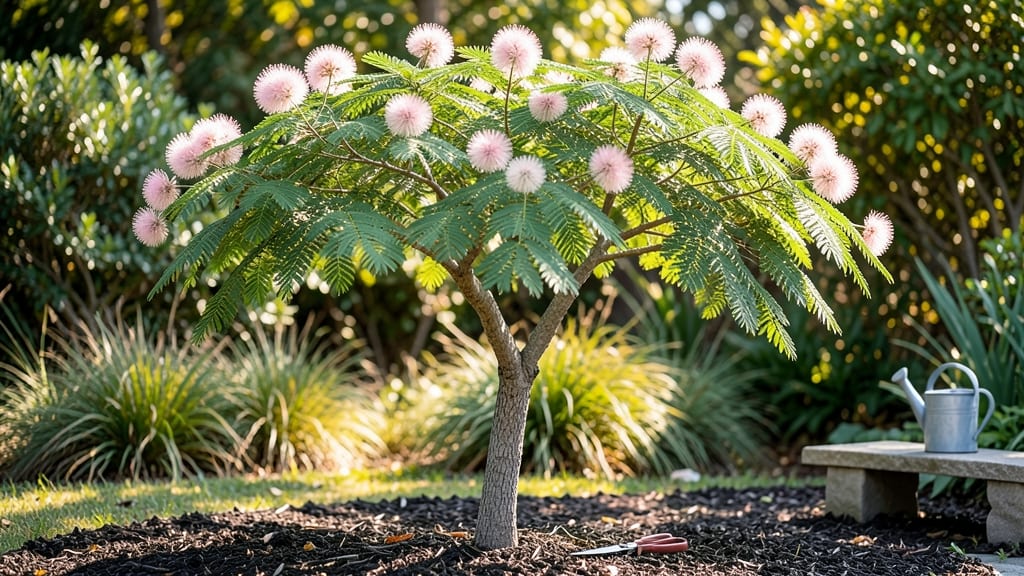
Your Chinese silk tree’s feathery blooms could transform your yard from spring through fall—but only if you prune it right. ✨ I’ve watched this tree go from a scraggly mess to a lush, flowering showstopper in just a few seasons, and the secret lies in knowing when and how to trim those fast-growing branches.
The key is timing: prune lightly in late winter to shape the tree, then cut back spent blooms in early summer to encourage another flush of flowers. Most gardeners overdo it—snipping too much at once stresses the tree and cuts back next year’s blooms.
Instead, think of it like sculpting: remove no more than 25% of the canopy in any one session, and always cut just above a leaf bud or branch collar.
What you’ll end up with is a tree that bursts into pink or white clouds of flowers twice a year, with glossy green fern-like leaves that stay vibrant even in summer’s heat.
The best part? It’s drought-tolerant once established, so once you get the pruning rhythm down, maintenance becomes effortless. Ready to turn that leggy tree into a flowering star?
This method works for both young trees and mature specimens—just adjust the intensity. In warmer climates, you might even see a third bloom cycle if you keep up with light trims. Let’s get those shears sharp and those branches in shape!
📚 In This Guide
- What you need
- Instructions
- Tips and common mistakes
- Wrapping up and next steps
What you need
- ● Pruning shears: Bypass pruners (sharp, 6–8" blades) for small branches (1 pair).
- ● Loppers: For thicker branches (1.5–2.5" diameter) (1 pair, with bypass or anvil blades).
- ● Pruning saw: Curved-tooth saw for branches 2.5" or larger (1, 12–18" length).
- ● Gloves: Heavy-duty gardening gloves (cut-resistant) (1 pair).
- ● Disinfectant: 70% isopropyl alcohol or pruning sealant (small bottle).
- ● Clean rags: For wiping tools between cuts (2–3 rags).
- ○ Extension pole: Optional for high branches (10–15 ft) (adjustable, 1–2" diameter).
- ● Ladder: Sturdy, non-slip ladder (if reaching >6 ft) (1, rated for your height).
- ● First-aid kit: Just in case! (basic kit with bandages).
- ● Trash bags: For collecting pruned branches (2–3 heavy-duty bags).
- ○ Water spray bottle: Optional, to clean tools mid-pruning.
How to prune a Chinese silk tree for continuous, lush blooms
Here’s how I keep my Chinese silk tree flowering year-round with simple, seasonal trims.
🌿 Step 1: Understand the Right Time to Prune
The Chinese silk tree thrives when pruned at the right moments. Start with a light trim right after flowering in late spring or early summer—this encourages new growth that will bloom again later. Avoid heavy pruning in fall or winter, as the tree needs its energy to recover before spring.
Look for spent flower clusters—these are your first pruning cues. Snip just above a leaf node where new growth can sprout. If you wait too long, the tree may focus on seed production instead of blooms.
✂️ Step 2: Shape and Thin for Airflow and Light
Use clean, sharp pruners to remove one-third of the oldest stems in early spring before new growth begins. This opens up the tree’s center, allowing light and air to reach all branches—key for preventing fungal issues and encouraging even blooming.
Watch for crossing or rubbing branches—these weaken the tree and create entry points for pests. Thin these out first, cutting back to a strong outward-facing bud. Never leave stubs; always prune at a 45-degree angle just above a leaf node.
💧 Step 3: Post-Pruning Care for Strong Recovery
After trimming, water deeply to help the tree recover. The roots need moisture to support new growth, especially if you’ve removed a lot of foliage. Mulch around the base with 2-3 inches of organic mulch to retain moisture and protect roots from temperature swings.
Keep the tree in bright, indirect light for the first few weeks post-pruning. If you notice yellowing leaves, it’s usually a sign of over-pruning or stress—adjust by trimming less aggressively next time.
⏰ Step 4: Monitor and Adjust for Year-Round Blooms
Check the tree monthly for new growth and spent blooms. Light trims throughout the growing season keep it bushy and flowering. If you see long, leggy branches, it’s a sign of too little light or over-pruning—move the tree closer to a sunny window or supplement with a grow light.
By late summer, give the tree a final light trim to remove any straggly growth. This ensures it enters dormancy in good shape, ready to burst into bloom again next spring.
Tips & tricks for perfect Chinese silk tree pruning
Real talk: Pruning this tree isn't just about cutting branches—it's about understanding its natural rhythm. Here's how to avoid common mistakes and keep those blooms coming.
Timing Secret: That light trim right after flowering in late spring or early summer is non-negotiable. I learned this the hard way after skipping it twice—my tree just focused on seeds instead of blooms! The key is to catch those spent flower clusters immediately before they set seed. If you miss this window, you'll notice fewer blooms next season.
Tool Technique: Never use dull pruners—they crush stems and create jagged cuts that invite disease. I keep a pair of clean, sharp bypass pruners dedicated just to my silk tree. For thicker branches, use loppers and always make cuts at a 45-degree angle just above a leaf node. This encourages new growth in the right direction and prevents unsightly stubs.
Recovery Strategy: After your pruning, the tree's roots need serious hydration. I water deeply right after trimming, then add 2-3 inches of organic mulch to lock in moisture. The first few weeks are critical—keep the tree in bright, indirect light and watch for yellowing leaves. If you see them, you've either over-pruned or stressed the tree. Next time, go lighter with your cuts.
Seasonal Checklist: Mark your calendar for these key moments: early spring (remove one-third oldest stems), monthly checks (spot and trim leggy growth), and late summer (final light trim). I keep a small notebook by my tree to track when I pruned and how it responded. This helps me adjust my timing each year for even better blooms.
Pro Tips for Chinese Silk Tree
- Real talk: Pruning this tree isn't just about cutting branches—it's about understanding its natural rhythm.
- Timing Secret: That light trim right after flowering in late spring or early summer is non-negotiable.
- Tool Technique: Never use dull pruners—they crush stems and create jagged cuts that invite disease.
Frequently asked questions
Got questions about pruning your Chinese Silk Tree (Albizia julibrissin)? You’re not alone!
Whether you’re a first-time gardener or a seasoned pruner, these answers will help you keep your tree thriving with lush, year-round blooms.
When is the best time to prune a Chinese Silk Tree?
The ideal time to prune is late winter or early spring, just before new growth begins. This timing encourages healthy blooms and prevents disease. However, light pruning to shape the tree or remove dead branches can be done year-round—just avoid heavy cuts during extreme heat or cold.
How much can I prune my Chinese Silk Tree without harming it?
You can safely remove up to one-third of the tree’s foliage in a single session, but avoid over-pruning. Focus on dead, diseased, or crossing branches first, then thin out dense areas to improve airflow. Never remove more than 25% of the canopy in one go—this can stress the tree.
Will pruning affect the tree’s beautiful pink “pom-pom” flowers?
Not if done correctly! Pruning stimulates new growth, which often leads to more abundant blooms. Just avoid cutting back into old wood too aggressively—new flowers typically form on younger branches. A light trim in spring keeps the tree bushy and floral!
My Chinese Silk Tree has yellowing leaves after pruning. Is this normal?
Yellowing leaves can happen if you prune too late in the season or over-cut. If only a few leaves yellow, it’s likely natural shedding. However, if large sections wilt or drop, you may have stressed the tree. Water deeply and avoid heavy pruning for a few months to recover.
Can I grow a Chinese Silk Tree in a container, and how does pruning differ?
Yes! They thrive in containers but need more frequent pruning to control size. Use the same techniques—remove dead wood and shape—but prune lightly every 4-6 weeks to encourage bushiness. Dwarf varieties (like ‘Summer Chocolate’) are ideal for pots and require less aggressive trimming.
Wrapping up and next steps
The Chinese Silk Tree thrives when you embrace strategic pruning as part of its care routine—year-round blooms are absolutely within reach! 🌿 By mastering the timing, tools, and techniques outlined above, you’ll not only revive its health but also unlock a stunning display of cascading flowers.
Whether you’re a seasoned gardener or just starting out, every trim is a step toward a more vibrant tree.
Ready to transform your outdoor space? Pick a sunny day, grab your pruners, and start trimming with confidence! Your Silk Tree—and your neighbors—will thank you for it.