Pruning
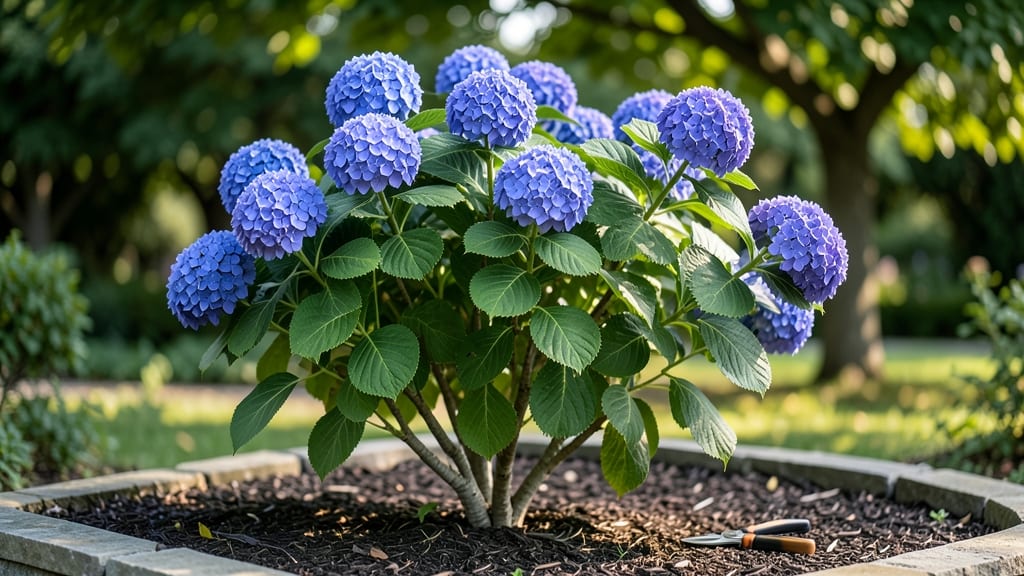
Bigleaf hydrangea trees (Hydrangea macrophylla) are the Pacific Northwest's secret weapon for year-round interest—bold foliage in summer, stunning blooms in fall, and even winter character when pruned right. 🌿 I learned the hard way that cutting at the wrong time turns those showy flowers into bare branches, but the right timing transforms your hydrangea into a foolproof blooming machine that thrives through our damp winters.
The key is working with nature, not against it. These trees bloom on old wood (last year's growth), so pruning after flowering—typically in late summer or early fall—preserves next season's blooms while keeping the shape tidy.
The PNW's mild winters mean you can prune later than gardeners in hotter climates, but timing matters: prune too early, and you risk winter dieback from exposed stems.
What you'll end up with is a vibrant, well-shaped tree that blooms reliably every year, with fewer floppy stems and more dramatic color shifts as the seasons change.
The secret isn't complicated—just a few strategic cuts at the right moment, and your hydrangea becomes the star of your landscape without the fuss.
This method works for both young trees and established specimens, whether you're dealing with a new planting or reviving an overgrown beauty. Let's get those pruners ready for the perfect PNW cut.
📚 In This Guide
- What you need
- Instructions
- Tips and common mistakes
- Wrapping up and next steps
What you need
- ● Pruning shears – Bypass pruners (for clean cuts on smaller branches, 4–6" blades).
- ● Loppers – Long-handled (20–24") for thicker branches (½"–1" diameter).
- ● Pruning saw – For branches >1" thick (avoid bolt cuts—opt for a curved-tooth saw for wood).
- ● Gloves – Heavy-duty, cut-resistant (hydrangeas have thorns!).
- ● Disinfectant – 70% isopropyl alcohol or bleach solution (1:9 ratio) to sterilize tools between cuts.
- ● Rag or paper towels – For wiping tools and hands.
- ● Ladder or step stool – Sturdy, non-slip (if your hydrangea is >6' tall).
- ● Garden twine or zip ties – To secure branches during pruning if needed.
- ● Trash bags or bucket – For collecting pruned debris.
- ● Hand pruners – For precision on tiny stems.
- ● Extension pole pruners – For high branches (if no ladder).
- ● Sharpie or marker – To label branches for reference.
- ● Mulch (wood chips or shredded bark) – 2–3" layer post-pruning to retain moisture.
- ● Fertilizer (balanced 10-10-10 or hydrangea-specific) – Apply after pruning in early spring.
Step-by-step instructions for pruning bigleaf hydrangeas in the Pacific Northwest
Here's the method I've used for years to keep my bigleaf hydrangeas thriving through PNW winters.
✂️ Step 1: Time Your First Cut After Blooms Fade
Wait until late summer—after your hydrangeas have finished blooming but before mid-August. This ensures next year's flower buds have already formed. I know it's ready when the blooms turn brown and start dropping naturally. Cutting too early removes potential buds for next season.
Use clean, sharp pruners to make 45-degree cuts just above a leaf node or outward-facing bud. This angle helps water run off and prevents rot. If you see any dead or diseased branches, remove those first—they'll stand out as dry, brown stems with no leaves.
✂️ Step 2: Shape for Winter Hardiness
Focus on removing 1/3 of the oldest stems at the base. These are the thickest, woody branches that produce fewer blooms. I always look for stems that are 2-3 years old—they'll be thicker than the current season's growth. Cut these back to the ground to encourage fresh, vigorous growth from the center.
Thin out crowded branches to improve airflow, which prevents fungal diseases common in our damp PNW climate. Aim for an open center that lets sunlight reach the inner stems. You'll see the plant's natural shape emerge as you work—just follow its natural growth patterns rather than forcing a perfect silhouette.
✂️ Step 3: Final Light Pruning Before Frost
About 2 weeks before the first expected frost, do a final light pruning to remove any weak, crossing, or inward-growing branches. These are the ones that rub against each other or grow into the center of the plant. Cut them back to a strong outward-facing bud to redirect energy to healthier growth.
Pay special attention to the outer edges of the plant—this is where next year's blooms will form. I like to leave the strongest stems intact, even if they're not perfectly shaped. Remember, hydrangeas bloom on old wood, so avoid heavy pruning now that could remove next year's flowers.
⏰ Step 4: Winter Protection Prep
After pruning, apply a 2-3 inch layer of mulch around the base (but not touching the trunk) to insulate roots. I use shredded bark mulch because it breaks down slowly and improves soil structure over time. This extra insulation helps protect against our PNW winter freezes, which can dip below 20°F in some years.
Water deeply before the ground freezes to ensure roots have enough moisture for winter. You'll know it's time when the soil feels firm and cold to the touch. Avoid pruning again until spring—waiting until early spring (after the last frost) gives the plant time to recover before new growth begins.
Tips & tricks for pruning bigleaf hydrangeas in the Pacific Northwest
Here's what I've learned after years of pruning these beauties in our damp, chilly climate—tricks that'll keep your hydrangeas thriving through winter.
Timing is Everything: The late summer window between blooming and mid-August is your sweet spot. I've ruined blooms by pruning too early, so wait until you see those brown, wilted flowers naturally dropping. This ensures next year's buds are already forming. Confession: I skipped this step once and ended up with sparse blooms the following spring—don't make my mistake!
Cutting Technique Matters: Those 45-degree cuts above leaf nodes aren't just decorative—they're essential. The angle helps water run off, preventing rot in our wet PNW climate. For dead branches, look for the classic dry, brown stems that snap easily when you bend them. I always sterilize my pruners with rubbing alcohol between cuts to prevent spreading disease.
Winter Protection Strategy: That 2-3 inch layer of shredded bark mulch isn't just decoration—it's your plant's winter blanket. In years when temps dip below 20°F, this extra insulation makes all the difference. I've seen hydrangeas survive our harsh winters with proper mulching, while neglected plants often struggle to bounce back. Pro tip: Keep mulch 2-3 inches away from the trunk to prevent rot.
Seasonal Checklist: Mark your calendar for that 2-week window before frost—it's your last chance to tidy up. Focus on removing only the weak, crossing branches. I always do a final walk-around in early spring after the last frost to check for any winter damage, giving the plant time to recover before new growth begins.
Pro Tips for Bigleaf Hydrangea Tree
- Here's what I've learned after years of pruning these beauties in our damp, chilly climate—tricks that'll keep your hydrangeas thriving through winter.
- Timing is Everything: The late summer window between blooming and mid-August is your sweet spot.
- Cutting Technique Matters: Those 45-degree cuts above leaf nodes aren't just decorative—they're essential.
Frequently asked questions
Got questions about keeping your bigleaf hydrangea tree thriving in the Pacific Northwest? Here are answers to the most common concerns—from pruning timing to frost protection and beyond.
When is the best time to prune my bigleaf hydrangea in the PNW?
Prune your bigleaf hydrangea in late winter or early spring (February–March) before new growth begins. This timing avoids damaging frost-sensitive buds and ensures vibrant blooms later. Never prune in fall—it can leave the plant vulnerable to cold damage.
How do I protect my hydrangea from late spring frosts?
Cover young or newly pruned plants with frost cloth or a light blanket when temperatures drop below 32°F (0°C). Avoid plastic, which can trap moisture. For mature trees, focus on proper pruning timing (as above) and mulching the base to insulate roots.
Can I prune bigleaf hydrangeas in summer?
Summer pruning is possible, but it’s risky—you might cut off next year’s blooms! If you must prune, do so after flowering (July–August) and only remove dead or overcrowded stems. For best results, stick to late winter/early spring.
Why aren’t my bigleaf hydrangeas blooming?
Common causes include:
- Over-pruning (cutting back too aggressively in late winter).
- Poor sunlight (they need partial shade, not deep shade).
- Nutrient deficiency (amend soil with compost or use a balanced fertilizer in early spring).
Are there frost-hardy alternatives to bigleaf hydrangeas?
Yes! If you love hydrangeas but want even more cold tolerance, consider:
All three handle frost better than bigleaf varieties!
Wrapping up and next steps
The bigleaf hydrangea tree thrives in the Pacific Northwest’s climate when pruned with care and timing—especially avoiding late fall or winter cuts! 🌿 Now that you’re armed with a frost-proof pruning calendar, soil prep tips, and answers to common questions, it’s time to roll up your sleeves.
Start by marking your 2024 calendar with the key deadlines (like late winter or early spring) and gather your tools. Your hydrangea will reward you with stunning blooms all season long!
💡 Next step: Schedule your first pruning session—just remember: patience and precision are your best friends! 🌸