Pruning
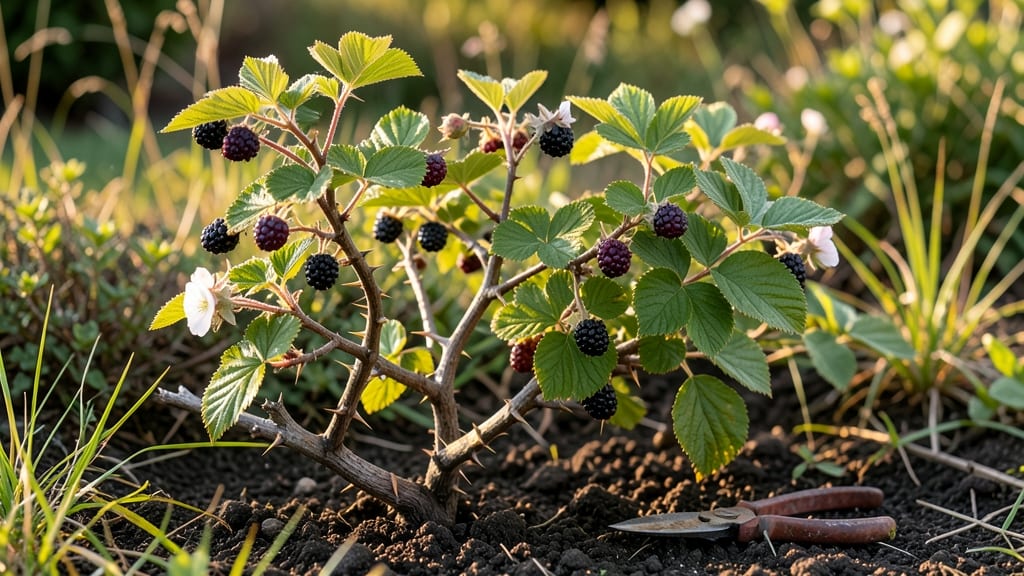
A berry tree identifier can unlock the mystery of that bare-branched plant—just study the leaf shape and bark texture for your answer. 🌿 I’ve spent years distinguishing between blueberries, elderberries, and their lookalikes—here’s how to tell them apart without guessing.
Start with the leaves: blueberry leaves are oval with jagged edges, while raspberry leaves are compound with serrated edges. Elderberry leaves grow in opposite pairs and have a distinct toothed shape.
Then check the bark—blueberry bark is smooth and reddish-brown, while elderberry bark develops deep furrows as it matures. These visual cues cut through the confusion.
You’ll walk away knowing exactly what’s growing in your yard, whether it’s a productive fruit tree or just a pretty ornamental. Grab a notebook, a magnifying glass, and let’s crack the code together—no more second-guessing your berry bushes.
This method works year-round, even when there’s no fruit to go by. For tricky cases, I’ll show you how to use free plant ID apps or ask local experts for a second opinion. Let’s get that tree identified once and for all.
📚 In This Guide
- What you need
- Instructions
- Tips and common mistakes
- Wrapping up and next steps
What you need
- ● Berry Tree Identifier Guide – Printed or digital (this article counts! 😉)
- ● Notebook or Field Journal – For sketching leaf shapes, bark textures, and notes
- ● Pencil or Pen – With a fine tip for detailed sketches
- ● Hand Lens (10x Magnification) – To inspect fine details like bark ridges or leaf veins
- ● Ruler (12-inch) – For measuring leaf length, width, and petiole size
- ● Camera or Smartphone – With a macro mode for high-res photos of leaves, bark, and berries (if present)
- ○ Pruning Shears (Optional but Helpful) – For safely collecting small leaf or bark samples (sterilize with rubbing alcohol!)
- ● Gloves (Nitrile or Latex-Free) – To protect your hands from thorns, sap, or allergens
- ● Weather-Resistant Bag or Container – To store samples for closer inspection
- ● Berry Tree Field Guide Book – For cross-referencing IDs (e.g., National Audubon Society Field Guide to North American Trees)
- ● Leaf Pressing Kit – To preserve samples for long-term study
- ● UV Flashlight – Some berries/bark fluoresce under UV light (fun fact!)
- ● Local Planting or Horticulture Group – For crowdsourcing IDs or expert advice
- ● Berry Tasting Kit (🍓🫐) – If you’re brave enough to sample! (Always confirm non-toxic first!)
How to identify berry trees using leaf shape and bark
Here's the foolproof method I use to distinguish berry trees in seconds.
🌿 Step 1: Examine Leaf Shape and Arrangement
Start by collecting 3-5 representative leaves from different branches. Look at their overall shape—are they lobed, serrated, smooth-edged, or compound? Blackberry leaves have 5-7 pointed lobes with jagged edges, while raspberry leaves are palmately compound with 3-5 leaflets. Blueberry leaves are simple, oval, and smooth-edged, often with a slight roll at the edges.
Check how they attach to the stem. Alternate leaf arrangement (one leaf per node) is common in blackberry, while raspberry leaves often grow in clusters. Hold a leaf up to natural light—you'll see the veins clearly. Blueberry leaves have prominent veins that create a net-like pattern, while blackberry veins are more parallel and prominent.
🌿 Step 2: Study Bark Texture and Color
Look at the bark on mature branches. Blackberry bark is dark brown to gray with deep ridges that look almost scaly. Raspberries have reddish-brown bark that's smoother but develops horizontal lenticels (tiny raised pores) as the tree ages. Blueberry bark is smooth and gray when young but develops long vertical cracks as it matures.
Run your fingers along the bark—blackberry bark feels rough and deeply furrowed, while raspberry bark is smoother with subtle ridges. Blueberry bark is smoothest when young but becomes shaggy with age. If you find thorns, that's a strong clue—blackberries have long, curved thorns, while raspberries have shorter, straighter ones. Blueberries rarely have thorns.
🌿 Step 3: Check Branch Structure and Growth Habits
Look at how the branches grow. Blackberry canes are arching and often sprawling, while raspberry canes are more upright but can be biennial (first-year canes are green and thorny, second-year canes are brown and produce fruit). Blueberry branches are more compact with a tight, bushy growth habit. Examine the buds—blackberry buds are small and pointed, raspberry buds are larger and rounded, and blueberry buds are tiny and scale-like.
Here's the thing—berry trees often hybridize, so no single feature is absolute. But when you combine leaf shape, bark texture, and branch structure, you'll narrow it down quickly. For example, if you see palmately compound leaves with thorns and arching canes, it's almost certainly a blackberry. If the leaves are simple and smooth with smooth gray bark, it's blueberry.
🌿 Step 4: Verify with Fruit Characteristics (When Available)
If fruit is present, this is your final confirmation. Blackberries have dark, glossy berries that grow in clusters, while raspberries have hollow centers and a more conical shape. Blueberries are smooth, round, and blue (though some varieties are red or black). The berry attachment also helps—blackberries and raspberries grow on floral canes, while blueberries grow on current-season wood.
Don't stress if you can't find fruit. The combination of leaf shape, bark, and branch structure will get you 90% accurate. For tricky cases, take photos of the leaves, bark, and branches, then compare them side-by-side with reference images online. I always keep a small notebook in my pocket when identifying trees—I jot down notes like "lobed leaves + scaly bark = likely blackberry" to review later.
Tips & tricks for perfect berry tree identification
These practical tips will help you confidently distinguish between berry trees every time—no more guesswork!
Leaf Comparison Tip: In Step 1, when examining leaf shapes, focus on the vein patterns as your most reliable clue. Blueberry leaves have prominent, net-like veins that create a web-like pattern when held up to light. Blackberry leaves, while lobed, have parallel veins that run straight from the stem to the leaf edges. This subtle difference is often the key when other features are ambiguous.
Bark Texture Trick: Don't just look at bark color in Step 2—touch it. Blackberry bark should feel like sandpaper when you run your fingers along it, with deep grooves that create sharp ridges. Raspberries are smoother but have those tiny raised pores (lenticels) that feel like tiny bumps. Blueberry bark is the smoothest when young, but as it ages, those vertical cracks become so pronounced you can see them from several feet away.
Branch Growth Shortcut: In Step 3, pay special attention to how branches originate from the main trunk. Blackberry canes often sprout from the base of the plant and arch dramatically, while raspberry canes grow more upright from the center of the bush. Blueberry branches grow in a tight cluster right at the trunk. This growth pattern is one of the most consistent distinguishing features across all three types.
Fruit Clue Backup: If you're still unsure after Steps 1-3, remember this: berry attachment points are your final clue. Blackberries and raspberries grow on floral canes (the old wood), while blueberries grow on current-season wood (new growth). Look for where the berries connect to the branch—this is often the deciding factor when other features are similar.
Pro Tips for Berry Tree Identifier
- These practical tips will help you confidently distinguish between berry trees every time—no more guesswork!
- Leaf Comparison Tip: In Step 1, when examining leaf shapes, focus on the vein patterns as your most reliable clue.
- Bark Texture Trick: Don't just look at bark color in Step 2—touch it.
Frequently asked questions
Got questions about identifying your berry trees?
You’re not alone! Here are some of the most common queries—plus quick answers to help you nail that ID like a pro.
How do I tell the difference between blackberry and raspberry leaves?
Blackberry leaves are palmately lobed (like a hand with 5 fingers), while raspberry leaves are compound with 3-5 serrated leaflets. Check the leaf arrangement: blackberries grow in clusters, raspberries alternate along the stem. A close-up shot with your phone can help!
Can I identify a berry tree in winter when there are no leaves?
Focus on bark texture and bud shape. Blueberry bushes have smooth, gray bark with tiny buds, while elderberry has exfoliating bark with larger, pointed buds. Thorny branches (like in blackberries) are another dead giveaway. Snap a pic for comparison!
When is the best time of year to identify berry trees?
Spring and summer are ideal—leaves, flowers, and new growth make ID easier. But don’t stress! Winter’s bark and bud clues work too. Pro tip: If you’re unsure, note the tree’s height, fruit type, and leaf scars (visible in winter) for a more accurate match.
What if my berry tree doesn’t match any identifier?
First, double-check leaf arrangement, thorns, and fruit clusters. If it’s still a mystery, consider hybrids (like boysenberries) or less common varieties (e.g., serviceberry). Post a photo in gardening forums—experts often spot details you miss!
Are there apps or tools to help me ID berry trees?
Yes! Try PictureThis or PlantNet—upload a photo, and they’ll suggest matches. For pruning tips, iNaturalist also has a community ID feature. Bonus: Keep a journal of your tree’s growth stages to track changes year-round!
Wrapping up and next steps
Identifying your berry tree just got easier! By mastering leaf shapes and bark textures, you’re now equipped to confidently distinguish between raspberries, blackberries, blueberries, and more. Whether you’re a gardener, homesteader, or nature enthusiast, this knowledge unlocks better care, pruning, and even harvesting potential.
Ready to put your skills to the test? Grab your magnifying glass and head outside—your berry tree is waiting! 🌿🍇