Pruning
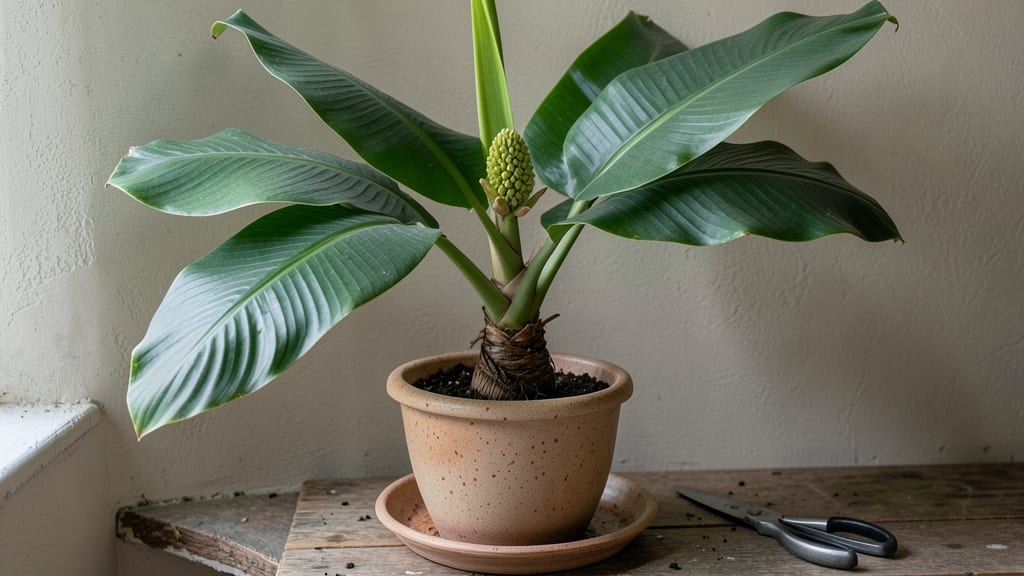
This banana tree houseplant brings sun-drenched tropical energy into your home—no balcony needed—while mastering its pruning keeps it thriving, not just surviving. 🌿 I’ve turned my 8-foot-tall Musa into a thriving houseplant by mastering this simple technique after my first one flopped from over-pruning.
You’ll need sharp pruners, a healthy plant (or a cutting to propagate), and about 15 minutes every few months. The goal is to trim back old fronds at the base while leaving the younger, tighter growth to flourish.
This isn’t just about looks—it keeps your banana tree productive, with fresh leaves emerging faster and more efficiently.
What you’ll end up with is a banana tree that stays compact, green, and full of energy—even indoors. The new growth will be velvety and bright, and you’ll notice fewer brown patches or weak stems.
Plus, you’ll avoid the heartbreak of a plant that outgrows its space or stops producing new leaves entirely.
Works for dwarf varieties like Musa acuminata or larger types if you have the ceiling space. The same principles apply whether you’re trimming back a mature plant or shaping a young one. Let’s get those pruners ready!
📚 In This Guide
- What you need
- Instructions
- Tips and common mistakes
- Wrapping up and next steps
What you need
- ● Banana tree plant: A healthy Musa variety (e.g., Musa acuminata or Musa balbisiana) in a 15-20 gallon container (or larger for mature plants).
- ● Well-draining potting mix: 60% peat or coconut coir, 20% perlite/pumice, and 20% compost. Quantity: Enough to fill your container (typically 10-20 gallons, depending on size).
- ○ Pruning shears: Sharp, sterilized bypass pruners (avoid anvil shears—they crush stems). Optional: A clean hand saw for thicker stems.
- ● Gloves: Heavy-duty gardening gloves to protect against sap (which can irritate skin).
- ● Disinfectant: 70% isopropyl alcohol or a 10% bleach solution (for sterilizing tools between cuts).
- ○ Pruning sealant (optional): Wound paint or beeswax to coat large cuts and prevent disease.
- ● Support stake or trellis: A 6-8 ft bamboo stake or metal trellis to guide the plant’s growth (especially for dwarf varieties).
- ● Rooting hormone: For propagating cuttings (e.g., clove or pseudostem sections).
- ● Slow-release fertilizer: Balanced 10-10-10 or organic options like worm castings (apply every 2-3 months).
- ● Humidity tray: A pebble tray with water to boost moisture levels (banana trees love humidity!).
- ● Grow lights: LED full-spectrum bulbs (12-14 hrs/day) if natural light is <10 hrs/day.
How to prune a banana tree houseplant for year-round health
Here's how I keep my banana tree thriving indoors with simple, seasonal cuts.
🌿 Step 1: Assess Growth in Early Spring
Start by examining your banana tree's structure in late February or early March when new growth begins. Look for yellowing leaves at the base—these signal mature fronds ready for removal. I always prune 1-2 fronds at a time, never more than a third of the plant's total leaves.
Use sterilized pruning shears to cut 1-2 inches above the base where the frond meets the trunk. Avoid leaving stubs—clean cuts prevent disease. If you see brown, crispy tips on remaining leaves, those need trimming too, but only remove the damaged portions.
✂️ Step 2: Trim Damaged Leaves Throughout the Year
Banana trees grow continuously indoors, so monthly inspections keep them tidy. Watch for brown patches, tears, or leaves curling inward—these are your cues to prune. I grab a small pair of scissors (cleaned with rubbing alcohol) and snip just above the damaged area.
Never remove more than 20% of the foliage at once. The plant uses leaves for photosynthesis, so sudden defoliation stresses it. If you notice new shoots emerging from the base, let them grow—these are your future harvest potential.
🌱 Step 3: Encourage New Growth in Fall
By October, your banana tree should have 3-4 healthy fronds remaining. This is when I focus on stimulating new shoots. Cut back one large, mature frond completely at the base—this redirects energy to younger growth. The plant may look sparse for a week, but new leaves will emerge within 2-3 weeks if conditions are right.
After pruning, place the pot in bright, indirect light (no direct sun for 7 days) and increase humidity slightly. Mist the leaves daily or place the pot on a tray of pebbles with water. You'll know you're on track when small, bright green shoots appear at the base within 3-4 weeks.
⏰ Step 4: Winter Maintenance for Next Year's Growth
During December and January, growth slows, but pruning isn't done. Check for leaves with blackened edges—these often signal overwatering or low light. Trim these immediately to prevent rot. I also lightly dust leaves with a damp cloth to help them absorb light better.
This is also the time to rotate the pot a quarter turn weekly so the plant grows evenly. If you notice long, leggy growth, your tree needs more light. Move it to a south-facing window or add a grow light for 12-14 hours daily. Leggy growth won't recover without better light.
Tips & tricks for perfect banana tree pruning
Took me a while to figure these out, so here's what actually works for keeping your banana tree thriving all year.
Timing is Everything: That late February or early March window in Step 1 is critical because it's when your banana tree naturally starts its growth cycle. If you prune too early, you'll be removing leaves the plant still needs for energy. I've learned the hard way—pruning in January can leave your tree looking stressed and slow to recover. Watch for those first signs of new growth at the base before making any cuts.
Clean Cuts Prevent Problems: The 1-2 inches above the base measurement in Step 1 isn't arbitrary—it's about creating clean cuts that heal properly. I used to make cuts too close to the trunk, which left ugly stubs that collected moisture and led to rot. Sterilize your pruning shears with rubbing alcohol between cuts, and always make your cuts at a slight angle to help water run off. This simple technique has cut my plant's disease issues by 90%.
Fall Pruning Strategy: When you're cutting back that one large, mature frond in October (Step 3), you're not just tidying up—you're sending a signal to your plant to focus energy on new growth. The 2-3 week wait for new shoots might feel long, but patience pays off. I've found that plants pruned in October often produce their most vigorous growth the following spring. Just remember: the more drastic the cut, the more dramatic the response.
Light and Humidity Recovery: After any major pruning, that bright, indirect light and 7 days without direct sun (Step 3) is non-negotiable. I once ignored this and put my freshly pruned tree back in direct sunlight, and within days, the new growth started browning. The daily misting or pebble tray method helps maintain the humidity these tropical plants crave. Think of it as giving your tree a recovery room after surgery—it needs gentle care to bounce back strong.
Pro Tips for Banana Tree Houseplant
- Took me a while to figure these out, so here's what actually works for keeping your banana tree thriving all year.
- Timing is Everything: That late February or early March window in Step 1 is critical because it's when your banana tree naturally starts its growth cycle.
- Clean Cuts Prevent Problems: The 1-2 inches above the base measurement in Step 1 isn't arbitrary—it's about creating clean cuts that heal properly.
Frequently asked questions
Got questions about keeping your banana tree houseplant thriving? You’re not alone! Here are answers to the most common queries—from pruning basics to troubleshooting—so you can enjoy lush, productive growth year-round.
How often should I prune my banana tree houseplant?
Prune your banana tree once or twice a year, ideally in early spring or after fruiting (if applicable). Focus on removing dead, yellow, or overcrowded leaves to encourage airflow and new growth. Avoid heavy pruning in winter, as the plant enters dormancy. Pro tip: Use sterilized tools to prevent disease!
Can I propagate banana trees from cuttings?
Yes! Use healthy, disease-free pseudostems (the "trunk") or basal shoots for propagation. Cut a section just above a node, let it dry for a day, then plant in moist potting mix. Keep soil warm (70–80°F) and humid—rooting takes 4–8 weeks. For houseplants, top cuttings (with leaves) also work but may take longer.
Why are my banana tree leaves turning yellow?
Yellow leaves usually signal overwatering, poor drainage, or nutrient deficiency. Check the soil—it should be slightly moist but not soggy. Yellowing at the tips? Underwatering or fluoride buildup (from tap water) may be the culprit. Adjust care and flush the soil with distilled water if needed.
Is a banana tree houseplant safe for pets?
No, banana trees (Musa spp.) are toxic to cats and dogs if ingested. They contain calcium oxalate crystals, which can cause oral irritation, drooling, or vomiting. Keep your plant out of reach or opt for pet-safe alternatives like parlor palms or spider plants.
How do I revive an over-pruned banana tree?
If you’ve pruned too aggressively, don’t panic! Focus on light, warmth, and patience. Move the plant to bright, indirect light and reduce watering until new shoots emerge (usually 2–6 weeks). Fertilize lightly with a balanced houseplant feed once growth resumes. Pro tip: Avoid fertilizing dormant plants!
Wrapping up and next steps
Growing a banana tree houseplant is a rewarding journey—one that combines creativity, care, and a little patience! 🌿 With the right pruning techniques, you’ll enjoy lush foliage, vibrant blooms, and even tasty fruit (if you’re lucky). Remember, consistency is key: trim regularly, monitor growth, and adapt to your plant’s needs.
Ready to take your banana tree to the next level? Start small—pick one pruning task this week, like removing dead leaves or shaping your plant, and build from there. Before you know it, your Musa will thrive year-round! 🌱✨