Pruning
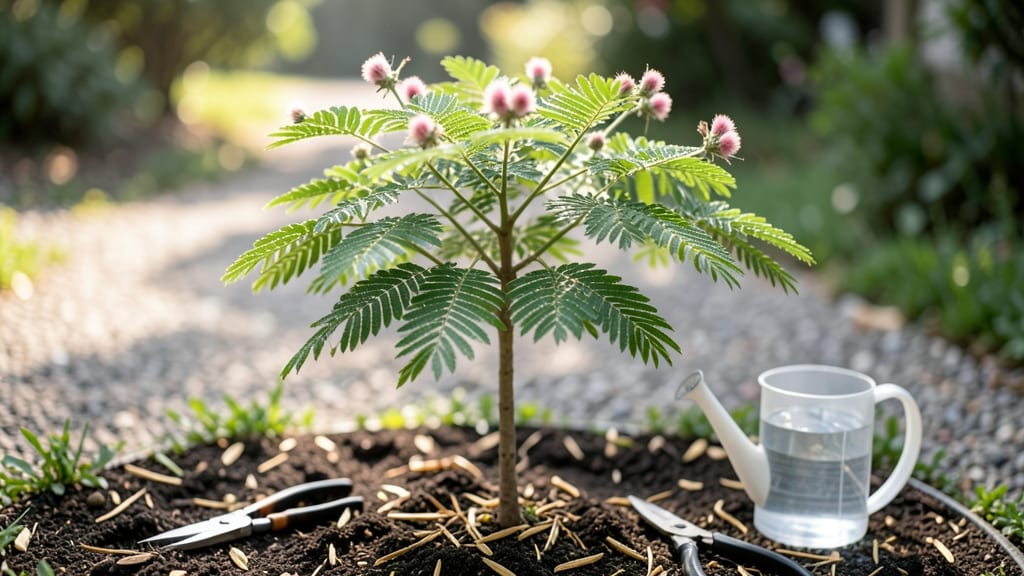
Growing a baby mimosa tree in the Pacific Northwest means mastering a few key tricks to survive our damp winters and wet springs—trust me, I’ve learned the hard way. That first year is all about sheltering delicate roots while encouraging strong branches that can handle our chillier nights.
The secret isn’t coddling it like a houseplant; it’s giving it the right conditions to toughen up naturally.
Start with a spot that gets at least 6 hours of sun daily, sheltered from wind and heavy rain. Mimosa trees hate soggy feet, so plant in well-draining soil with a 3-inch layer of mulch to protect roots from freezing.
Water deeply once a week unless we’re in a drought—overwatering is the fastest way to kill these trees in our climate. Pruning comes later, but only after the tree has established itself for a season.
By summer’s end, you’ll see why this tree is worth the patience: feathery pink blooms that turn heads and a canopy that grows 3-4 feet per year when happy.
The key is pruning in late winter or early spring—just enough to shape it without stripping it of its natural resilience. Skip the heavy cuts until it’s at least 3 years old, or you’ll end up with a leggy, weak tree that struggles with our winters.
This method works for both Albizia julibrissin and cold-hardier varieties like ‘Summer Chocolate.’ The biggest mistake? Pruning too early or too late—wait until after the last frost, and you’ll set your mimosa up for a showstopping season. Ready to grow one that thrives in our climate?
📚 In This Guide
- What you need
- Instructions
- Tips and common mistakes
- Wrapping up and next steps
What you need
- ○ Pruning shears: Sharp, bypass-style shears (for clean cuts). Optional: Loppers for thicker branches (1–2” diameter).
- ● Hand pruners: Anvil-style for small twigs (avoid crushing bark).
- ● Disinfectant: 70% isopropyl alcohol or a pruning sealant (to prevent disease).
- ● Gloves: Heavy-duty, cut-resistant gloves (mimosa thorns are no joke!).
- ● Safety glasses: Protect your eyes from flying debris.
- ○ Pruning saw: Only if branches exceed 2” in diameter (optional for most baby mimosas).
- ● Timing: Prune in late winter to early spring (before new growth starts). Avoid fall pruning—it stresses cold-sensitive mimosas!
- ● Weather: Choose a dry, calm day (no rain for 24 hours before/after).
- ● Inspection: Check for dead, diseased, or crossing branches first—remove these before shaping.
- ● Cleanup: Gather a bucket or bag for clippings (compost or dispose of diseased branches separately).
- ● ✨ Cold-hardy hack: Mimosa trees hate wet wood—thin out dense areas to improve airflow and reduce frost damage.
- ● 🌡️ Temperature check: Wait until consistent temps above 40°F before pruning to avoid shock.
- ● 🎯 Shape smart: Mimosa trees grow fast—aim for a rounded canopy to support heavy snow in winter.
Step-by-step pruning for cold-hardy baby mimosa trees
Here's how to shape your young mimosa for resilience—tested in PNW winters.
Time Your First Pruning for Spring Awakening
Wait until after the last frost when new growth appears—usually mid-April in the Pacific Northwest. This timing ensures you don’t cut back into dormant buds that might not survive another freeze. Look for bright green leaves along the branches as your signal.
Use clean, sharp pruners to make cuts just above a leaf node or outward-facing bud. This encourages growth in the right direction. Avoid cutting into old wood—young mimosa trees respond best to shaping their current season’s growth.
Remove Dead or Crossing Branches First
Start by eliminating any dead, diseased, or damaged branches—these are easy to spot as they’ll be brown, brittle, or without leaves. Next, remove branches that cross or rub against each other, as these create wounds and invite pests.
Focus on the lower third of the tree first. Mimosa trees naturally grow taller, so thinning here improves airflow and sunlight penetration. If a branch is thicker than your thumb, make the cut at a 45-degree angle to prevent water pooling.
Shape for a Strong Structure
Step back and visualize the tree’s natural shape—mimosa trees grow in an open, airy habit. Prune to maintain this form by cutting back overgrown branches to one-third of their length, but never more than that in a single season. This keeps the tree balanced and resilient.
For a bushier look, trim the tips of branches to encourage side shoots. Avoid heavy pruning in late summer or fall, as new growth won’t harden off before winter. Save major shaping for early spring.
Prepare for Winter with Light Pruning
In late fall, do a final light pruning to remove any weak, spindly growth that might not survive the cold. Focus on branches that grew too fast this season—they’re more vulnerable to frost damage.
Apply a 2-inch layer of mulch around the base (using the 4 bags of wood chips from your materials) to protect roots. Water deeply before the first hard freeze to help the tree store moisture for winter. This step is critical for PNW winters, where temperatures can drop below 20°F.
Monitor and Adjust Through the Seasons
Check your mimosa every 4-6 weeks during the growing season for new growth or pests. Mimosa trees are prone to aphids, so spray with neem oil if you see sticky residue on leaves. Prune lightly as needed to maintain shape, but avoid heavy cuts after mid-July—this encourages tender growth that won’t survive winter.
By late summer, you’ll see how your pruning choices influenced the tree’s structure. If branches grew too leggy, next spring’s pruning can focus on shortening them. The goal is a strong, open canopy that sheds snow easily and resists winter damage.
Tips & tricks for pruning cold-hardy baby mimosa trees
Pruning young mimosa trees in the Pacific Northwest takes patience and precision—here's how to avoid common pitfalls while building resilience for winter.
The Timing Secret: That mid-April target for your first pruning is non-negotiable in the PNW. I learned this the hard way after pruning too early and exposing tender buds to a late frost. Watch for those bright green leaves—this is your confirmation that new growth has begun and the tree can handle shaping. If you're unsure about frost dates, check your local agricultural extension service for your specific zone.
Cutting Technique That Changed Everything: When making those 45-degree angle cuts on branches thicker than your thumb, I now use a sharp bypass pruner and make the cut just outside the branch collar. This prevents water from pooling at the wound, which mimosa trees are particularly susceptible to. For smaller branches, clean cuts at a slight angle above the leaf node work perfectly. Always sterilize your tools between cuts with rubbing alcohol to prevent spreading disease.
Winter Prep Wisdom: That 2-inch layer of mulch around your mimosa's base is your best defense against PNW winters where temperatures can drop below 20°F. I've found that adding a handful of pine needles mixed with the wood chips creates an even better insulating layer. Watering deeply before the first hard freeze helps the roots store moisture—think of it as giving your tree a good drink before hibernation. This step alone has saved my mimosa from winter dieback in years past.
Pro Tips for Baby Mimosa Tree
- Pruning young mimosa trees in the Pacific Northwest takes patience and precision—here's how to avoid common pitfalls while building resilience for winter.
- The Timing Secret: That mid-April target for your first pruning is non-negotiable in the PNW.
- Cutting Technique That Changed Everything: When making those 45-degree angle cuts on branches thicker than your thumb, I now use a sharp bypass pruner and make the cut just outside the branch collar.
Frequently asked questions
Got questions about pruning your baby mimosa tree (Albizia julibrissin) in the Pacific Northwest? We’ve got answers!
Whether you’re a first-time pruner or troubleshooting winter woes, here’s what you need to know to keep your tree thriving in cold climates.
Can baby mimosa trees survive the Pacific Northwest winters?
Yes! Baby mimosa trees are cold-hardy (USDA Zones 6-9), but young trees or newly planted ones may need extra care. Mulch the base with 3-4 inches of organic mulch (like wood chips) to insulate roots, and avoid pruning late in the season—wait until early spring to trim. Pro tip: Wrap the trunk with burlap if your winters dip below 10°F to prevent sunscald.
When is the best time to prune a baby mimosa tree?
Prune your mimosa tree late winter or early spring (before new growth starts) to encourage vigorous, cold-resistant branches. Avoid heavy pruning in fall—it stimulates tender growth that won’t survive frost. For shaping, focus on removing dead, crossing, or weak branches first, then thin out the canopy by 20-30% to improve airflow and sunlight penetration.
How do I prune a baby mimosa tree for bushier growth?
To encourage a fuller shape, prune just above a leaf node or bud (about ¼ inch above) using clean, sharp pruners. Cut back 1/3 of the oldest stems to the ground to stimulate new growth from the base. For a multi-stemmed look, select 3-5 strong central branches and remove competing suckers. Remember: Mimosa trees bloom on new wood, so avoid over-pruning in early spring!
What should I do if my mimosa tree’s leaves turn brown or drop early?
Brown leaves or early defoliation often signal cold stress, fungal issues, or over-pruning. Check for:
- Frost damage: If leaves brown after a hard freeze, trim back affected branches once new growth appears in spring.
- Powdery mildew: Prune for airflow and apply neem oil if spots appear.
- Over-watering: Mimosa trees hate soggy roots—ensure well-draining soil and water deeply but infrequently.
If the issue persists, test soil pH (6.0-7.0 is ideal) and adjust with lime or sulfur as needed.
Are there cold-hardy alternatives to baby mimosa trees?
If mimosa’s delicate nature worries you, consider these Pacific Northwest-tested alternatives:
Tree
Cold Hardiness
Why It’s Great
Amur Maackia (Maackia amurensis)
Zones 3-8
Fuzzy pink blooms, tougher than mimosa, and deer-resistant!
Black Locust (Robinia pseudoacacia)
Zones 4-9
Fast-growing, nitrogen-fixing, and thrives in poor soil.
Korean Spice Viburnum (Viburnum carlesii)
Zones 3-7
Fragrant spring blooms and winter interest with red berries.
All three handle PNW winters better than mimosa while offering similar textural charm.
Wrapping up and next steps
Growing a thriving baby mimosa tree in the Pacific Northwest’s chilly climate is totally doable with the right pruning techniques! By mastering late-winter shaping, summer light trimming, and seasonal care, you’ll encourage strong, cold-resistant growth while keeping your tree healthy and beautiful. 🌿
Now that you’re equipped with the know-how, roll up your sleeves and get pruning! Start with a fresh assessment of your tree—notice any overgrown branches or weak spots—and follow the steps you’ve learned.
Happy gardening, and here’s to a lush, resilient mimosa tree that stands up to the elements for years to come! 🌟