
Pruning
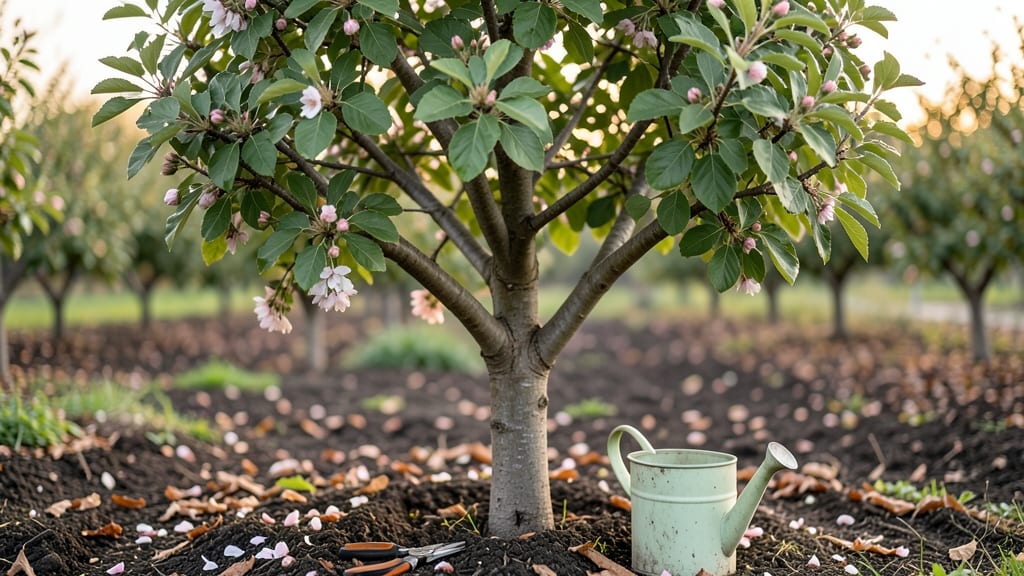
Apricot trees can reach 20 to 30 feet tall if left unchecked, but their height depends entirely on the variety and how you manage them.
I learned this the hard way when my first tree grew taller than my garage roof—until I discovered how pruning transforms a wild, unruly giant into a manageable fruit powerhouse. The right approach keeps branches within reach while boosting those sweet, sun-ripened apricots you crave every summer.
Standard varieties like 'Royal' or 'BlazeGold' typically hit 25 feet, while dwarf types like 'Goldbar' max out at 8 to 10 feet—perfect for small yards or containers.
Climate plays a role too: colder zones need more pruning to protect branches from heavy snow, while warmer areas can handle slightly taller trees. The key is balancing height with sunlight exposure, since apricots need 6 to 8 hours of direct light to produce fruit.
With strategic pruning, you’ll end up with a tree that’s easier to harvest and produces more consistent yields. Open the canopy to let light reach inner branches, and you’ll see fruit develop all the way to the trunk.
Plus, shorter trees are less prone to storm damage—no more broken limbs ruining your harvest. Start with a clean cut in late winter, and you’ll thank yourself when summer rolls around.
Whether you’re working with a backyard sapling or a container-grown dwarf, the same principles apply. Just adjust your tools and timing to fit your space. Next, we’ll dive into the exact pruning steps that keep your tree healthy—and your fruit within arm’s reach.
📚 In This Guide
- What you need
- Instructions
- Tips and common mistakes
- Wrapping up and next steps
What you need
- ● Pruning shears: Bypass pruners (for cuts up to ½ inch thick) – one pair (look for sharp, stainless-steel blades).
- ● Loppers: For thicker branches (½ to 1½ inches) – one pair (with long handles for reach).
- ● Pruning saw: For branches over 1½ inches thick – one (with a fine-tooth blade for clean cuts).
- ● Garden gloves: Heavy-duty, cut-resistant – one pair (to protect your hands from thorns and sharp tools).
- ● Disinfectant: 70% isopropyl alcohol or bleach solution (1 part bleach to 9 parts water) – small bottle or spray (to sterilize tools between cuts).
- ○ Pruning sealant: Optional but helpful for larger wounds – small tube (to prevent disease entry).
- ● Ladder or step stool: Sturdy and tall enough to reach the tree’s highest branches – one (prioritize safety!).
- ● Heavy-duty trash bags: For collecting pruned branches – 2-3 bags (to keep your workspace tidy).
- ● Marking twine or tape: For tagging branches to prune – small roll (helps visualize cuts before making them).
- ● Extension pole pruners: For high branches without a ladder – one (saves time and effort!).
- ● Tree pruning spray: Post-pruning fungicide (e.g., copper-based) – small bottle (reduces risk of infection).
- ● Notebook & pen: To jot down pruning notes or sketch a simple tree map – one (great for tracking progress!).
- ● Safety goggles: To protect eyes from debris – one pair (especially useful in windy conditions).
How to control apricot tree height for optimal fruit production
Apricot trees thrive when pruned strategically—here’s how to balance growth and harvest.
Understand Your Tree’s Natural Growth Pattern
Apricot trees grow 12–24 inches per year under ideal conditions, but unchecked growth leads to leggy branches and reduced fruit quality. Young trees focus energy on vertical growth, while mature trees (over 5 years old) shift to horizontal branching—this is when they produce the most fruit. Pay attention to shoot growth in spring; vigorous vertical shoots are prime candidates for pruning to redirect energy into fruit-bearing branches.
Use a sharp pruning saw for thicker branches (over ½ inch diameter) and bypass pruning shears for smaller stems. Always make cuts at a 45-degree angle, just above an outward-facing bud. This ensures new growth emerges away from the center of the tree, improving sunlight penetration and air circulation—critical for preventing fungal diseases like brown rot, which thrives in dense foliage.
Prune for Structural Balance in Early Spring
Time your first pruning 2–4 weeks before buds swell (typically February–March in most climates). This timing allows wounds to heal before the tree’s active growth phase begins. Start by removing dead, diseased, or crossing branches—these compete for resources and create entry points for pests. Cut back to the main scaffold branch or a healthy lateral bud, never leaving stubs.
For height control, target vertical water sprouts (thin, fast-growing shoots) and prune them back by ⅓ to ½ their length. These shoots steal energy from fruit production. Avoid heavy pruning in wet conditions—fresh cuts are more susceptible to infection. If your tree exceeds 12 feet, prioritize reducing the central leader (the main upward stem) to encourage a bushier, more productive shape.
Thin Out Branches Mid-Season for Airflow and Light
After flowering but before fruit sets (around May–June), conduct a light pruning session to improve sunlight exposure. Remove suckers (shoots growing from the base or graft union) and overcrowded branches that rub against each other. Aim to leave 6–8 main scaffold branches evenly spaced around the tree—this creates an open canopy that dries quickly after rain, reducing disease risk.
Watch for shade-induced branches (thin, weak growth in the tree’s interior) and prune them out entirely. These branches rarely produce fruit and create a moist, dark environment where pests thrive. Use a clean, sterilized cutting tool to prevent spreading pathogens. If your tree is already over 15 feet, focus on raising the lower scaffold branches to create clearance for maintenance and airflow at ground level.
Summer Pruning to Refine Shape and Encourage Fruit
In July–August, perform light summer pruning to shape the tree and redirect growth. Pinch back new shoots that exceed 6 inches to encourage bushier, fruit-bearing branches. Avoid heavy cuts this time of year—it stimulates vigorous late-season growth that won’t harden off before winter. Instead, focus on thinning out excess fruit clusters to improve size and quality; leave 1 cluster per spur (short, stubby branches where fruit forms).
If your apricot tree is too tall for easy harvesting (over 10–12 feet), prioritize raising the canopy by pruning lower branches that no longer bear fruit. This also makes winter cleanup easier and reduces the risk of snow damage. Always step back and visualize the tree’s shape—your goal is a balanced, open structure with sunlight reaching the center. A well-pruned apricot tree will produce larger, higher-quality fruit and be far easier to maintain long-term.
Tips & tricks for perfect apricot tree pruning
Pruning an apricot tree isn’t just about cutting back—it’s about sculpting a productive framework. Here’s what I’ve learned after years of working with these trees to keep them manageable while maximizing fruit yield.
Seasonal Timing is Everything: The 2–4 week window before buds swell in early spring (typically February–March) is your best opportunity for major structural pruning. This timing allows wounds to heal before the tree’s active growth phase begins. I’ve seen trees recover poorly from late pruning because the cuts don’t have time to seal before sap flow increases—leading to infection risks and wasted energy. If you miss this window, wait until summer for light shaping work only.
Pruning Angles Matter More Than You Think: Always cut at a 45-degree angle just above an outward-facing bud. This isn’t just a technicality—it determines where new growth will emerge. I’ve watched trees develop awkward growth patterns when cuts were made at the wrong angle, resulting in branches growing back toward the center of the tree. The goal is to create an open canopy that allows sunlight penetration to the center, which is crucial for even fruit ripening and disease prevention.
Water Sprout Management: Those vertical water sprouts you see shooting up in spring are energy vampires. Pruning them back by ⅓ to ½ their length redirects that energy into fruit production. I’ve seen trees with uncontrolled water sprouts produce 40% fewer apricots because all their resources were going into vertical growth rather than horizontal branching where fruit forms. For trees exceeding 12 feet, focus on reducing the central leader to encourage a bushier shape that’s easier to harvest from.
Sterilization Prevents Disasters: Clean, sterilized tools are non-negotiable when pruning apricot trees. I learned this the hard way after seeing brown rot spread through an entire orchard because I reused pruning shears without sterilizing them between trees. Use a 10% bleach solution or rubbing alcohol to clean tools between cuts, especially when working with diseased branches. This simple step can save your entire harvest from fungal infections that thrive in fresh pruning wounds.
Pro Tips for Apricot Tree Height
- Pruning an apricot tree isn’t just about cutting back—it’s about sculpting a productive framework.
- Seasonal Timing is Everything: The 2–4 week window before buds swell in early spring (typically February–March) is your best opportunity for major structural pruning.
- Pruning Angles Matter More Than You Think: Always cut at a 45-degree angle just above an outward-facing bud.
Frequently asked questions
Got questions about apricot tree height and how it impacts fruit yield? Here are some of the most common queries—plus quick answers to help you grow a thriving orchard!
How tall do apricot trees typically grow?
Apricot trees usually reach 15–25 feet tall at maturity, though dwarf varieties stay between 6–12 feet. Their height depends on the cultivar, rootstock, and growing conditions. For smaller spaces, choose dwarf or semi-dwarf types to simplify pruning and harvesting.
When is the best time to prune an apricot tree for optimal height?
Prune apricot trees during late winter or early spring (before buds swell) to control height and shape. Avoid heavy pruning in fall, as it can stimulate new growth vulnerable to frost. Light pruning after harvest can also encourage airflow and fruit production.
Can I keep an apricot tree small without dwarf rootstock?
Yes! Even standard apricot trees can be pruned to stay smaller by removing 1/3 of the canopy annually and focusing on open-center or espalier shapes. However, dwarf rootstock is the most reliable way to maintain compact size with less effort.
Why is my apricot tree growing too tall, and how do I fix it?
Excessive height often results from over-fertilizing with nitrogen or lack of pruning. To correct it, cut back vigorous vertical shoots and redirect energy to lateral branches. Thin out dense growth to improve sunlight penetration and fruit quality.
Does pruning for height affect fruit production?
When done correctly, pruning enhances fruit yield by improving airflow and sunlight exposure. Focus on removing water sprouts, dead wood, and crossing branches while keeping the tree’s structure balanced. Over-pruning can reduce harvest, so aim for 10–20% of the canopy per year.
Wrapping up and next steps
Understanding the apricot tree height and how pruning influences its growth is key to unlocking a bountiful harvest! 🌱 With the right tools, timing, and techniques—like open-center shaping or summer pruning—you can keep your tree healthy, productive, and well-balanced.
Whether you're a beginner or a seasoned gardener, strategic pruning is your secret weapon for maximizing fruit yield.
Ready to transform your apricot tree into a thriving fruit powerhouse? Grab your pruners, review your notes, and get pruning today! 🌟 Your future apricot pies will thank you!