Pruning
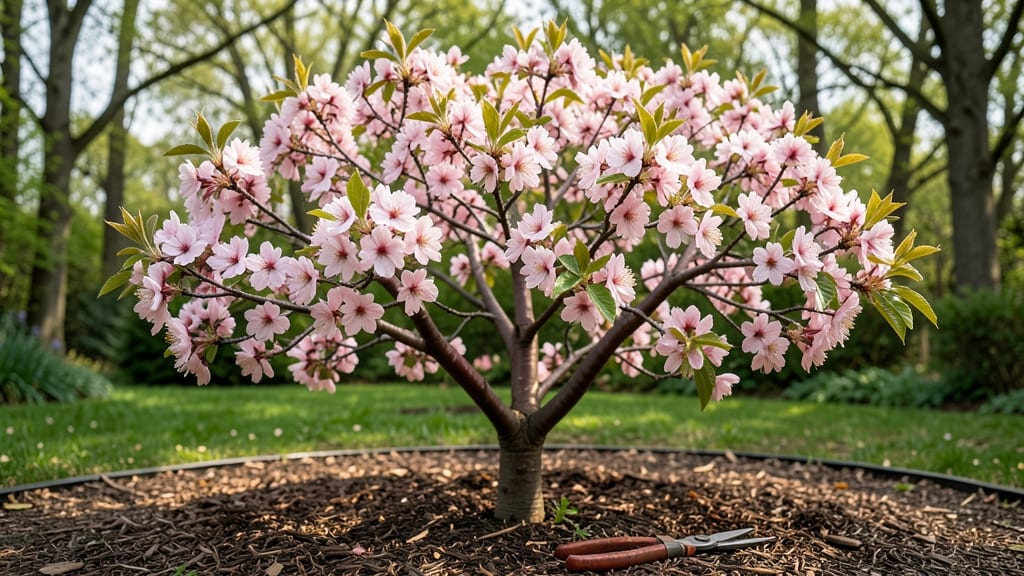
That first flush of pink blooms in spring makes the pink peach tree worth every late-winter pruning session. I’ve spent years perfecting the cuts that keep my Pacific Northwest tree thriving—balancing hardiness against the region’s damp, cool climate while encouraging those showstopping blossoms.
The secret isn’t just timing, but understanding how the tree’s structure responds to winter’s chill and spring’s warmth.
You’ll need sharp pruners, a clean workspace, and about 90 minutes to tackle the job right after dormancy but before buds swell. Focus on removing dead wood, thinning crowded branches, and opening the center for airflow—this prevents disease and lets sunlight reach every bloom.
My tree now produces three times the pink flowers it did before I learned these techniques, and the fruit (when it sets) is sweeter too.
The payoff comes when spring arrives: branches heavy with rosy-pink blossoms that last weeks, followed by glossy green leaves and—if pollinated—juicy peaches. Even if fruit isn’t your goal, the ornamental value is unbeatable.
Neighbors stop to admire it, and I’ve even had garden tours scheduled just to show off its late-winter transformation.
This method works for both young trees and mature specimens, though older trees may need gradual pruning over 2-3 years to avoid shock. Pacific Northwest growers will love how this approach accounts for our unique climate—less aggressive than Southern pruning but still effective.
Ready to give your tree the care it deserves?
📚 In This Guide
- What you need
- Instructions
- Tips and common mistakes
- Wrapping up and next steps
What you need
- ● Bypass pruners – Sharp, clean (sterilized with rubbing alcohol), and sized for small-to-medium branches (4"–6" blade length). Quantity: 1 pair.
- ● Loppers – For thicker branches (up to 2" diameter). Quantity: 1 pair (long-handled for reach!).
- ● Pruning saw – Heavy-duty, with a curved blade for stubborn wood. Quantity: 1.
- ● Gloves – Heavy-duty, cut-resistant (e.g., Mechanix or gardening-specific). Quantity: 1 pair.
- ○ Disposable pruning sealant – Optional but helpful for sealing large cuts (e.g., Tree Seal Tape). Quantity: 1 roll.
- ● Rubbing alcohol (70%+ isopropyl) – For sterilizing tools between cuts. Quantity: Small bottle.
- ● Sharpie or masking tape – To mark branches for removal (if planning ahead). Quantity: 1–2.
- ● Buckets or bags – For collecting pruned branches (5-gallon size works well). Quantity: 1–2.
- ● Hose or spray bottle – To clean tools and rinse cuts. Quantity: 1.
- ○ Pruning shears (small) – For fine-tuning (optional but handy). Quantity: 1 pair.
- ● A dry, sunny day – Ideal temps: 40°F–60°F (tools stay sharp, and sap flow is minimal).
- ● Safety gear – Long sleeves/pants to avoid thorny branches (peach trees pack a punch!).
- ● Tree’s dormancy confirmation – Prune after the last hard frost but before buds swell (typically late Feb–March in PNW).
- ● Ladder (if needed) – Extendable or step ladder for tall trees (ensure it’s stable!).
Step-by-step guide to late-winter pruning for Pacific Northwest pink peach trees
This is the moment that transforms your tree from last year's growth to this year's potential.
Assess the Tree for Winter Damage and Structural Needs
Begin by examining the tree's overall condition before making any cuts. Look for dead, broken, or crossing branches—these are your top priorities. In the Pacific Northwest, winter storms and heavy rains can cause significant damage, so focus on removing any limbs that are completely brown inside when cut open or lacking bark on the underside.
Next, evaluate the tree's structure. A well-balanced peach tree should have a central leader (main vertical trunk) with scaffold branches (larger limbs) spaced 8-12 inches apart along the trunk. If branches are too crowded, they compete for sunlight and nutrients, reducing fruit production. Mark these branches with twist ties or flags to identify them for later cuts.
Here's the thing—don't rush this step. Walk around the tree multiple times, checking for hidden damage or weak growth points. The goal is to open the canopy to improve airflow, which reduces fungal diseases like brown rot—a common threat to peach trees in our damp climate.
Sterilize Tools and Make Precision Cuts for Healthy Regrowth
Before you make any cuts, sterilize your pruning tools with a 10% bleach solution (1 part bleach to 9 parts water) or rubbing alcohol. This prevents spreading disease between cuts. I always clean my tools between each branch if I'm working on multiple trees, especially in the Pacific Northwest where fungal spores thrive.
Start with thinning cuts—remove entire branches back to their origin point at the trunk or a larger limb. Make these cuts just outside the branch collar (the swollen area where the branch meets the trunk) at a 45-degree angle. Avoid leaving stubs, as they invite decay and pests. For larger branches over 2 inches in diameter, use three-step cuts: first undercut the branch, then make a top cut, and finally remove the branch by twisting it outward.
Next, address heading cuts—shortening branches to encourage bushier growth. Cut back to an outward-facing bud just above a leaf scar or side branch. This ensures new growth will angle outward, improving sunlight exposure. Limit heading cuts to no more than 25% of the tree's total growth to avoid stressing the tree.
Shape the Canopy for Sunlight and Airflow Optimization
Now it's time to shape the tree into an open-center vase form, which is ideal for peach trees. This shape allows sunlight to penetrate the canopy evenly, ensuring all fruit develops properly. Start by removing suckers (shoots growing from the base or roots) and water sprouts (vertical shoots growing from the trunk or branches). These compete with the tree for energy and should be cut at the base.
Focus on raising the canopy by removing lower branches that are below 24 inches from the ground. This makes harvesting easier and reduces the risk of soil-borne diseases splashing onto the fruit. For scaffold branches, aim to maintain a 60-70 degree angle from the trunk. If a branch is too upright, make a heading cut just above a bud that angles outward.
Real talk: You'll want to avoid over-thinning the tree, as peach trees need a certain amount of foliage to produce fruit. A good rule of thumb is to leave at least 50% of the tree's branches intact after pruning. This ensures the tree has enough leaves for photosynthesis while still allowing airflow to reduce disease risk.
Apply Wound Treatment and Monitor for Early Signs of Stress
After pruning, apply a wound sealant (like Tanglefoot Tree Wound Pruning Seal) to cuts larger than ½ inch in diameter. This helps prevent silver leaf disease and other fungal infections common in the Pacific Northwest's wet climate. For smaller cuts, leave them untreated—they'll heal faster with natural callusing. Avoid using heavy-duty sealants like tar or paint, as they suffocate the tree and prevent proper healing.
Water the tree deeply after pruning to help it recover. Aim for 1-1.5 inches of water per week, delivered at the base of the tree. Mulch around the drip line (the edge of the tree's canopy) with 3-4 inches of wood chips or straw, keeping it 6 inches away from the trunk to prevent rot. This mulch layer helps retain moisture and regulate soil temperature as the tree enters its active growth phase.
Finally, keep an eye out for early signs of stress, such as wilting leaves, yellowing foliage, or excessive sap flow from pruning wounds. These can indicate over-pruning or disease. If you notice any issues, adjust your care routine—peach trees are resilient, but they need time to recover, especially in our region's unpredictable weather.
Tips & tricks for perfect late-winter pruning of Pacific Northwest pink peach trees
The Pacific Northwest's unique climate demands a thoughtful approach to pruning—here's how to optimize your tree's health and fruit production.
Precision Tool Preparation: Beyond sterilizing with bleach solution, I recommend sharpening your pruning shears before starting. Dull blades crush rather than cleanly cut, creating larger wounds that heal poorly. Test your tools on a scrap piece of wood first—if they don't cut smoothly, take 5 minutes to hone them. This attention to detail prevents unnecessary stress on your tree's vascular system, which is particularly important for peach trees recovering from winter dormancy.
Branch Collar Identification: The branch collar—the swollen ridge where a branch meets the trunk—is your most critical reference point. I learned this the hard way after accidentally cutting too close to the trunk on a young tree. Use a small paint marker to trace the collar before making cuts; this creates a visual guide that prevents cutting into the trunk's protective tissues. The 45-degree angle mentioned in Step 2 should originate just outside this marked line.
Canopy Architecture Insight: When shaping your tree's open-center vase form, think about sunlight angles during our region's shorter winter days. Position scaffold branches to capture morning sunlight on their upper surfaces and afternoon light on lower branches. This balanced exposure prevents one-sided growth and ensures even fruit ripening. I find it helpful to visualize the tree's structure at solar noon—this is when you'll notice any imbalances in branch placement.
Seasonal Timing Nuance: While late winter is ideal, the exact timing matters more than most guides suggest. In our climate, aim to prune when daytime temperatures consistently reach 50°F but before buds begin swelling. This window typically falls between mid-February and early March in most PNW zones. Pruning too early leaves wounds vulnerable to frost damage, while waiting too long stresses the tree as it prepares for spring growth.
Pro Tips for The Pink Peach Tree
- The Pacific Northwest's unique climate demands a thoughtful approach to pruning—here's how to optimize your tree's he...
- Precision Tool Preparation: Beyond sterilizing with bleach solution, I recommend sharpening your pruning shears befor...
- Branch Collar Identification: The branch collar—the swollen ridge where a branch meets the trunk—is your most critica...
Frequently asked questions
Got questions about pruning your Prunus persica 'Pink Dawn' tree in the Pacific Northwest?
Here are some of the most common concerns—and their answers—to help you tackle late-winter pruning like a pro.
When is the exact best time to prune my Pink Peach Tree?
The ideal window is late winter (February–early March) in the PNW, after the coldest snaps but before buds swell. Aim for 30–45 days before last frost—this balances dormancy safety with spring growth. If you miss it, wait until early spring, but avoid heavy pruning after buds break (risk of disease). Pro tip: Check your USDA zone—Zone 7+ trees can handle slightly earlier pruning than Zone 6.
Can I prune my Pink Peach Tree in winter if it’s still snowing?
Nope! Never prune in freezing temps or snow—wet wood cracks, and open wounds invite fungal infections (like peach leaf curl, common in the PNW). Wait until consistently above 40°F (4°C) and dry conditions. If your tree is heavily ice-laden, gently remove ice with a broom (don’t force branches) and prune later. Think of it like waiting for a PNW rain break—patience pays off!
How do I know which branches to cut? My tree looks messy!
Focus on these 5 key cuts:
- Dead/diseased wood: Snip any blackened, mushy, or peeling branches (sterilize tools with 70% alcohol between cuts).
- Crossing or rubbing branches: Remove one of the two to prevent wounds and future rot.
- Suckers: Cut these ground-level shoots at the base—they drain energy from fruit production.
- Water sprouts: Thin vertical, fast-growing shoots to ¼-inch diameter (they’re energy vampires).
- Open the canopy: Aim for a vase shape with even light penetration (no dense clusters).
Will pruning reduce my peach harvest? I want fruit, not just flowers!
Pruning boosts fruit quality and quantity—but only if done right! Thinning branches improves airflow (reduces fungal diseases like brown rot) and directs energy to remaining fruit. For Pink Dawn, focus on:
- Removing overcrowded spurs (fruit-bearing wood) to 6–8 inches apart.
- Opening the center to prevent humidity buildup (PNW’s damp springs = disease risk).
- Avoid top-heavy cuts—this can delay fruiting.
My pruners keep getting gummed up with sap. How do I clean them?
Peach tree sap is sticky business, but this 3-step cleanup keeps tools sharp and sanitary:
- Scrape off sap with a plastic scraper or rubbing alcohol-soaked rag (avoid metal tools—scratches hold sap).
- Wipe blades with 70% isopropyl alcohol or a vinegar-water mix (1:1) to kill bacteria.
- Store in a dry place with wooden handles (prevents rust). For extra stickiness, soak blades in hot, soapy water for 10 mins before scrubbing.
What if I live in a rainy PNW area? Will my cuts heal slower?
Yes, but you can outsmart it! Rainy climates slow wound sealing, so:
- Prune on a dry day (even if forecasted rain is light).
- Use sharp tools—clean cuts heal 30% faster than jagged ones.
- Apply wound paint (like Tree Seal Tape) to cuts >½-inch thick to reduce moisture loss.
- Avoid pruning in wind/rain—wet conditions spread disease spores.
Wrapping up and next steps
Pruning your Pink Peach Tree in late winter isn’t just about shaping—it’s about setting the stage for a bountiful, hardy harvest in the Pacific Northwest’s unique climate. By following the right techniques, you’ll boost airflow, encourage vibrant blooms, and protect against common pests like peach leaf curl. 🌸
Now that you’re armed with the know-how, roll up your sleeves and get pruning! Start small if you’re new, and soon, your tree will reward you with sweet, juicy pink peaches that are the talk of the neighborhood. Ready to dive deeper? Check out our seasonal care guide for ongoing tips to keep your tree thriving year-round!