Pruning
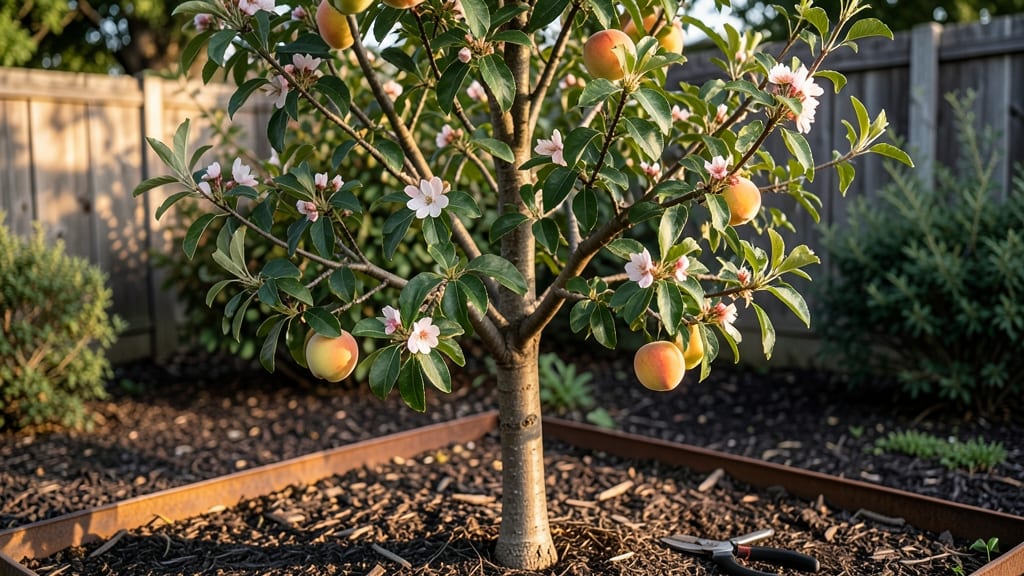
The Suncrest peach tree thrives in Pacific Northwest summers, but without the right pruning, you’ll end up with sparse fruit and tangled branches. I’ve spent three seasons perfecting my approach—what works here is different from California orchards, thanks to cooler nights and wetter springs.
The key is open-center shaping to maximize airflow, which cuts down on fungal diseases that plague PNW peach trees.
You’ll need sharp pruning shears, a ladder (for mature trees), and a clear day in late winter when the tree’s dormant. My first mistake was pruning too late—wait until February or early March when buds swell but leaves haven’t emerged yet.
The goal is to remove dead wood first, then thin crowded branches to let sunlight reach the center. Think of it like giving your tree a haircut that lets it breathe.
By summer, you’ll see the payoff: sunlit branches heavy with fruit, not just a few peaches hiding in the shade. The tree becomes easier to harvest, and pests like aphids struggle to take hold in the open structure.
Even in rainy years, this method keeps your Suncrest producing reliably—no more bitter disappointment when your neighbors’ trees outperform yours.
Adapt this for container growing too—just scale down the pruning tools and expect smaller yields. The principles stay the same: airflow, sunlight, and timing. Once you’ve mastered the basics, we’ll tackle seasonal adjustments for your specific microclimate. Let’s get those branches in shape!
📚 In This Guide
- What you need
- Instructions
- Tips and common mistakes
- Wrapping up and next steps
What you need
- ● Pruning shears: Bypass pruners (sharp, clean, and disinfected with rubbing alcohol or bleach solution). Quantity: 1 pair.
- ● Loppers: For thicker branches (3/4"–2" diameter). Quantity: 1 pair.
- ○ Hand pruners: For precise cuts on smaller branches. Quantity: 1 pair (optional if using loppers).
- ● Pruning saw: For branches too thick for loppers (2"+ diameter). Quantity: 1.
- ● Gloves: Heavy-duty gardening gloves (cut-resistant for safety). Quantity: 1 pair.
- ● Disinfectant: 1-part bleach to 9-parts water (for sterilizing tools between cuts).
- ○ Sealing wax: Pruning sealant (optional but recommended for large cuts to prevent disease).
- ● Ladder or step stool: If your tree is over 6 feet tall. Safety note: Use a stable, non-slip ladder!
- ● Trash bags or bucket: For collecting pruned branches and debris.
- ● Marking twine or flags: To tag branches for removal (if planning ahead).
- ● Extension pole pruners: For high branches (saves ladder time!).
- ● Tree wound paint: Alternative to sealing wax (follow label instructions).
- ● Notebook & pen: To sketch your tree’s structure or note pruning decisions.
- ● Safety glasses: Protect your eyes from debris.
- ● Knee pads: For comfort during long pruning sessions.
Step-by-step pruning guide for Suncrest peach trees in the Pacific Northwest
This method keeps your Suncrest peach tree productive, disease-resistant, and adapted to our region's unique climate.
✂️ Step 1: Prune for Winter Dormancy (Late Winter)
Timing is everything with peaches—wait until late February to early March when the tree is fully dormant but before buds swell. The Pacific Northwest's mild winters mean you have a narrow window to avoid encouraging early growth that frost can damage. Start by removing dead, diseased, or crossing branches first—they compete with healthy growth and spread pathogens.
Use sharp pruning shears to make clean cuts just outside the branch collar (the swollen area where the branch meets the trunk). Avoid leaving stubs, which invite rot. For larger branches over ½ inch thick, use a pruning saw to prevent tearing. I always sanitize my tools with 70% isopropyl alcohol between cuts to prevent spreading fungal spores like brown rot, which thrives in our damp climate.
☀️ Step 2: Open the Canopy for Sunlight and Airflow (Early Spring)
Once buds begin to swell (typically mid-March to early April in the PNW), focus on structural pruning to improve light penetration and airflow. Remove suckers (vigorous shoots growing from the base or trunk) and water sprouts (vertical shoots growing from branches). These compete for energy and make fruit smaller. Aim to keep the tree's center open and airy—this reduces humidity inside the canopy, cutting down on fungal diseases common in our region.
Thin out branches to maintain a balanced shape, removing those growing inward or rubbing against others. Leave 3-5 main scaffold branches evenly spaced around the trunk. In the PNW, peach trees often grow more vigorously on the south side, so I prune slightly more aggressively there to balance growth. Never remove more than 25% of the tree’s canopy in one season—this stresses the tree and reduces fruit production.
🌿 Step 3: Summer Pruning for Fruit Quality (June to Early July)
After the first harvest (usually late June to early July), shift to summer pruning to improve next year’s fruit. Remove shoots growing from last year’s fruit spurs—these are non-fruiting branches that drain energy. Also, trim back excessive vegetative growth (long, leafy shoots with no fruit) to redirect energy to developing fruit. This step is critical in the PNW, where peaches often struggle with poor fruit set due to cool springs.
Use hand pruners for precision, making cuts just above a leaf bud or lateral branch. Avoid heavy pruning now—focus on light shaping to maintain the tree’s vigor. If you notice yellowing leaves or stunted growth, it’s a sign of over-pruning or nutrient deficiency. In that case, apply a balanced fruit-tree fertilizer in early spring to support recovery. Summer pruning also helps prevent bark splitting during winter, a common issue in our fluctuating PNW climate.
⏰ Step 4: Post-Harvest Maintenance (Fall)
After the second harvest (typically August to early September), perform light maintenance pruning to prepare for winter. Remove mummified fruit (dried, shriveled fruit left on the tree) to prevent pests and diseases from overwintering. Also, trim back any shoots that grew excessively during the summer, focusing on thinning out crowded branches to improve airflow.
This is also the time to check for signs of pests like peach tree borers or aphids. If you spot sawdust-like frass (insect droppings) or holes in the bark, treat with neem oil or horticultural oil as a preventive measure. In the PNW, where winters are wet, mulch the base of the tree with 3-4 inches of wood chips to protect roots from temperature swings and retain moisture. Avoid piling mulch against the trunk—keep it 2-3 inches away to prevent rot.
Tips & tricks for pruning Suncrest peach trees in the Pacific Northwest
These practical insights will help you master the art of pruning your Suncrest peach tree while adapting to our region's unique climate challenges.
Timing is Critical: The late February to early March window for winter dormancy pruning is non-negotiable in the PNW. Our mild winters mean buds can start swelling earlier than in colder climates—wait until you see no green tissue in the branch when cut open. This ensures you're not accidentally encouraging early growth that frost could damage. I've learned this the hard way after seeing premature buds freeze in March.
Tool Sanitation Matters: Between each cut during winter pruning, wipe your shears with 70% isopropyl alcohol—this isn't just about cleanliness, it's about disease prevention. Brown rot spores can linger on tools and infect healthy branches. I keep a small spray bottle of the alcohol mixed with water (1:1 ratio) right at my pruning station for quick sanitization between cuts on larger trees.
Structural Balance is Key: When opening the canopy in early spring, remember the 3-5 main scaffold branches rule serves a purpose. These branches should be evenly spaced around the trunk, each with its own branch collar. The PNW's south-facing branches often grow more vigorously, so I typically make 10-15% more aggressive cuts on the south side to maintain balance. This prevents the tree from becoming top-heavy and improves fruit distribution.
Summer Pruning Precision: The light shaping approach in summer is where many gardeners go wrong. Focus on removing shoots growing from last year's fruit spurs—these non-fruiting branches can drain up to 30% of the tree's energy. Use hand pruners for precision cuts just above a leaf bud, never above a branch collar. I mark my cuts with a permanent marker before making them to ensure proper placement, especially when working in the heat of July.
Pro Tips for Suncrest Peach Tree
- These practical insights will help you master the art of pruning your Suncrest peach tree while adapting to our regio...
- Timing is Critical: The late February to early March window for winter dormancy pruning is non-negotiable in the PNW....
- Tool Sanitation Matters: Between each cut during winter pruning, wipe your shears with 70% isopropyl alcohol—this isn...
Frequently asked questions
Got questions about growing and pruning your Suncrest peach tree in the Pacific Northwest? You’re not alone! Here are answers to the most common concerns—from timing to troubleshooting—so you can keep your tree thriving and productive year-round.
When is the best time to prune a Suncrest peach tree in the PNW?
The ideal time is late winter or early spring (February–March) when the tree is still dormant but before buds swell. This prevents disease spread and encourages strong growth. Avoid pruning in fall, as wet PNW winters can invite fungal infections. Pro tip: If you must prune in summer, do it early to avoid stressing the tree before harvest!
How much should I prune my Suncrest peach tree each year?
Aim to remove 20–30% of the tree’s canopy annually to maintain airflow and sunlight penetration. Focus on:
- Dead, diseased, or crossing branches
- Suckers at the base
- Overcrowded fruiting spurs
Why does my Suncrest peach tree have fewer fruits than expected?
Common culprits in the PNW include:
- Late frosts (damaging blossoms)
- Over-fertilizing with nitrogen (promotes leaves over fruit)
- Poor pollination (plant a second variety nearby)
- Insufficient sunlight (peaches need 6+ hours/day)
Can I grow a Suncrest peach tree in partial shade?
While Suncrest peaches tolerate partial shade (especially in hotter PNW summers), they thrive best with full sun (6–8 hours/day). In shadier spots:
- Fruit quality may suffer (less sugar, smaller size)
- Prune aggressively to maximize light exposure
- Consider a dwarf variety if space is limited
How do I prevent pests like aphids or peach tree borers in the PNW?
PNW peach trees face unique pests—here’s how to fight back:
- Aphids: Spray with soapy water or introduce ladybugs (natural predators).
- Peach tree borers: Wrap the trunk with burlap strips in early spring to trap emerging larvae. Apply beneficial nematodes to soil.
- Birds: Use netting during ripening season (July–August).
Wrapping up and next steps
Growing a thriving Suncrest peach tree in the Pacific Northwest is all about patience, precision, and a little extra love—especially when it comes to pruning! 🌱 By mastering the right techniques for winter dormancy, disease prevention, and structural health, you’ll set your tree up for years of juicy, sun-ripened fruit.
Remember, consistency is key: a well-timed prune now means fewer headaches (and more peaches!) down the road.
Ready to take the next step? Grab your pruners, mark your calendar for late winter, and dive into your tree’s care with confidence. Your future self—and your taste buds—will thank you! 🍑✨