Pruning
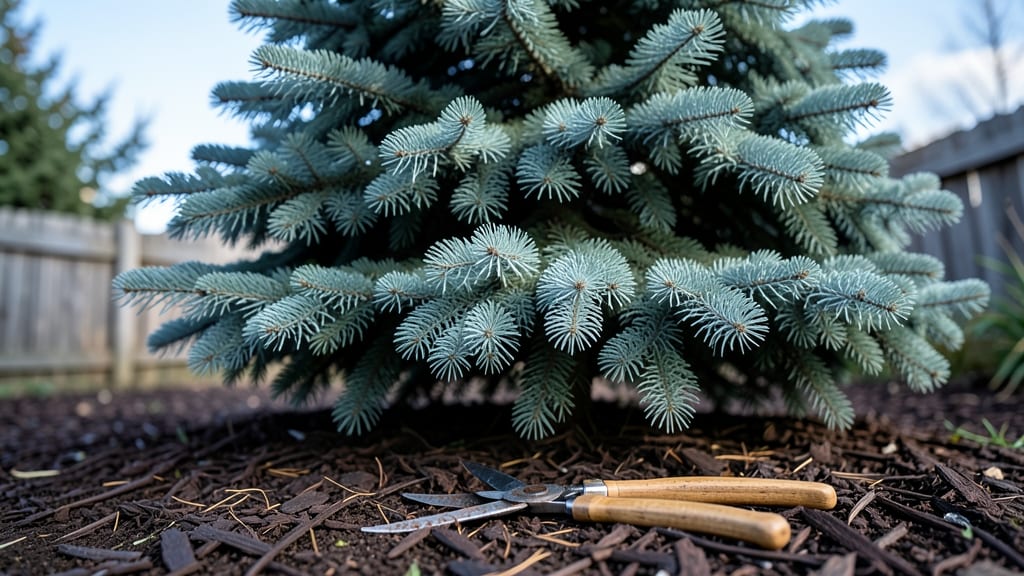
Trimming a blue spruce tree isn’t about hacking away at branches—it’s about guiding its natural shape while keeping it healthy for decades. ✂️ I’ve learned the hard way that aggressive cuts can scar the tree and invite pests, but the right approach turns pruning into a simple maintenance task that preserves that iconic blue-green silhouette.
The key is working with the tree’s growth patterns, not against them.
You’ll need just a few tools: sharp bypass pruners for smaller branches, a handsaw for thicker limbs, and a sturdy ladder if your tree stands over 6 feet tall. Timing matters too—late winter or early spring, when the tree is dormant, is ideal.
That’s when you can see the structure clearly and avoid stressing the tree during active growth. Even a small spruce benefits from an annual check: remove only dead, crossing, or overcrowded branches, never more than 25% of the foliage at once.
What you’ll end up with is a tree that looks fuller at the base and more open at the top, letting light and air circulate where it matters. The needles stay vibrant, the branches grow stronger, and you avoid that "lollipop" shape where the bottom half gets bare.
It’s a subtle process—think sculpting, not butchery—but the results last for years. Ready to give it a try?
This method works for any blue spruce size, from dwarf varieties in containers to mature specimens in landscapes. The same principles apply whether you’re trimming for shape, health, or both. Just remember: patience and precision pay off in a tree that stays lush and upright for generations.
📚 In This Guide
- What you need
- Instructions
- Tips and common mistakes
- Wrapping up and next steps
What you need
- ● Pruning shears (bypass or anvil type) – For small branches (up to ½ inch thick). Choose sharp, high-quality shears for clean cuts.
- ● Loppers – For medium branches (½ to 1½ inches thick). Look for bypass loppers to avoid crushing the wood.
- ● Pruning saw – For thicker branches (1½+ inches). Opt for a curved blade for precision.
- ● Extension pole pruners – To reach higher branches safely. Adjustable lengths (8–12 feet) work best for tall spruces.
- ● Safety gloves – Thick, cut-resistant gloves to protect your hands from thorns and sharp tools.
- ● Safety glasses or goggles – To shield your eyes from debris and sap.
- ● Ladder or tree spikes – If your spruce is over 6 feet tall. Use a sturdy, extendable ladder rated for your weight.
- ● Tar or pruning sealant – Small bottle (4–8 oz) to seal large cuts and prevent disease.
- ● Disinfectant spray – 70% isopropyl alcohol to clean tools between cuts and avoid spreading disease.
- ● Rope or harness – For extra stability when working on very tall trees.
- ● Work boots with traction – To stay steady on uneven or wet ground.
- ● Dust mask – If your area has heavy pollen or dust during trimming.
- ● Check the weather forecast – Trim on a dry, calm day to avoid slipping or spreading sap.
- ● Review your tree’s health – Look for signs of disease (fungus, discoloration) or pests before pruning.
- ● Plan your cuts in advance – Sketch a rough shape or use reference photos of healthy blue spruces.
- ● Have a cleanup plan – Bring a tarp or bags to collect debris and dispose of it properly.
Step-by-Step guide to pruning a blue spruce tree
Here’s how I keep my blue spruce looking sharp and healthy year-round.
✂️ Step 1: Choose the Right Time and Tools
Late winter or early spring is ideal—before new growth starts. I use sharp, clean bypass pruning shears for small branches and a pruning saw for thicker limbs. Disinfect your tools with rubbing alcohol to prevent disease spread. Avoid pruning in fall or winter when the tree is dormant and more susceptible to damage.
Check the weather first—prune on a dry, calm day. Wet branches snap easily, and wind can stress the tree. I like to work in the morning when the air is still, so the tree has time to recover before afternoon heat.
✂️ Step 2: Assess the Tree’s Structure
Step back and scan the tree for dead, crossing, or overcrowded branches. Dead branches are brittle and snap easily—remove them first. Crossing branches rub against each other, creating wounds that invite pests. I look for branches growing inward or rubbing against others and mark them with a piece of twine for easy identification.
Focus on maintaining the tree’s natural shape. Blue spruces grow in a conical form, so I avoid cutting into the dense inner growth. Thin out branches from the inside outward to improve airflow and reduce disease risk. If you’re unsure, take a photo first—you can always compare later.
✂️ Step 3: Make Precision Cuts for Health
Cut just outside the branch collar—the swollen area where the branch meets the trunk. Avoid leaving stubs, as they can rot and invite pests. For larger branches, use the three-cut method: undercut slightly upward, make a top cut just outside the branch collar, and finish by removing the branch without tearing the bark.
Remove no more than 25% of the tree’s foliage in one session. Over-pruning stresses the tree and can lead to dieback. If the tree looks sparse after trimming, you’ve gone too far. I like to make small cuts over a few years rather than heavy pruning all at once.
✂️ Step 4: Clean Up and Monitor Recovery
Rake up and dispose of all clippings to prevent disease or pests from lingering. I use a small tarp to collect debris and seal it in a trash bag. Avoid composting pruned branches, as they may harbor pathogens. Water the tree deeply after pruning to help it recover, especially if the weather is dry.
Keep an eye on the tree in the weeks following pruning. New growth should appear within a few weeks if the cuts were made correctly. If you notice yellowing needles or wilting, the tree may be stressed—reduce pruning next time and focus on watering and mulching.
Tips & tricks for perfect blue spruce trimming
Here's what nobody tells you about keeping your blue spruce healthy and beautiful after pruning.
Timing Secret: Late winter or early spring is your golden window because the tree is still dormant but about to burst with new growth. I learned this the hard way after pruning in fall—my tree struggled to recover and developed brown patches. If you must prune outside this window, avoid late summer when the tree is already stressed from heat.
Tool Technique: Your pruning shears and saw need to be sharper than you think. Dull tools crush branches instead of making clean cuts, which creates wounds that invite pests and disease. I keep a small file in my toolkit to sharpen blades between uses. For branches thicker than your wrist, use the three-cut method from Step 3—it prevents bark tearing that can kill the branch.
Visual Assessment Tip: When scanning your tree in Step 2, look for branches that grow in the same direction as the trunk—they're called "inward-growing" branches. These are the sneaky ones that create dense pockets where air can't circulate. I mark them with colored twine (I use red) so I don't miss them when I'm standing on my ladder. This simple trick has saved me from over-trimming healthy growth.
Recovery Strategy: After pruning, give your tree a drink—literally. Water deeply to help it recover, especially if you've removed more than 15% of the foliage. I use a soaker hose to deliver water slowly to the root zone without disturbing the soil. Watch for new growth within 4-6 weeks as a sign your cuts were healthy. If you notice yellowing needles, that's your tree's way of saying "whoa, take it easy next time."
Pro Tips for How Do You Trim A Blue Spruce Tree
- Here's what nobody tells you about keeping your blue spruce healthy and beautiful after pruning.
- Timing Secret: Late winter or early spring is your golden window because the tree is still dormant but about to burst...
- Tool Technique: Your pruning shears and saw need to be sharper than you think. Dull tools crush branches instead of m...
Frequently asked questions
Got questions about trimming your blue spruce? You’re not alone—this evergreen beauty needs some TLC to stay healthy and stunning! Below, we’ve answered the most common queries to help you trim with confidence.
When is the best time to trim a blue spruce?
The ideal time to trim is late winter or early spring (February–March), just before new growth begins. Avoid heavy pruning in late summer or fall, as this can stress the tree and make it vulnerable to pests or winter damage. Light shaping for aesthetics can happen year-round, but avoid trimming during extreme heat or cold.
Can I trim a blue spruce in winter? What about snow?
Yes, you can trim in winter, but avoid doing it during a snowstorm or when ice is present. Snow can weigh down branches, making them brittle and harder to handle. If you must trim in winter, choose a dry, calm day when temperatures are above freezing. Just be gentle—cold weather can slow healing.
How much can I trim off a blue spruce without harming it?
Never remove more than 25% of the tree’s foliage in a single year. Blue spruces are slow-growing, and over-pruning can weaken the tree, reduce its cold hardiness, and even lead to dieback. Focus on selective shaping—removing only dead, diseased, or overly dense branches. For mature trees, spread heavy trimming over 2–3 years.
What should I do if my blue spruce looks “bald” after trimming?
If your tree has thinning patches or bare spots, it might be due to over-pruning, disease (like Rhizosphaera needle cast), or environmental stress. To fix it:
- Stop trimming for at least a year to let the tree recover.
- Apply a balanced fertilizer in early spring to encourage new growth.
- Check for pests (like spruce beetles) and treat if necessary.
- Consider planting a companion tree to fill gaps if the damage is severe.
Do I need special tools to trim a blue spruce?
While you can use hand pruners for small branches**, larger blue spruces (especially mature ones) require:
Always sterilize your tools with rubbing alcohol or bleach solution between cuts to avoid spreading fungal infections. And if you’re unsure about a big trim, consult a certified arborist—they can assess your tree’s health and suggest the safest approach!
Pro Tip:
Wrapping up and next steps
Trimming your blue spruce tree doesn’t have to be intimidating—with the right tools, timing, and technique, you can keep it healthy, shapely, and stunning year after year. 🌲✨ Remember to prioritize safety, gradual pruning, and seasonal care to avoid stressing the tree.
Whether you’re tackling overgrowth or just a light refresh, your efforts will pay off with a lush, vibrant landscape that stands out in your yard.
Ready to take the next step? Grab your pruners, dust off your ladder, and schedule that trim—your blue spruce will thank you! For extra confidence, check out our FAQs or watch a quick tutorial video to see the process in action.