Pruning
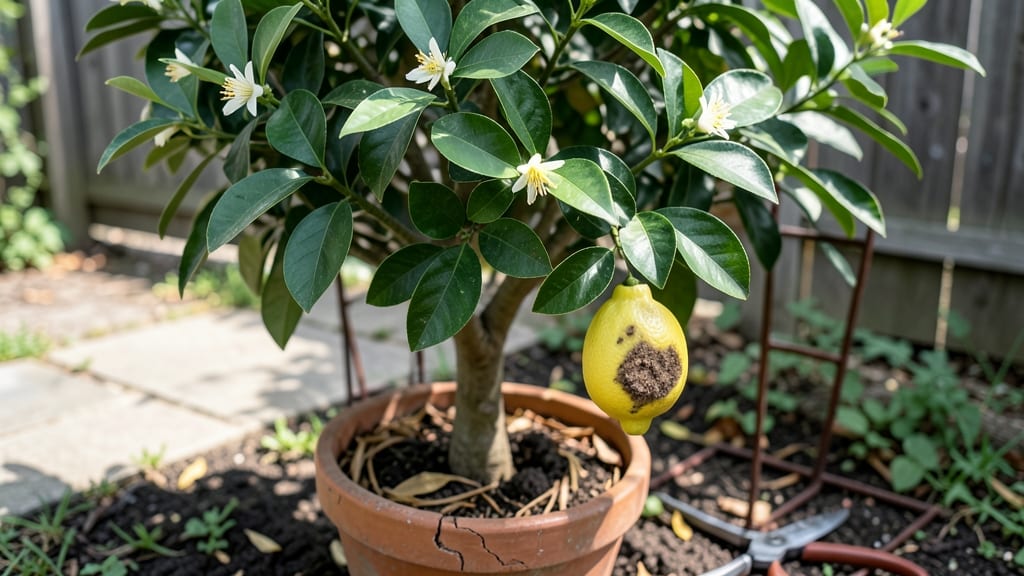
Your citrus tree’s sudden yellow leaves or sticky sap could signal the citrus tree issues of root rot or pests—but three strategic cuts can turn things around. 🌿 I’ve saved more trees than I’ve lost by focusing on the right pruning spots: dead branches, overcrowded growth, and those hidden pest hotspots.
The key isn’t just cutting randomly; it’s understanding which cuts invite airflow, which remove disease, and which encourage new growth.
Start with sterilized pruners and a sharp eye for three types of cuts: first, remove any branches with dark, mushy spots (root rot’s calling card), then trim back any crossing or rubbing branches (they’re stressing the tree), and finally, snip off any new shoots growing from the trunk (these sap-suckers drain energy).
Each cut should leave a clean, angled surface—no jagged edges that invite more trouble.
What you’ll end up with is a citrus tree that breathes easier, resists pests better, and puts its energy into sweet fruit instead of fighting itself. The first flush of new leaves after pruning is always a relief—like giving your tree a fresh start.
Plus, you’ll spot problems earlier next time, because pruning turns your tree into an open book of health signals.
Works for Meyer lemons, Valencia oranges, and even dwarf varieties—just adjust the scale. The same principles apply whether your tree’s in a pot or planted in the ground. Ready to make those cuts?
📚 In This Guide
- What you need
- Instructions
- Tips and common mistakes
- Wrapping up and next steps
What you need
- ● Pruning shears (bypass or anvil type) – Sharp, clean, and sterilized (for small to medium branches).
- ● Loppers (long-handled) – For branches ½” to 2” in diameter (look for bypass blades for cleaner cuts).
- ● Pruning saw (folding or curved blade) – For thick branches 2”+ in diameter (avoid rust—stainless steel is best!).
- ● Disinfectant (70% isopropyl alcohol or bleach solution) – 1 part bleach to 9 parts water (to sterilize tools between cuts).
- ● Rubbing alcohol or hand sanitizer – For cleaning hands before/after pruning.
- ● Garden gloves (cut-resistant) – To protect hands from thorns and sap.
- ○ Pruning sealant (optional but helpful) – For large cuts (½”+ diameter) to prevent disease.
- ● Heavy-duty trash bags or bucket – For collecting pruned branches.
- ● Ladder (if needed) – Sturdy, extendable, and rated for your tree’s height.
- ● Sharpener or honing stone – To keep blades razor-sharp mid-pruning.
- ● Marking spray (white or pink) – To tag branches for removal before cutting.
- ● Safety glasses – If working with large branches or near your face.
- ● Tree wound dressing (like Tanglefoot) – For extra-large cuts (controversial but some swear by it!).
- ● Notebook & pen – To sketch your tree’s structure or note cuts made.
How to diagnose and fix common citrus tree problems
Here's how to spot trouble early and take action before it's too late.
🌿 Step 1: Identify the Root Cause of Yellowing Leaves
Start by examining the leaves from top to bottom. If older leaves yellow first, your tree likely needs more water or has nutrient deficiencies. Check the soil—if it's dry 2 inches deep, give it a deep watering until water runs from the drainage holes. Citrus trees hate soggy roots, so never let them sit in standing water.
If new leaves are yellowing, the issue might be overwatering or poor drainage. Look for signs like moldy soil or leaves that feel mushy when touched. In this case, let the soil dry out completely between waterings and consider repotting into fresh, well-draining soil. I've seen citrus trees recover completely after just one adjustment like this.
Don't overlook pests like aphids or spider mites—these tiny invaders suck sap and cause yellowing. Run your fingers along the stems and undersides of leaves. If you find sticky residue (honeydew) or webbing, you'll need to treat with neem oil or insecticidal soap within 48 hours to prevent further damage.
✂️ Step 2: Prune for Better Airflow and Light Penetration
Use clean, sharp pruning shears to remove any dead, diseased, or crossing branches first. Cut back to the nearest healthy growth point—this encourages new, vigorous branches. I always sterilize my tools with rubbing alcohol between cuts to prevent spreading any fungal spores that might be hiding in the tree.
Next, thin out the canopy by removing branches that block sunlight from reaching the inner leaves. Citrus trees need 6-8 hours of direct sun daily, and dense foliage traps moisture, inviting fungal diseases. Aim to create an open, airy structure so air circulates freely. You'll know you've done it right when sunlight reaches the center of the tree.
If you notice leggy growth (long, thin stems with sparse leaves), your tree isn't getting enough light. Move it to a sunnier spot immediately or supplement with a grow light positioned 12-18 inches away for 12-14 hours daily. Prune back the leggy stems by one-third to encourage bushier growth—just don't cut into old wood, as citrus trees struggle to regrow from there.
💧 Step 3: Adjust Watering and Fertilizing for Seasonal Needs
Citrus trees in containers need water when the top 2-3 inches of soil feel dry to the touch. Stick your finger in the soil—if it's damp below that depth, wait another day. Overwatering is the #1 killer of potted citrus, leading to root rot that you won't see until it's too late. I like to water deeply but infrequently, giving the roots time to dry out completely between sessions.
During active growth (spring and summer), fertilize every 4-6 weeks with a balanced 10-10-10 or 20-20-20 citrus fertilizer. In fall and winter, cut back to once every 8-12 weeks—citrus trees go semi-dormant in cooler months and don't need as much feeding. Always water before fertilizing to prevent root burn, and flush the soil with plain water after applying fertilizer.
If your tree's leaves are small and pale, it's begging for micronutrients. Mix a chelated iron supplement into the soil or apply it as a foliar spray. You'll see new leaves emerge within 2-3 weeks with a deeper green color. Real talk: I've had to do this twice with my Meyer lemon—once when I skipped fertilizing over winter, and again when I used regular garden soil instead of citrus-specific mix.
Tips & tricks for diagnosing citrus tree problems
Here's what I wish I knew sooner about keeping citrus trees thriving.
Leaf Inspection Technique: When checking for yellowing in Step 1, focus on the leaf veins. If the veins stay green while the leaf turns yellow, it's a classic sign of overwatering. Healthy citrus leaves should have vibrant green veins throughout the leaf. I've caught early root rot this way before it became visible in the soil.
Pest Detection Hack: The 48-hour window for treating pests like aphids or spider mites is critical. I use a white paper towel under the leaves to spot honeydew—tiny white specks that look like sugar dust. Once I saw this, I sprayed neem oil immediately and saw improvement within a week. Don't wait until you see visible damage!
Pruning Visual Cue: In Step 2, when thinning the canopy, aim to create a "light filter" effect. You want sunlight to dapple through the leaves like sunlight through a canopy. This prevents the dense center from becoming a fungal breeding ground while still providing shade for the tree.
Grow Light Positioning: For leggy growth, place the grow light at a 45-degree angle rather than directly above. This mimics natural sunlight patterns and encourages bushier growth. I've seen citrus trees double their leaf production in just 6 weeks with this simple adjustment.
Pro Tips for Citrus Tree Issues
- Here's what I wish I knew sooner about keeping citrus trees thriving.
- Leaf Inspection Technique: When checking for yellowing in Step 1, focus on the leaf veins. If the veins stay green wh...
- Pest Detection Hack: The 48-hour window for treating pests like aphids or spider mites is critical. I use a white pap...
Frequently asked questions
Got questions about keeping your citrus tree thriving? You’re not alone! Here are some of the most common concerns—and their solutions—to help you troubleshoot like a pro.
Why are my citrus tree leaves yellowing, and how can I fix it?
Yellow leaves often signal overwatering, nutrient deficiencies, or root issues. First, check the soil—it should be slightly moist but not soggy. Amend with citrus-specific fertilizer (high in nitrogen and micronutrients like zinc) and ensure proper drainage. If roots are rotting, trim affected areas and repot if needed.
When is the best time to prune a citrus tree to avoid stress?
Prune lightly in late winter or early spring (just before new growth starts) to minimize stress. Avoid heavy cuts during extreme heat or cold—citrus trees are sensitive to temperature shocks. Focus on removing dead, diseased, or crossing branches first, then shape as needed.
How do I tell if my citrus tree has pests, and what’s the safest treatment?
Look for sticky residue (aphids), chewed leaves (caterpillars), or sawdust-like frass (borers). Start with neem oil or insecticidal soap for mild infestations. For stubborn pests like citrus psylla, introduce beneficial insects (ladybugs) or use systemic granules like Imidacloprid (follow label instructions carefully).
Can citrus trees survive frost, and how do I protect them?
Most citrus trees (like lemons and oranges) are tender perennials and die back in temps below 28°F (-2°C). Cover young trees with frost cloth or a blanket, and wrap the trunk with bubble wrap. For mature trees, use string lights or heat lamps to raise temps slightly. Water roots lightly before frost to insulate them.
Should I remove fruit from my citrus tree to encourage better growth?
Yes! Overloaded fruit can drain energy from new growth and leaves. Thin fruit when young (leave 6–8 inches between oranges/lemons) to improve size and quality. Focus on removing small, misshapen, or damaged fruit first. This also reduces pest risks and helps the tree recover faster after pruning.
Wrapping up and next steps
Citrus trees are resilient, but proper pruning is the secret weapon to keeping them thriving! By mastering the three key cuts—structural shaping, disease removal, and fruit thinning—you’ll boost airflow, prevent pests, and ensure a bountiful harvest. 🌿✂️
Don’t let citrus tree issues hold you back—roll up your sleeves and give your tree the care it deserves! Start by assessing your tree this week, gather your tools, and take action. Your future harvest (and happy tree!) will thank you.